
How to Test a Power Window Motor Like a Pro
Common Mistakes When Testing Power Window Motors
Quick Summary
When a power window stops working, many DIYers suspect a bad window motor. The motor is often blamed—but just as often, it’s innocent. Before replacing a power window motor, test it for proper power and ground. In this guide, I’ll show you exactly how to test a power window motor using a multimeter, explain how window switches reverse polarity, and help you decide when it makes sense to replace a power window motor versus replacing the entire regulator assembly. Testing first saves time, money, and frustration.
Article
Understanding How a Power Window Motor Really Works
Before you can properly test a power window motor, you need to understand how it’s powered. Most power window motors use just two wires. There’s no dedicated “up” or “down” wire. Instead, the window switch reverses polarity to change direction.
When you press the switch one way, the motor sees 12 volts on one wire and ground on the other. Press the switch the opposite way to flip the polarity. That polarity reversal is what drives the motor up or down. Once you understand this, testing becomes incredibly straightforward.
Access Comes First: Removing the Door Trim Panel
You can’t test a power window motor until you can physically access it. That means removing the interior door trim panel. This step varies slightly by vehicle, but the goal is always the same: expose the window regulator and motor while keeping the glass supported.
Take your time here. Mark fastener locations if needed, disconnect the switch panel carefully, and don’t force plastic clips. A broken door panel clip creates rattles that customers—and owners—hate.
How I Test a Power Window Motor the Right Way
Once the trim panel is off, I disconnect the electrical connector at the window motor. Then I temporarily reconnect the window switch to the door harness so the system can be powered during testing.
I set my multimeter to DC volts and place the probes directly on the two terminals in the motor connector. With the ignition key in the RUN position, I toggle the window switch up and down.
If I see the meter alternate between approximately +12 volts and -12 volts as I move the switch, I know the switch and wiring are working properly. At that point, the motor is receiving proper power and ground. That means the system has passed the electrical test, and the problem lies inside the regulator or motor assembly itself.
This is the moment many people miss. If the voltage reverses correctly, the switch is not the problem. The wiring is not the problem. And no amount of switch replacement will fix it.
This is why I always test a power window motor before replacing anything.
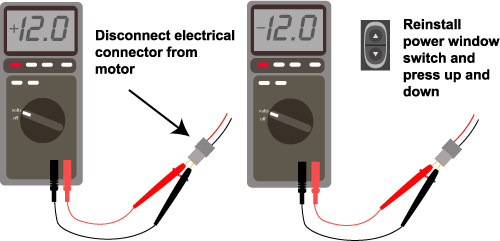
To test for power and ground, disconnect the electrical connector from the motor in question and reconnect the window switch assembly from the door trim panel to the window wiring connector. Set your multimeter to volts. Connect the red and black probes to the two wires on the connector you just removed. Then turn the ignition key to the RUN position. Toggle the window switch up and down. If the meter reading toggles between +12 volts and -12volts, the switch is good. The motor is getting power, and so the problem lies in the window regulator/motor assembly.
When Testing Tells You to Replace a Power Window Motor
If you test a power window motor and see proper voltage but the motor doesn’t move—or only works intermittently—you’re dealing with mechanical failure. That’s when it’s time to replace a power window motor. However, this is where experience really matters.
In most cases, the motor didn’t fail on its own. It failed because it was overworked. Binding window channels, frayed regulator cables, or broken sash clips dramatically increase the load. Replacing only the motor without addressing the regulator usually results in repeated failures.
That’s why I almost always recommend replacing the entire regulator and motor assembly, not just the motor. Yes, it costs more up front—but it prevents redoing the job.
If you truly want a permanent repair, replace a power window motor only when it comes pre-installed on a new regulator.
Power window regulator warning
This guide pertains to cable-operated window regulators. If your vehicle has a scissor-style, you must lock the spring in place before removing the regulator. Failure to do so may result in injury. Consult a shop manual for instructions on replacing a non-cable-actuated regulator.
Removing the Glass Without Breaking It (or Yourself)
Before removing the regulator, the glass must be disconnected and secured. I always raise the glass to the top and hold it in place with shipping tape run over the door frame. Masking tape won’t hold—use shipping tape, but protect the paint with a strip of paper underneath.
If the regulator has failed in a way that blocks access to the sash clips, I cut the regulator cables while physically holding the glass. That instantly releases tension and prevents sudden movement.
Removing the glass from the door opening takes a little finesse, but once you’ve done it once, it makes sense. Tilt, lift, and rotate—never force it.
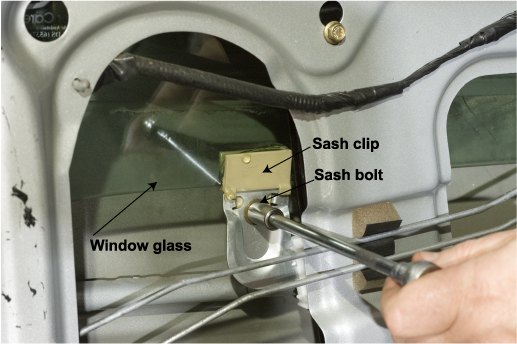
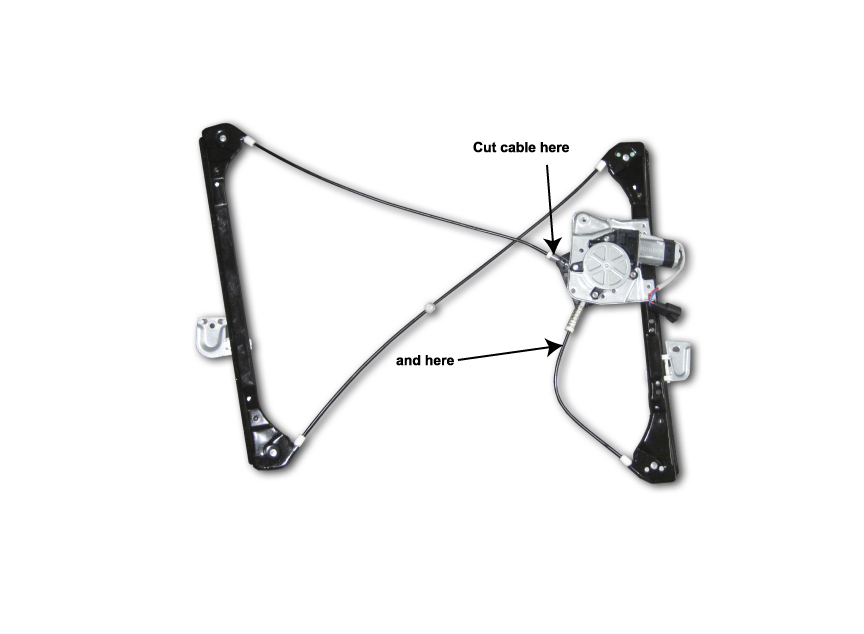
TIP: Attach shipping tape to the outside of the glass and run the tape around the top of the door and attach to the inside of the glass to hold the window up while you work on the regulator. But slip a piece of paper under the tape to prevent it from sticking to painted surfaces. That will make clean-up a lot easier and protect your paint.
TIP #2: If you have to remove the glass from the door to replace the sash clip, simply tilt the front edge (hinge side) of the glass down into the channel. Lift the left hand (jamb side) out of the window channel and raise it up. Then lift the hinge side of the glass up and out. Reverse to install.
Remove Arm Rest Strut
You won’t be able to remove the cable tracks without first removing the armrest strut on this 2002 Oldsmobile Alero. (Other makes and models may or may not have this type of obstacle) Removing the strut will give you an opening large enough to maneuver the tracks out. Remove nuts 1, 2, & 3, then remove the strut.
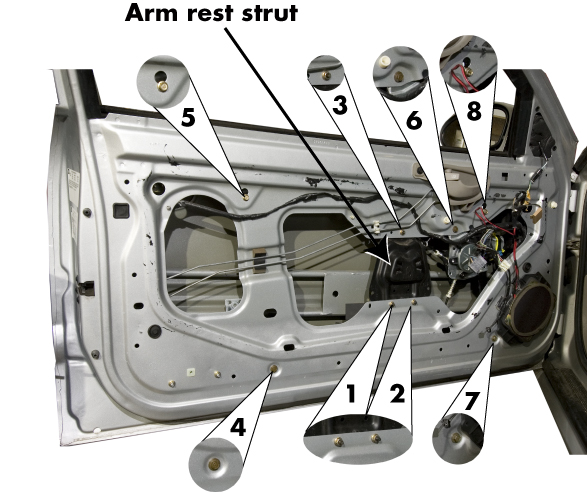
Remove the left cable track
Remove bolt #4 and loosen bolt #5. Then slide the track up and pull the upper bolt out of the keyhole. Twist the track until it’s horizontal, then pull it through the opening. See photo below.
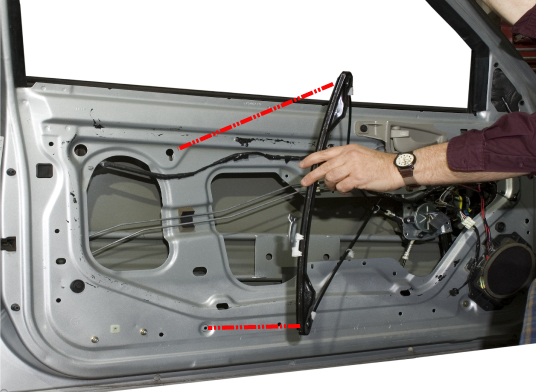
Remove the right side track and motor
Make sure you disconnect the electrical connector from the motor. Then remove bolts #6 and #7 and loosen bolt #8. Slide the track up and pull the upper bolt out of the keyhole. Twist the track and motor so it’s horizontal and pull it through the opening.
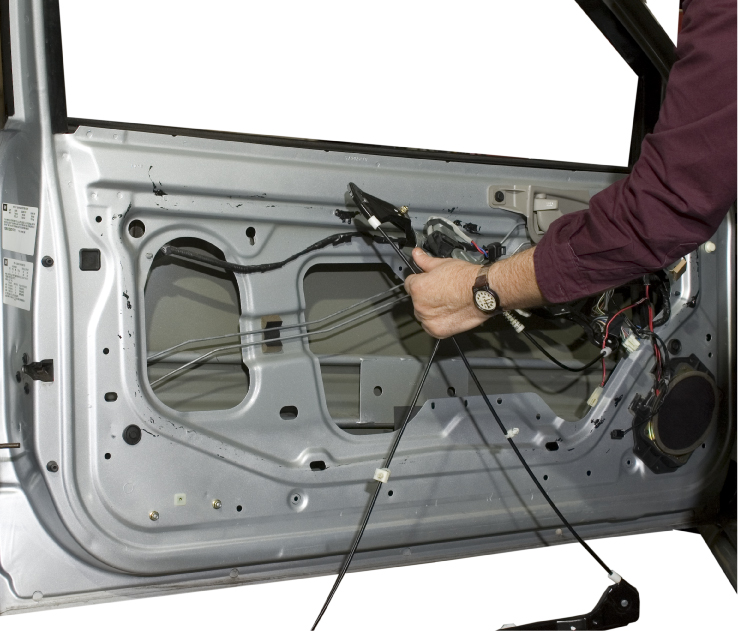
Check the condition of the sash clips and install new ones if broken
Some car makers have a high failure rate on their plastic sash clips. Often that’s all that’s wrong with your power window. You can replace these clips yourself. Buy replacement door glass attaching clips from www.rockauto.com. Spread an old blanket on your workbench or the trunk of your car and lay out the window to work on it.
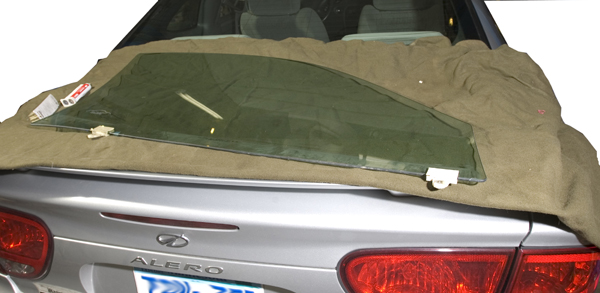
Remove the broken sash clip and glue a new one in place.
Mark each side of the broken clip with tape to position the new guide precisely. Warm the clip with a hair dryer (NOT a heat gun—you’ll crack the glass). Then break off the old clip using a sharp chisel and a small hammer. Be gentle! Don’t scratch the glass or you’ll be buying a new window. If you can’t get all the old adhesive off, don’t worry. The new epoxy will bond to it. Note the position of the threaded portion of the old clip, and install the new clip in the same orientation. Buy the proper epoxy adhesive (3M #08641) from an auto body supplier or the dealer. Squeeze out equal portions, mix, and apply to the inside of the sash clip. Install the clip onto the glass and wait for the recommended curing time before installing the glass in the door.
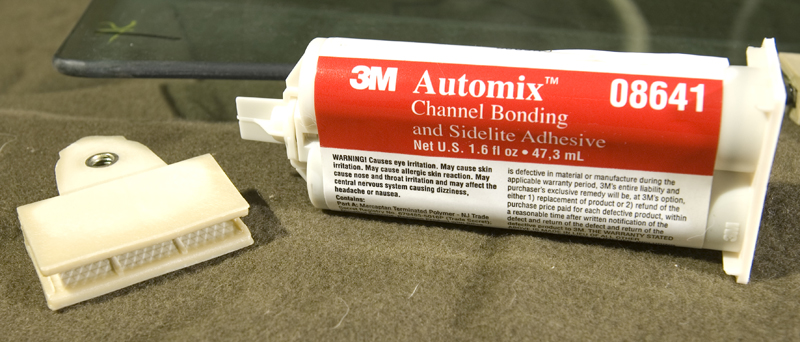
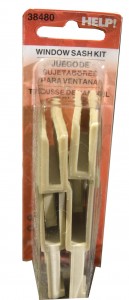
Dorman 38480 window sash kit
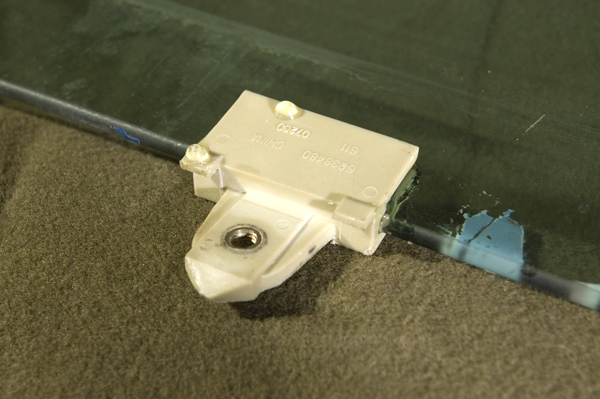
New sash guide installed on the glass
Why Sash Clips Matter More Than You Think
Plastic sash clips are a known weak point on many vehicles. I’ve seen countless “bad motor” diagnoses turn out to be nothing more than broken door glass attaching clips.
If the clips are damaged, replace them before installing the new regulator. Proper epoxy and correct positioning are critical here. I always mark the original clip location before removal so the new one goes back exactly where it belongs.
Skipping this step shortens the life of the new regulator and increases motor load—exactly what you’re trying to avoid.
Reassemble
Reassembly and the Step Most People Forget
Once the new regulator is in place, I always lubricate the glass channels with silicone or dry Teflon spray. This reduces drag, lowers motor current draw, and dramatically extends regulator life.
© 2012 Rick Muscoplat
Posted on by Rick Muscoplat