
AGM Versus Gel Battery: The Differences
AGM Battery vs Gel Battery: Why They Are Not Interchangeable
Quick Summary
An AGM battery uses a liquid electrolyte absorbed into fiberglass mats and is ideal for automotive starting and start/stop systems. A gel battery, on the other hand, suspends its electrolyte in silica gel, making it better for slow-discharge, standby applications—not engine starting. Despite the myths, spiral-wound batteries like Optima are AGM, not gel. Choosing the wrong type can shorten battery life or cause charging damage.
Article
AGM Versus Gel Battery: Why This Confusion Still Exists
I’ve lost count of how many times I’ve heard someone say, “I’ve got a gel battery in my car,” when what they actually have is an AGM battery. The misunderstanding isn’t accidental—battery marketing hasn’t helped. Once spiral-wound AGM batteries hit the market, people assumed that because they weren’t flooded, they must be a gel battery. They’re not.
Understanding the real differences between an AGM versus gel battery matters more today than ever, especially as automakers continue to rely on advanced electrical systems, start/stop technology, and battery monitoring systems that demand very specific battery behavior.
What an AGM Battery Really Is—and Why Carmakers Use It
An AGM battery, short for Absorbent Glass Mat battery, is still a lead-acid battery at heart. The difference is how the electrolyte is managed. Instead of sloshing freely around the plates like a flooded battery, the sulfuric acid is absorbed into tightly packed fiberglass mats that sit between the plates.
That design allows an AGM battery to deliver extremely high current very quickly. That’s the entire reason carmakers favor AGM technology. Modern vehicles require massive bursts of power for starting, immediate recharge capability for start/stop events, electric power steering, brake-by-wire systems, and dozens of control modules that never fully shut off.
Another critical feature of an AGM battery is its recombination capability. During charging, oxygen and hydrogen are recombined internally into water with an efficiency of over 99%. That’s why AGM batteries are sealed, spill-proof, and often referred to as “dry cell,” even though they absolutely still contain liquid electrolyte.
In real-world use, an AGM battery tolerates vibration better, charges faster, holds voltage more consistently under load, and performs better in cold weather than a traditional flooded battery. Those advantages are exactly why AGM has become the default choice in late-model vehicles.
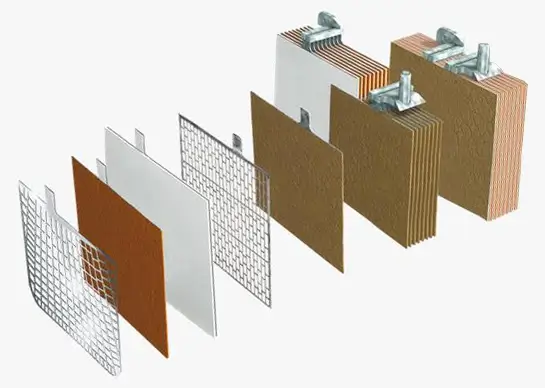
Notice the absorbent fiberglass mats between plates and separators.
Now for the downsides of an AGM battery
• Easily damaged— AGM batteries can be easily and permanently damaged if overcharged or charged with a traditional battery charger. You MUST use a charger specifically built to charge these types of batteries.
• They’re more sensitive to heat— Sitting in extremely high underhood engine temps is what does them in. AGM batteries are even more sensitive to heat than flooded batteries. That’s why more car makers are installing these batteries in locations away from the engine compartment.
• They cost more— They’re much more expensive than traditional flooded lead-acid batteries. In late 2023, a group of 35 lead-acid batteries sold for $184 at Batteries Plus stores. The same battery size in an AGM runs $259.
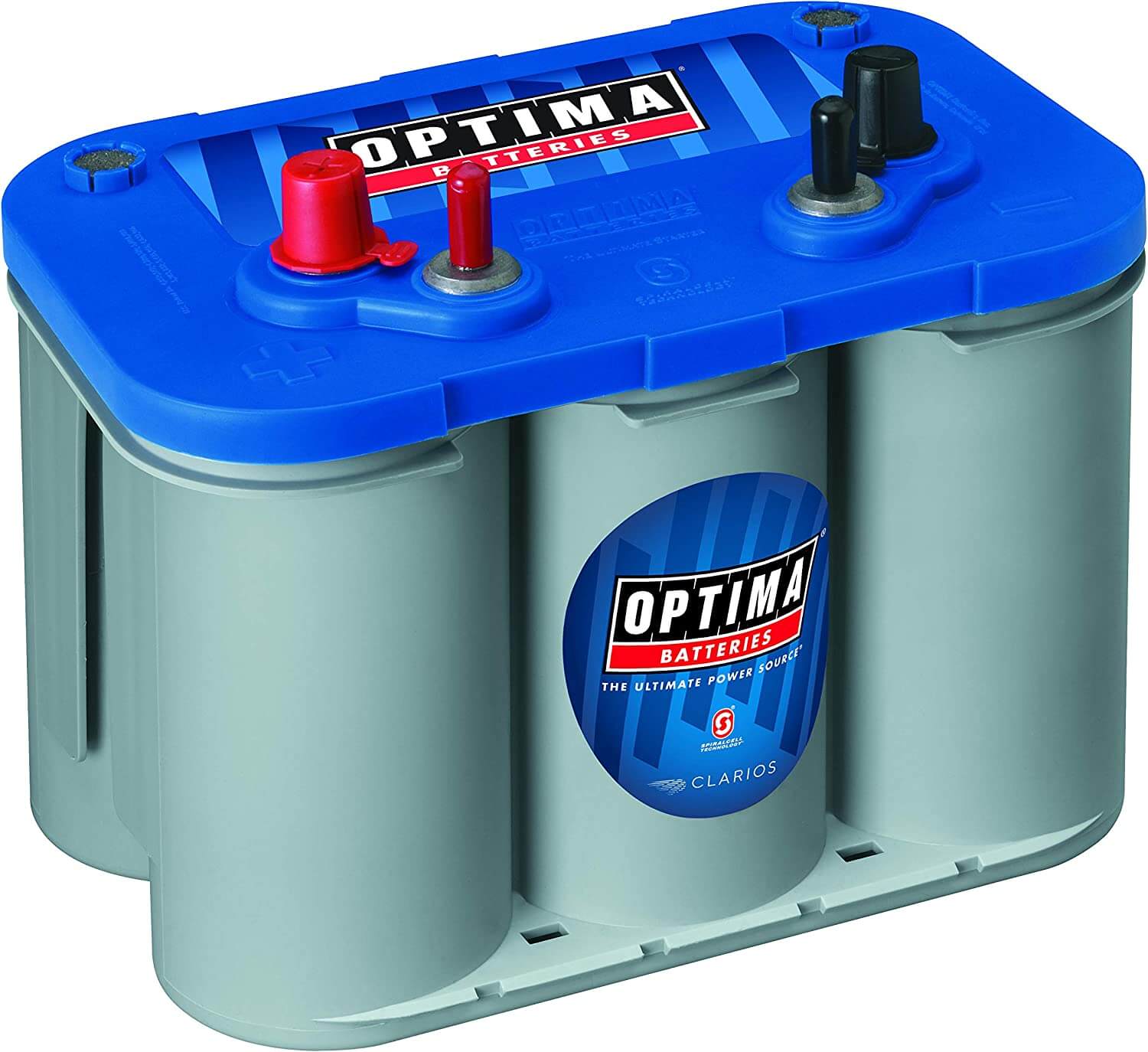
An Optima battery is not a gel cell. It is an absorbed glass mat battery (AGM). It uses a liquid electrolyte, not a gel
The Truth About Heat, Chargers, and AGM Battery Failure
Here’s the part I always emphasize: an AGM battery is not forgiving. Overcharging one—even once—can permanently damage it. A charging voltage that would be harmless to a flooded battery can warp the plates and dry out the mats in an AGM battery.
Heat is another silent killer. I’ve seen plenty of AGM batteries fail early simply because they were mounted in high-temperature engine compartments. That’s why many manufacturers now relocate the AGM battery to the trunk or under a seat, where the temperature is more stable.
This sensitivity doesn’t mean AGM technology is fragile—it just means it’s precise. When properly charged and kept cool, an AGM battery typically lasts four to eight years in automotive service.
Why an Optima Battery Is Not a Gel Battery
Let’s clear this up once and for all. Optima batteries are not gel batteries. They are spiral-wound AGM batteries that use liquid electrolyte absorbed into glass mats. The spiral design improves vibration resistance and current flow, but the chemistry is still AGM.
A true gel battery would be a terrible choice for engine starting. It cannot deliver the high instantaneous current required by modern starters. If you tried to use a gel battery as a starting battery, you’d quickly learn why automakers don’t do it.
What a Gel Battery Is Designed to Do
A gel battery also uses lead plates, but the electrolyte is mixed with silica to create a thick, gel-like substance. That gel completely immobilizes
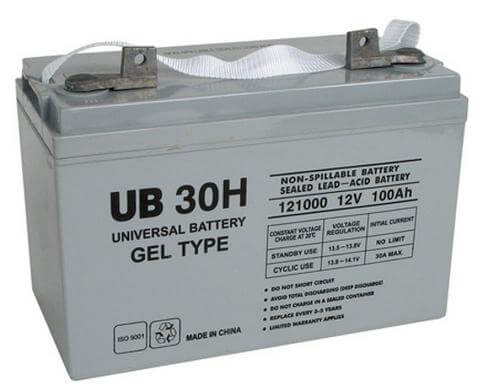
A gel cell battery would never work well as a starting battery in a car
, as the acid makes the battery extremely stable and resistant to leakage.
The trade-off is current delivery. A gel battery excels at slow, steady discharge and deep cycling, not rapid high-amp output. That’s why gel batteries are commonly found in uninterruptible power supplies, medical equipment, mobility devices, and standby power systems.
When people ask me about AGM versus gel battery applications, I point to this dividing line: starting power versus endurance power.
AGM Versus Gel Battery: How They Truly Compare in Real Use
When you put an AGM versus a gel battery side by side, the design priorities become obvious. An AGM battery can be discharged and recharged at a much higher rate, which is why it dominates automotive use. A gel battery prefers slower charge and discharge cycles, and pushing it too hard dramatically shortens its life.
Cost is another difference people don’t expect. A gel battery typically costs more than an AGM battery of similar capacity, largely because of its niche applications and tighter manufacturing tolerances. Weight also matters—gel batteries tend to be heavier, making them impractical for vehicles where every pound counts.
Longevity is where the gel battery shines. In a properly managed standby system, a gel battery can outlast an AGM battery by years. That longevity is meaningless in a car, though, where high current demands would quickly overwhelm it.
Temperature tolerance is another separator. AGM batteries operate reliably across a wider temperature range, while gel batteries are more easily damaged by both heat and extreme cold.
Choosing Between AGM Versus Gel Battery the Right Way
Whenever someone asks me which is “better” in the AGM versus gel battery debate, my answer is always the same: better for what? If you’re powering a modern vehicle, the answer is always an AGM battery. If you’re protecting sensitive electronics during a power outage, a gel battery may be the better choice.
The mistake happens when people treat these batteries as interchangeable. They’re not. Different internal resistance, different charging requirements, and completely different performance profiles mean the wrong choice can cost you money fast.
Final Thoughts From the Shop Floor
I’ve tested, charged, replaced, and autopsied more failed batteries than most people will ever see. The confusion around AGM versus gel battery technology persists because they look similar on the outside but behave very differently inside.
An AGM battery is a high-performance starting powerhouse that demands proper charging and heat management. A gel battery is a long-life, high-capacity battery built for steady, predictable loads. Once you understand that distinction, choosing the right battery becomes simple—and costly mistakes disappear.
©, 2014 Rick Muscoplat
Posted on by Rick Muscoplat