
Are Oil Additives Worth It? The Truth Every Car Owner Needs
Why Most Additives Are Marketing Hype
Quick Summary
Most oil additives and motor oil additives are unnecessary for modern engines because today’s motor oils are already highly engineered with complete additive packages. Some oil additives can provide limited benefits in very specific situations—such as high-mileage engines or temporary noise reduction. But others are at best redundant and at worst harmful. The wrong motor oil additives can disrupt the carefully balanced chemistry of engine oil, leading to sludge, seal damage, or reduced lubrication performance. Bottom line: Use quality oil and change it on time, and you’ll almost never need extra additives.
Article
Are Oil Additives Worth It? The Truth From a Technician Who’s Seen the Damage
I’ve been working on engines long enough to remember when oil additives were more common—and sometimes even necessary. Back then, base oils weren’t nearly as advanced as they are today, and adding a bottle of something extra could actually make a difference. But today? The story is very different.
Modern engine oil already contains a carefully engineered blend of detergents, dispersants, anti-wear agents, friction modifiers, and viscosity stabilizers. In other words, your oil already is a package of motor oil additives. When you pour in an aftermarket product, you’re not “improving” the oil—you’re altering a chemical formula that was designed by engineers and chemists after thousands of hours of testing.
That’s where things start to go wrong.
What’s Already in Your Motor Oil (And Why It Matters)
Every quart of oil you pour into your engine contains a balanced additive package. These built-in motor oil additives include:
• Detergents to keep sludge and varnish from forming on metal parts
• Dispersants to suspend contaminants so they can be captured by the oil filter
• Anti-wear components
• Friction modifiers for efficiency
• Anti-oxidants to prevent breakdown
The key here is balance. Too much of one additive can reduce the effectiveness of another. When you add aftermarket oil additives, you’re throwing off that balance.
I’ve torn down engines where excessive additives caused varnish buildup, clogged oil passages, and even lifter failure. And in almost every case, the owner thought they were “helping” the engine.
When Motor Oil Additives Might Actually Help
There are a few situations where off-the-shelf additives can provide some benefit.
In high-mileage engines with minor seal leaks, certain seal-conditioning motor oil additives can slow down seepage. I’ve also seen thicker additives temporarily quiet noisy hydraulic lifters.
In flat-tappet engines—especially older or classic engines—extra ZDDP additives can be useful if the oil you’re using doesn’t contain enough anti-wear protection.
But notice the pattern: these are niche situations. Not daily-driver, modern-engine scenarios.
When Oil Additives Can Cause Real Harm
This is the part most people don’t hear about—and it’s where I’ve seen the most damage.
Some motor oil additives can:
• Over-thicken oil, reducing flow on cold starts
• Foam under high RPM conditions
• Attack seals instead of protecting them
• Interfere with catalytic converters
• Reduce the effectiveness of detergents and dispersants
One Quart In, One Quart Out
This is the part where you have to use some logic. Most engines are designed to run on 4.5 quarts of oil. If you fill your engine with 4.5 quarts and then add a quart of additive, you’re overfilled, and that can cause foaming and engine damage. However, if you only add 3.5 quarts and then 1 quart of additive, your engine is running on too little oil. Additives aren’t a lubricant. In other words, by adding a quart of additive, you’re wearing out the remaining oil at least 25% faster.
The Truth About Oil Stabilizer Products Sold at Auto Parts Stores
Oil stabilizers occupy prime retail space in every AutoZone, O’Reilly, and NAPA store in the country, and their bold label promises — “reduce wear by 50%,” “stop leaks,” “silence noisy engines” — are hard to ignore when you’re staring down a high-mileage vehicle with a ticking lifter. But before you pour that quart of amber gel into your crankcase, it’s worth understanding exactly what an oil stabilizer is, what’s inside the bottle, and what the engineering community actually thinks about these products.
The short answer is that oil stabilizers are not snake oil, but they are also not magic — and for the majority of modern vehicles, they are a solution in search of a problem.
So what exactly is an oil stabilizer? At its core, nearly every major oil stabilizer product on the market is a high-viscosity base oil blended with a package of additives — typically zinc dialkyldithiophosphate (ZDDP), extreme-pressure (EP) agents, seal conditioners, and viscosity index improvers.
ZDDP is the real workhorse here: it’s an anti-wear compound that coats metal surfaces under high heat and pressure, and it was phased out of modern motor oils after 2010 because it can damage catalytic converters. Older vehicles with flat-tappet camshafts — think pre-1990 muscle cars and classic trucks — genuinely benefit from the elevated ZDDP levels that a quality oil stabilizer delivers.
The seal conditioners, usually a blend of esters and aromatic hydrocarbons, swell and soften hardened rubber seals, which is why oil stabilizers are legitimately effective at slowing minor seepage around valve cover gaskets and rear main seals in aged engines.
The marketing, however, tends to dramatically oversell what an oil stabilizer can do. Claims that these products will “stop engine wear” or “add 50,000 miles to your engine” are not supported by independent, peer-reviewed testing. What independent dyno and fleet testing does generally show is that an oil stabilizer can measurably reduce metal-on-metal friction in engines with worn clearances — the kind of tolerance slop you find in an engine north of 150,000 miles running conventional oil.
In a brand-new engine, or any engine running a premium full-synthetic oil already loaded with a robust additive package, adding an oil stabilizer is redundant at best and potentially counterproductive at worst, since it alters the carefully engineered viscosity rating of your oil. The bottom line for the average driver: if your engine is relatively new and well-maintained, skip the oil stabilizer and invest that $10 in sticking to your oil change schedule.
The downsides of using an oil stabilizer
Better resistance to cold start wear at the expense of higher overall engine wear
An oil stabilizer is essentially a bottle of viscosity index improver (VII). These additives are very thick, so they cling to engine parts and don’t drain back into the crankcase as readily as normal engine oil, which is much lower in viscosity. Because they adhere to engine parts, they can reduce cold-start wear. But they also impair the oil’s cold flowability. In other words, while they reduce cold start engine wear, they increase engine wear because the oil can’t flow as well. Worse yet, they’re not a lubricant. So adding a quart of stabilizer and reducing a quart of oil leaves you with less lubrication.
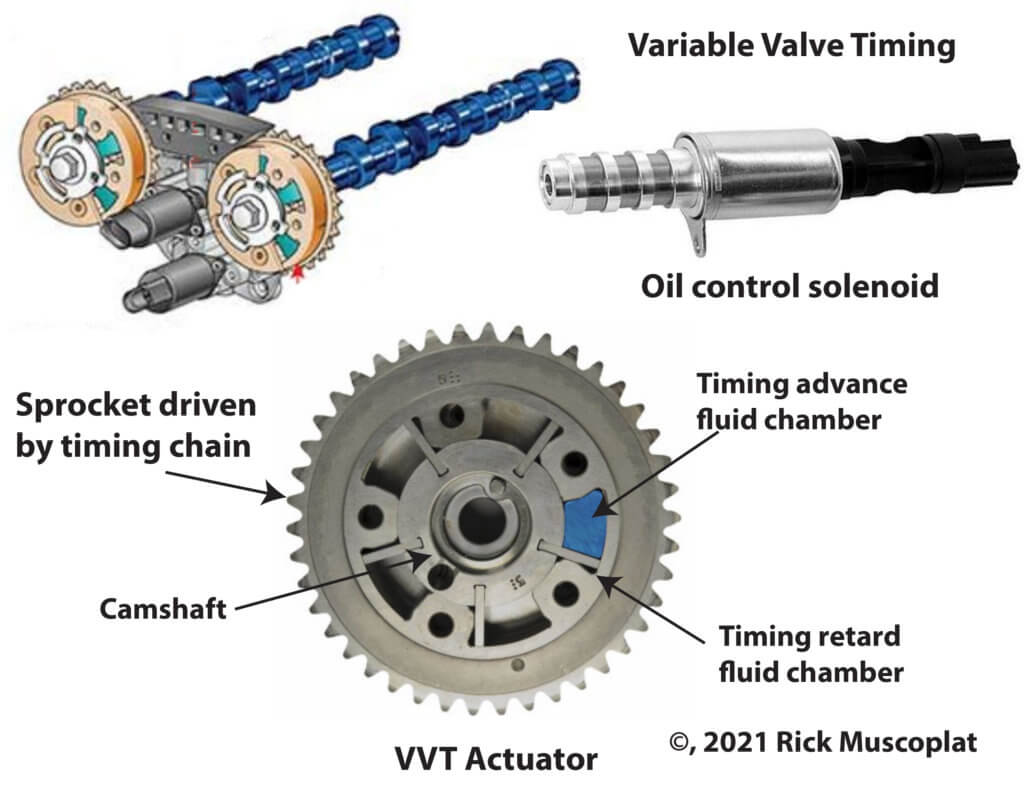
Increased viscosity interferes with variable valve timing (VVT) systems
VVT systems vary camshaft timing by pulsing oil pressure into the VVT actuator or, in the Honda VTEC system, by altering the valve lift. The VVT systems require the recommended oil viscosity. If you alter the oil viscosity, the VVT system won’t work properly and will set a check engine light and trouble codes. Oil stabilizer products interfere with VVT operation.
Anti-wear additives
Modern oils have advanced anti-wear additives like molybdenum. They do not require supplemental anti-wear additives, with one exception: on engines built before the early ’80’s. Those engines were built with high-friction flat tappet lifters, so they need a boost of anti-wear additive with ZDDP (zinc dialkyl dithio phosphate). Supplemental ZDDP additives cost less than $15 a bottle. Shop for brands like ZDDP Plus or Hy-Per Lube Zinc. However, DO NOT USE ZDDP additives in a post-’80s engine—extra ZDDP can damage your catalytic converter.
Engine restorer oil additives
If you’re hoping to restore your worn engine to a “like new” condition with a restorative additive, you should instead put your money into lottery tickets because you’ll have a better chance of seeing a return on your investment. Engine oil restoration products promise to restore your engine by depositing microscopic metal particles onto the cylinder walls to rebuild compression. On some YouTube channels, amateur testers use the product and compare before-and-after compression readings, purportedly showing how effectively the product increases compression. But these effects are not long-lasting. If they were, you wouldn’t need to re-treat the engine.
Crankcase cleaners
Pour-in crankcase cleaners are supposed to remove sludge and carbon deposits from your engine. These are basically petroleum solvents that dissolve sludge. However, if your engine has sludge deposits due to neglect, the damage is already done. Removing the sludge won’t restore the lost metal. Worse yet, solvent cleaners can dislodge large portions of sludge that can clog oil galleries, causing oil starvation and complete engine failure.
If you want to clean your engine safely, increase oil change frequency.
Final Verdict: Are Motor Oil Additives Worth It?
In my professional opinion, most oil additives are unnecessary for modern engines and can sometimes do more harm than good. While certain motor oil additives may offer limited benefits in specific situations, they are not a substitute for proper maintenance or mechanical repair.
If your engine is healthy, adding anything beyond quality oil is usually a waste of money. If your engine has problems, additives won’t fix them.
©, 2021 Rick Muscoplat
Posted on by Rick Muscoplat