
Can You Patch a Tire Shoulder Puncture?
Why You Can’t Fix a Tire Shoulder Puncture
If you’ve ever discovered a nail or screw near the edge of your tire or the sidewall, you may have wondered if it can be patched. The short answer is no—and there’s a very good reason why. In this article, I’ll explain why you can’t fix a tire shoulder puncture or a sidewall puncture, and why most reputable tire shops won’t even attempt it.
The Tire Repair Zone Is Limited for a Reason
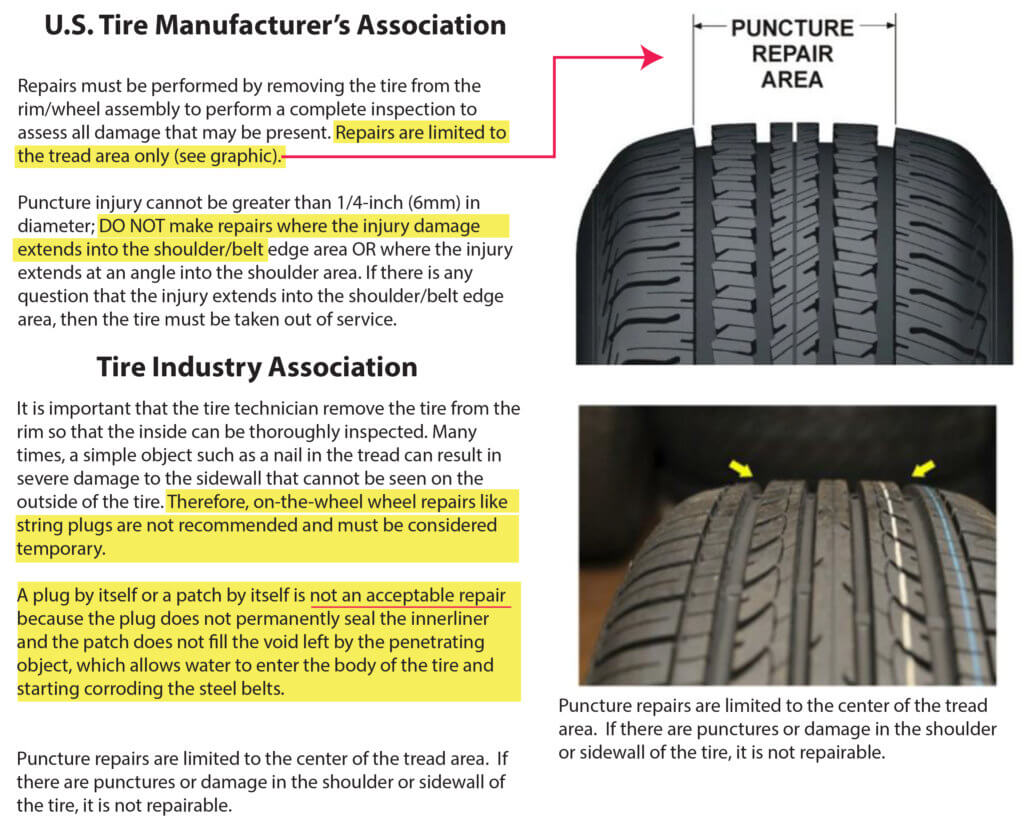
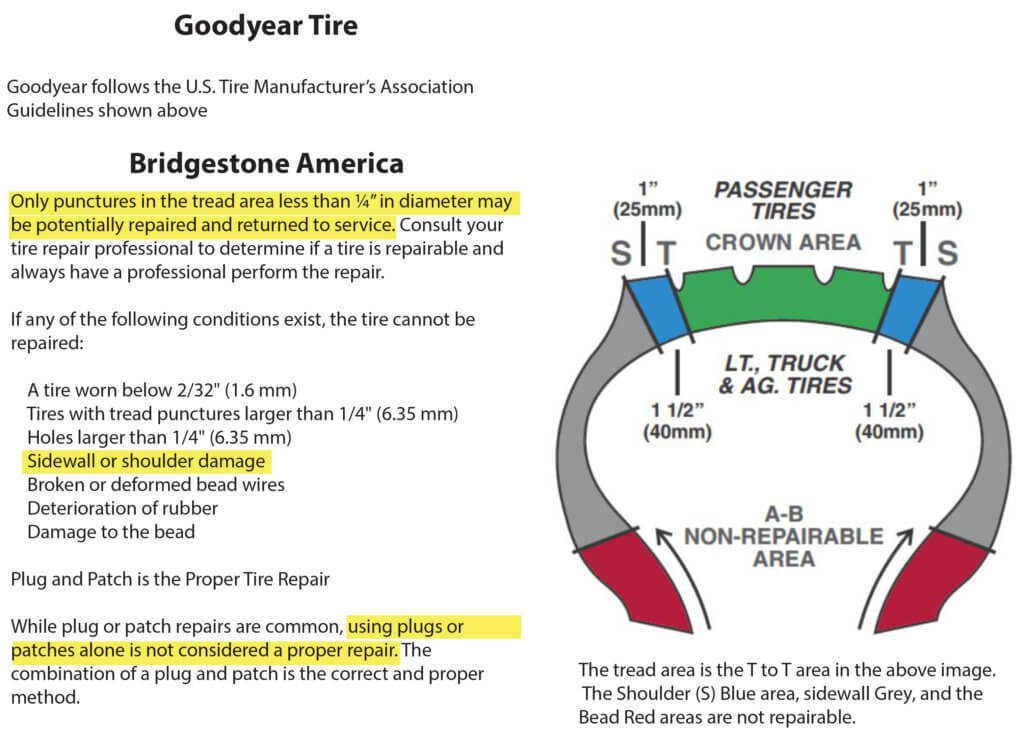
Tire manufacturers and industry experts agree on one thing: only the tread area—specifically the central crown portion—can be safely repaired. That’s where the internal steel belts provide the structure needed to support a proper patch or patch-plug combo. When people ask why you can’t fix a tire shoulder puncture or a sidewall puncture, the answer lies in tire construction.
The sidewall and shoulder areas lack that same internal reinforcement. The steel belts end before those zones, leaving the rubber to flex and absorb road impact on its own. That constant flexing generates heat and weakens the area around a repair, making it prone to failure.

Why You Can’t Trust a Plug in the Tire Shoulder or Sidewall
Even if a puncture seems small and the tire isn’t losing air quickly, you can’t fix a tire shoulder puncture or a sidewall puncture using a string or rope plug. These types of repairs may seem convenient, but they don’t address hidden internal damage or provide the structural integrity needed for long-term safety.
String plugs don’t bond well in areas with thinner or more flexible rubber, like the shoulder or sidewall. Over time, the constant pressure from tire inflation—often around 35 psi or more—can force the plug out, especially when hitting bumps or potholes.
Can You Just Ignore the Rules and Plug It Anyway?
Some drivers argue that everyone plugs tires, and “it works fine.” But if you ask a professional tire technician why you can’t fix a tire shoulder puncture or a sidewall puncture, they’ll tell you: it’s not just about holding air—it’s about ensuring your tire performs safely under all conditions.
Patching or plugging these areas without proper inspection and reinforcement can result in a sudden blowout, loss of control, and even a crash.
The Correct Way to Repair a Tire
When a puncture occurs in the repairable tread area, the proper method involves removing the tire from the rim, inspecting it internally, buffing the liner, and applying a patch-plug combination from the inside. This ensures both a physical seal and a strong bond, backed by internal support from the tire’s belts.
But again, this process only applies to the tread, not the sidewall or shoulder. That’s why you can’t fix a tire shoulder puncture or a sidewall puncture—those areas simply don’t have the structural reinforcement to make the repair safe or permanent.
Answers to the most common tire repair questions
Can you repair a puncture in the tire shoulder area?
No. According to the tire repair guidelines published by the U.S. Tire Manufacturer’s Association, the Tire Industry Association, and most tire manufacturers, punctures can only be repaired in the tread/crown area. That excludes punctures in the tire shoulder, sidewall and bead areas.
Can you repair a puncture using a string or rope plug?
No. A plug is a temporary repair. It is unsafe to drive for long periods on a plugged tire. A proper repair requires removing the tire from the wheel to inspect for internal damage. Then it requires buffing the punctured liner so it can accept and adhere to a combination patch plug.
Everybody plugs tires, and they work fine. Isn’t the industry just trying to sell repair services and new tires?
No. If you plug a tire without dismounting it, you don’t know the damage that may have occurred inside the tire
Think about the stresses on a plug-only repair. Because you haven’t removed the tire from the wheel, you have no idea what kind of internal damage exists inside the tire. If the liner puncture has a ragged edge. that will make it much harder for the plug and adhesive to bond. The same applies if there’s debris surrounding the puncture.
Plug-only repairs aren’t designed to handle the stress
If you skip the patch, you’re subjecting the plug to constant pressure; the 35-ish inflation pressure plus the added pressure when you hit an object or pothole. In simple terms, the air pressure inside the tire is constantly trying to “spit” the plug out.
When you perform a proper tire repair with a patch plug, the patch prevents tire pressure from exerting any outward force on the plug portion.
©, 2022 Rick Muscoplat
Posted on by Rick Muscoplat