
Can You Repair Tire Sidewall Damage?
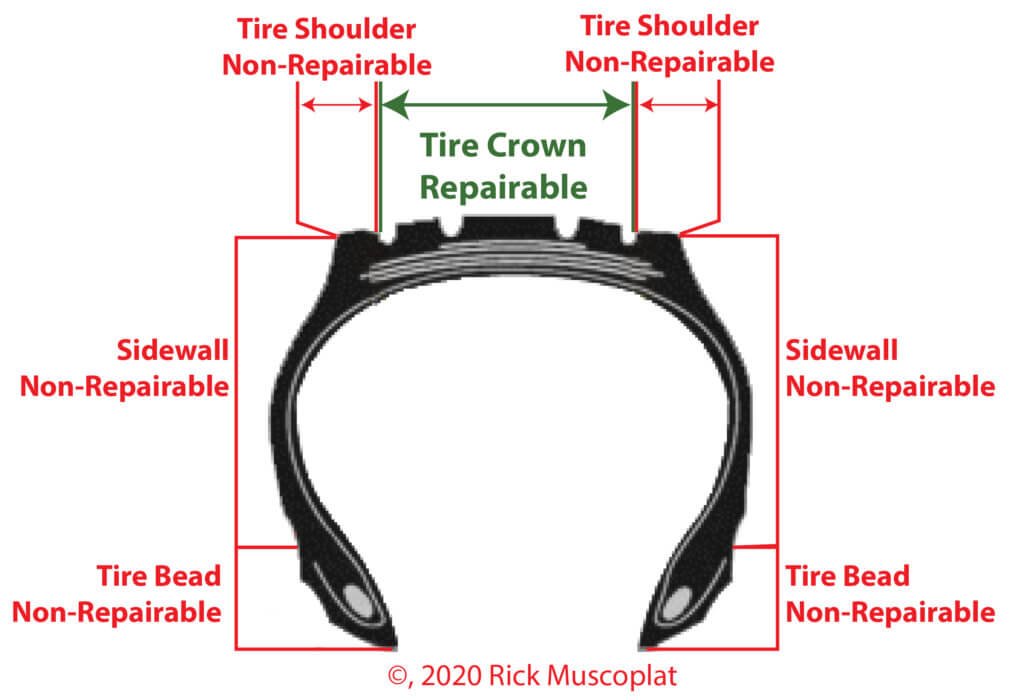
Tire Shoulder Damage vs Sidewall Damage Explained
Quick Summary
I get asked about tire sidewall repair constantly, especially after someone scrapes a curb or picks up a nail near the edge of the tread. Here’s the short answer: true sidewall damage cannot be repaired safely in almost all cases. The sidewall flexes constantly while driving, which makes plugs and patches unreliable and dangerous in that area. The shoulder area of the tire—the transition between the tread and sidewall—is also generally considered non-repairable by major tire manufacturers and tire industry standards. Only punctures located in the center tread area are considered safely repairable using an internal patch/plug combination.
Understanding the Difference Between the Tire Sidewall and Shoulder
One reason there’s so much confusion about tire sidewall repair is that many drivers don’t understand where the sidewall actually begins.
I always explain it this way:
• The Tread Area is the flat section that directly contacts the road.
• The Shoulder Area is the rounded transition area between the tread and the sidewall.
• The Sidewall is the vertical section below the shoulder that flexes continuously as the tire rolls.
That distinction matters because the shoulder and sidewall experience much more flex and heat than the center tread area.
The anatomy of a tire

Why Tire Sidewall Repair Is Always Unsafe
Over the years, I’ve seen people try:
• Rope plugs
• Tire slime
• Rubber cement
• Sidewall patches
• Gluing sidewall flaps
None of those are considered safe permanent repairs.
The reason is simple: the sidewall is one of the most structurally stressed parts of the tire.
Every time the tire rotates:
• The sidewall flexes
• The cords stretch
• Heat builds up
• Internal stress increases
A repair in that area can eventually fail without warning. According to tire industry standards, you cannot safely plug a sidewall puncture.
So no, it’s not safe to plug a sidewall puncture.
Can You Repair a Shoulder Puncture?
This is where many debates start online. Technically, the shoulder isn’t the sidewall. However, most tire manufacturers and tire repair guidelines still consider the shoulder area non-repairable.
Why?
Because the shoulder:
• Carries extreme cornering loads
• Generates significant heat
• Flexes far more than the center tread
I’ve seen shoulder repairs hold temporarily, but I would never recommend one for long-term highway use. If a puncture is too close to the edge of the tread blocks, most reputable tire shops will refuse to repair it.
What Types of Tire Damage Are Repairable?
A safe tire repair must meet several conditions.
Generally Repairable
• Small punctures in the center tread
• Nail or screw holes under 1/4-inch
• No internal belt damage
• No sidewall cracking or bulging
Usually NOT Repairable
• Sidewall punctures
• Shoulder punctures
• Large cuts
• Bulges or bubbles
• Exposed cords
• Run-flat damage after driving flat
One thing many people don’t realize is that internal tire damage can be present even when the exterior looks minor.
Why tire plugs aren’t safe
I’ve removed hundreds of failed rope plugs over the years. A simple external plug does not properly seal:
• The inner liner
• The steel belts
• The puncture channel
When moisture enters the steel belts, corrosion begins internally.
That corrosion weakens the tire structure and can eventually lead to tread separation.
A plug can’t seal the inner liner
A rope plug, inserted from the outside, cannot seal the inner liner. During a proper repair, the inner liner is cleaned and abraded with a buffing tool to prepare the surface for a vulcanizing patch. A double-over rope plug, covered with rubber cement and shoved into the tire from the outside, cannot seal the inner liner as well as a patch.
A plug doesn’t properly seal the belts
When you fold a rope plug in half and shove it into the tire, you’re actually forcing a “figure-8” profile into the puncture. That always leaves voids, and it’s those voids that allow water to enter the belts, causing them to corrode. Once corrosion starts, the belts are compromised.
Only a combo patch/plug can do the job
A patch plug, properly installed, seals the inner liner,
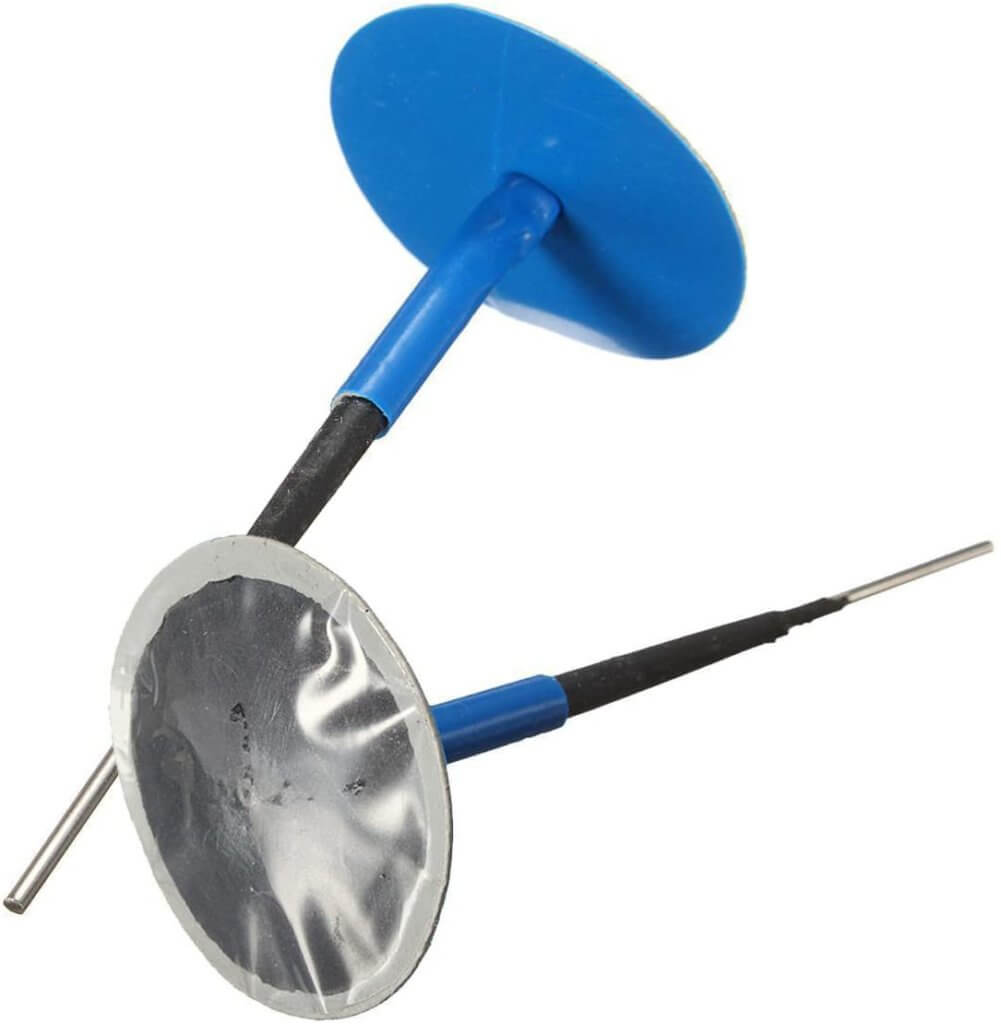
A proper patch/plug must be inserted from inside the tire, after the inner liner has been prepared
fills the belt area completely and seals out water.
The Correct Way to Repair a Tire
The only repair I trust is an internal patch/plug combination installed from inside the tire.
Proper Tire Repair Procedure
1) Remove the tire from the wheel
2) Inspect the interior
3) Buff the inner liner
4) Install a patch/plug combo
5) Seal the puncture path
6) Rebalance the tire
This type of repair seals:
• inner liner
• The puncture channel
• The steel belt area
That’s why tire industry organizations recommend combination repairs instead of simple plugs.
Common Signs Tire Damage Is Dangerous
I always tell drivers to replace the tire immediately if they notice:
• A sidewall bubble
• Visible cords
• Deep sidewall cuts
• Cracks around the bead
• Repeated air loss
• Vibration after impact damage
A sidewall bulge is especially dangerous because it usually means the internal cords have already failed.
My Professional Advice on Tire Sidewall Repair
After decades in the automotive industry, my rule is simple:
If the damage is in the sidewall or shoulder area, replace the tire.
Yes, replacement costs more upfront, but a tire failure at highway speed can destroy a vehicle or cause a serious crash.
Tires are one area where cutting corners simply isn’t worth the risk.
©, 2020 Rick Muscoplat
Posted on by Rick Muscoplat