
Car Tips For Car Owners to prevent unnecessary repairs
Car tips to keep your car in tip-top shape
Auto repair shops see a lot of avoidable repairs, like engine damage caused by not changing oil or fluids on time or owners not paying attention to other recommended maintenance items. If you really want to save money, and maintain your car in tip-top shape, follow these top 10 car tips.
Car tip #1: Check the oil dipstick once a month and top off when needed
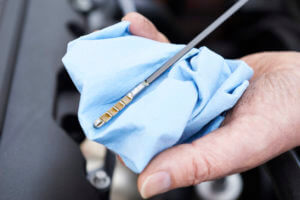
Check your oil level once a month and top off when needed
Your car probably has an oil life monitor that tells you when to change oil. BUT, the system assumes you’ve used the recommended oil AND you regularly check the dipstick and top off the oil when needed. Most drivers NEVER check the oil level on the dipstick, let alone top it off and that’s a HUGE problem.
If you drive when you’re low on oil, even just a quart low, you stress the remaining oil and dramatically reducing its useful life.
Here’s an example: Let’s assume the oil change interval for your car is every 7,500 miles. If you lose one quart of oil in the first 3.000 miles and don’t replenish it, you deplete the anti-wear and anti-corrosion additives in the remaining oil by about 25%. At that rate, you’ll need the next oil change at 5,600 miles instead of the normal 7,500 miles (that assumes you won’t lose any more oil after the first 3,000—which is highly unlikely). If you continue to drive on that depleted oil until you reach the 7,500-mile mark, you’ll be running your engine on worn-out oil. That worn-out oil can turn into sludge and cause major engine damage. With an engine swap costing around $5,000, it pays to check your oil regularly and refill when it’s low. You’ve been warned.
For more information on oil and oil filters, see these posts
Car tip #2:L Follow the carmaker’s recommendation for tire inflation pressure
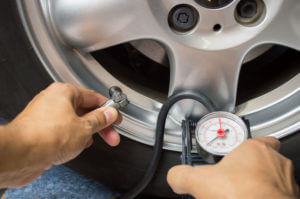
Car tip: Keep your tires inflated to the recommended pressure listed on the driver’s door label.
The recommended tire pressure for your car is listed on a placard inside the driver’s door frame and it’s based on vehicle weight along with the best possible handling. Over-inflating your tires to the maximum pressure listed on the tire is ok for short periods when you’re hauling a very heavy load. If you drive on over-inflated tires the rest of the time, you might see a slight increase in mileage because over-inflation reduces rolling resistance.
Overinflation causes accelerated center tread wear and increases the chances of hydroplaning. Under-inflation, on the other hand, wears out the outer edges of your tires and also reduces contact with the road. Both over-and-under inflation increase stopping distances.
Stick with the car maker’s recommended tire pressure for the longest wear and greatest safety and check tire pressure once a month.
For more information on tires and tire maintenance, see these posts
Car tip #3: Top off your coolant with the same type
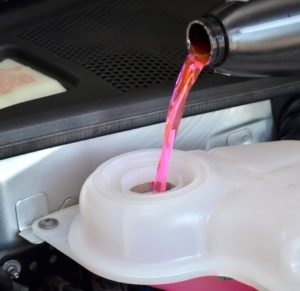 If you use the wrong coolant or mix two different types of coolants you can actually cause faster internal corrosion and even gelling and heater core and radiator clogs.
If you mix different coolants, the corrosion inhibitors in one type of coolant can not only reduce the effectiveness of the new blend, but can even cancel out the performance of the corrosion inhibitors of the old coolant. They can also damage the plastic and rubber seals and gaskets. The damage may not show until you’ve racked up 5,000 or more miles. But when those parts fail you probably won’t connect the dots and realize they failed because you used the wrong coolant.
If you can’t find the exact coolant for your engine at an auto parts store, buy it at the dealer. You may spend a whopping $10 more than the “universal” coolant stocked at the auto parts store, but at least you’ll get the right coolant for your car. That’s a small price to pay for peace of mind.
For more information on coolants, cooling system service and fixes for overheating, see these posts
Tip #4: Be careful when topping off your power steering and brake fluid
It’s easy to grab a 1-pint bottle of power steering fluid and pour it into your master cylinder because the bottle looks just like a 1-pint 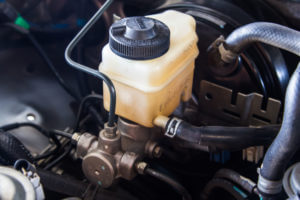 bottle of brake fluid (it happens more often than you think). But if you add the wrong fluid to either your power steering or brake system, the repair can easily cost upwards of $1,000. Power steering fluid will damage the rubber seals in a brake system, causing total brake failure.
Pouring brake fluid into your power steering reservoir is just as damaging because brake fluid isn’t a lubricant, so it causes pump and steering gear failure. Always double check before you refill your brake or power steering fluid reservoirs.
For more information on brakes, brake jobs, brake noise and brake service tips, see these posts
Car tip #5: Use only the recommended fluids. Avoid all universal fluids
Several fluid manufacturers sell universal coolant, power steering and transmission fluids that supposedly work in all car makes and models. Not a single car maker recommends using a universal coolant, and their objections aren’t based on greed. Instead, they’re based on the incompatibilities between different steering and transmission designs.
There’s simply no way a single coolant, transmission or power steering fluid can meet the many different (and mutually exclusive) viscosity and additive requirements for every transmission and power steering system in use today. If the auto parts doesn’t stock the exact fluid, try a different store or buy it at the dealer. It’s simply not worth the risk to use a non-approved fluid in expensive components like your transmission or power steering.
Tip #6: Do the scheduled maintenance on time
Not all engines can go 100,000 miles between spark plug
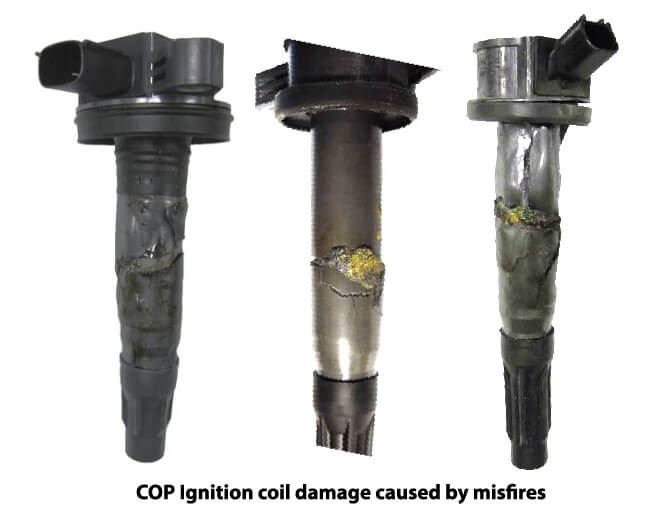
Running too long on worn spark plugs can cause other, more expensive damage. These ignition coils were damaged by worn spark plugs.
changes. Some require new spark plugs at 40,000 or 60,000 miles. Extending your spark plug change intervals to some “universal” mileage can cause misfires, decreased fuel mileage, and even damage to the catalytic converter.
The same advice applies to fluid changes, belt replacement, shocks and struts, as well as coolant and transmisison fluid changes.
For more information on battery and alternator testing, see these posts
Car tip #7: Understand what the warning lights mean and follow the carmakers’ recommendations
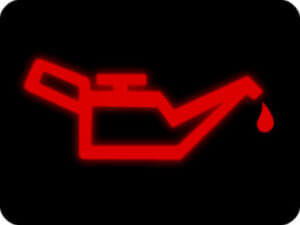
If your oil pressure light comes on, pull over immediately to a safe place and turn off the engine
All cars have a “low oil pressure” warning light. If the light comes on while you’re driving, it can mean that your car is dangerously low or completely out of oil. Or it can mean that your car has a serious internal leak that’s causing a pressure drop. It can also be a sign of a worn engine bearings, a clogged oil passage that’s causing oil starvation or an oil pump that’s failing. Whatever the cause, when the light comes on, pull off the road immediately and shut off the engine. Then pop the hood and check the oil level using the dipstick. If the dipstick shows you’re out of oil or dangerously low, add more oil before restarting the engine.
Driving a car when it’s dangerously low or completely out of oil will destroy your engine in just a few minutes. A blown engine can easily cost you $4,000. And don’t think you can drive it “for just a few minutes” to the nearest store. It’s not worth the risk. Call a friend or family member and ask them to bring the oil to your location (the recommended type and viscosity is listed in your owner’s manual). Add it to the filler port and check the dipstick to make sure it’s full. Do not overfill.
However, if the dipstick shows you’ve got oil, then the problem is even more serious and must be checked out by a shop. There’s really nothing you can do while you’re on the side of the road. If the dipstick shows the engine is full, or you can’t reach a friend to drop off more oil, call a tow truck! If you can’t afford a $200 tow, then you surely can’t afford a new engine.
Tip #8: Fill up with gas before you’re down to 1/8 of a tank
The electric fuel pump on fuel injected cars is located inside 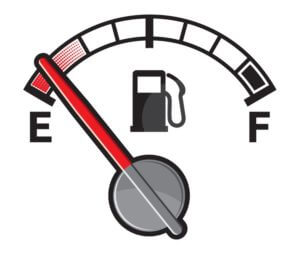 the fuel tank. Car makers put it there on purpose so it can be cooled by the gas in the tank. If you consistently drive with less than ¼ tank, you risk overheating the fuel pump and shortening its life. Fuel pump replacement can cost around $700.
This doesn’t mean you must rush to a gas station the instant you hit ¼ tank on the gauge. The fuel pump can easily handle occasional low fuel level operation. But if you like to drive around town with less than a ¼ tank of fuel, don’t be surprised when you’re hit with a $700 fuel pump repair bill.
Car tip #9: Use the recommended motor oil
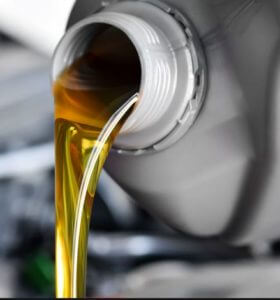
Using the recommended oil will give you the best performance and longest engine life
Modern engines are designed to more exacting standards to improve fuel efficiency. As a result, oil specifications are much tighter. Plus, newer engines include high-tech mechanisms like variable valve timing (VVT) and turbochargers to squeeze more power and miles out of every gallon of gas. VVT systems work by pulsing pressurized oil into hydraulic passages to advance or retard the camshaft. The pulse timing and associated camshaft movement is based on the oil type and viscosity listed in your owner’s manual. The computer varies the pulse rate based on engine temperature and driver inputs from the accelerator pedal.
But the computer systems that operate the VVT and turbo assume you’ve used the recommended oil. If you substitute your own judgment instead of the engineers who designed the engine, all bets are off. Use the wrong type of oil or the wrong viscosity can cause accelerated wear and even set a trouble code and light the “check engine” light on your dash.
The right oil is just as critical for proper turbocharger operation. A modern turbocharger can spin at rates as high as 240,000 RPM which means the bearings must be constantly lubricated and cooled by the oil. If you substitute a different oil type or viscosity, you can change the flow rate, causing bearing overheating and early turbo failure. Turbo replacement can cost $1,500 to $2,000.
For more information on oil and oil filters, see these posts
Car tip #10) Use car washing soap to wash your car
Dishwashing detergent is designed to attack and break down 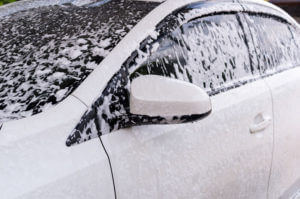 dried-on food, oil and grease. But car paint, clear coat and car wax contains oil and resins that maintain the paint’s integrity and filter out harmful UV rays. If you use dishwashing detergent to wash your car, you’re actually stripping off the wax and pulling some of those critical oils out of the paint and paint sealants, leaving it bare and exposed to the elements.
If you don’t wax your car after washing with dishwashing detergent, you’ll lose some of that important sun protection. Worse yet, if you regularly wash your car with dishwashing detergent, you’ll degrade the paint and clear coat enough over its life to cause premature fading and even early paint failure.
Car wash soap is designed to remove dirt and grease without removing the surface wax and oils from the paint. It’s also biodegradable, so the wash water runoff is safer for the environment. Find car wash soap at any auto parts store or in the automotive aisle at most big box stores. It’s cheap and it’s better for your car’s finish.
©. 2018 Rick Muscoplat
Posted on by Rick Muscoplat