
Car Won’t Start When Cold: The Most Common Causes
Why Your Car Won’t Start When Cold and How To Fix It
One of the most common problems I encounter during winter is when a car won’t start when cold. You turn the key, the engine cranks like normal, but it just won’t fire up. As a seasoned technician, I’ve diagnosed this exact issue countless times. In this guide, I’ll walk you through what I check—and why—when a car won’t start when cold but still cranks at normal speed. As a seasoned auto technician, I’ll guide you through my diagnostic procedure, explaining what I check first and why. In this article, I’ll be assuming your engine is cranking at its normal speed; if it’s sluggish or slow, you’re likely dealing with a battery issue, and you’ll want to troubleshoot that first. See this post for help diagnosing a slow-cranking engine.
1. Worn Spark Plugs Are The #1 Cause When Your Car Won’t Start When Cold
Cold fuel doesn’t vaporize as well in a cold engine. Plus, it’s harder to ignite cold fuel. Worn spark plugs make the job that much harder. Worn spark plugs can start your engine in summer but fail to start your engine on the first day of cold weather. Here’s why:
The ignition spark travels from the sharp edge of the spark plug’s center electrode to the edge of the side electrode. Over time, these sharp edges wear down and become rounded, which makes it harder for the spark to initiate the jump. In addition, as the spark plugs wear, the gap between the electrodes also increases, making it even more challenging to initiate the spark.
In other words, a worn spark plug creates a weaker, shorter spark when you 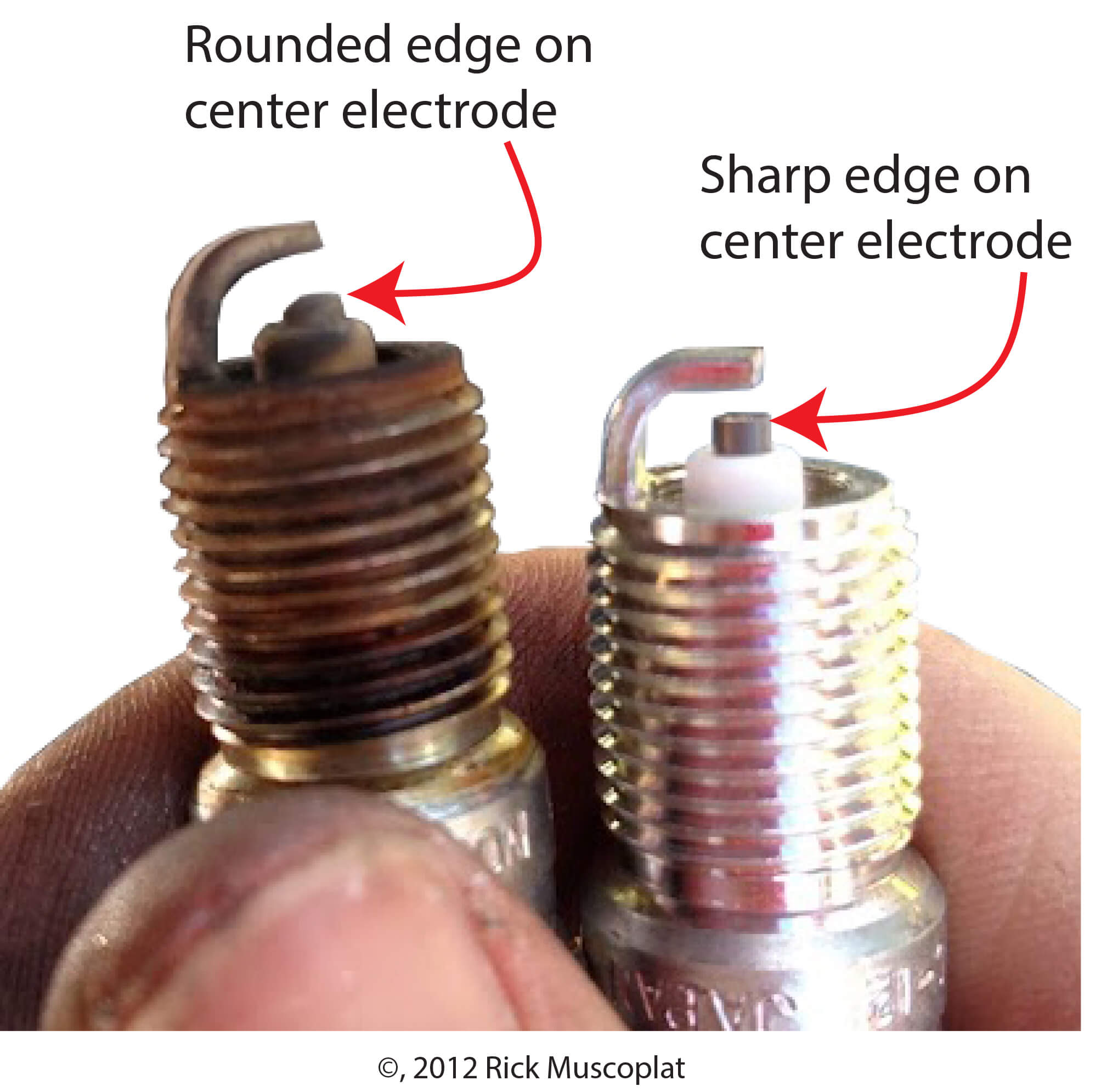 need the hottest spark possible. See this article that explains why it’s harder to ignite cold fuel.
Spark plug replacement intervals vary by engine. Some engines require spark plug replacement every 40K or 60K miles, while others only require new spark plugs at 100K or even 120K miles.
What I recommend:
a) After several attempts to start your cold engine, the engine is most likely flooded. Depress the gas pedal to the floor and hold it there while cranking. That will allow more air into the engine and cut off the fuel injectors, allowing the fuel to evaporate. After cranking a while in this condition, release your foot from the pedal and try starting normally.
b) If you haven’t changed your spark plugs, now is the time to do it to ensure quick starts.
2. Leftover Summer Fuel Can Stop Your Car Cold
Winter gasoline is different than summer gasoline. It contains more volatile components designed to vaporize better in cold weather. However, if your tank still has summer-blend fuel, that could be why your car won’t start when cold..
What I recommend:
Follow the same flooded-start clearing technique listed above: hold the pedal to the floor and crank. Once you get the engine running, drive off some of the summer gas and refill with fresh winter-grade fuel.
3. A Dirty Throttle Body Starves the Engine of Air
One of the most overlooked causes of a car cranks but won’t start when cold situation is a ca
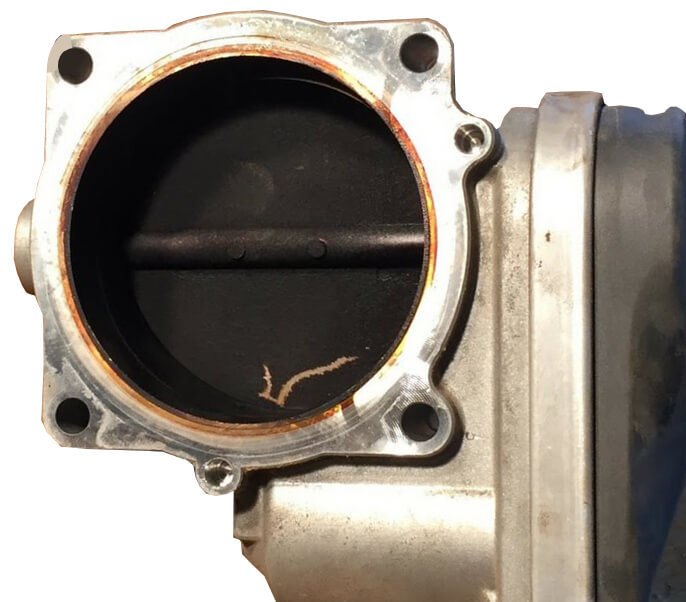
This is what carbon buildup looks like. The buildup restricts airflow during startup and can cause a cranks but won’t fire up condition.
rboned throttle body. During a cold start, the computer expects a specific amount of airflow. But carbon buildup around the throttle plate chokes off that air and disrupts the air/fuel mix. I’ve seen this problem cause countless no-start conditions, especially when a car won’t start when cold and no other issue is obvious.
What I do:
I remove the intake duct, inspect the throttle plate, and clean any carbon buildup with throttle body cleaner on a lint-free rag. After cleaning, I often perform a throttle body relearn to recalibrate idle airflow.
#4 You Have A Vacuum leak Or an Air Duct Leak
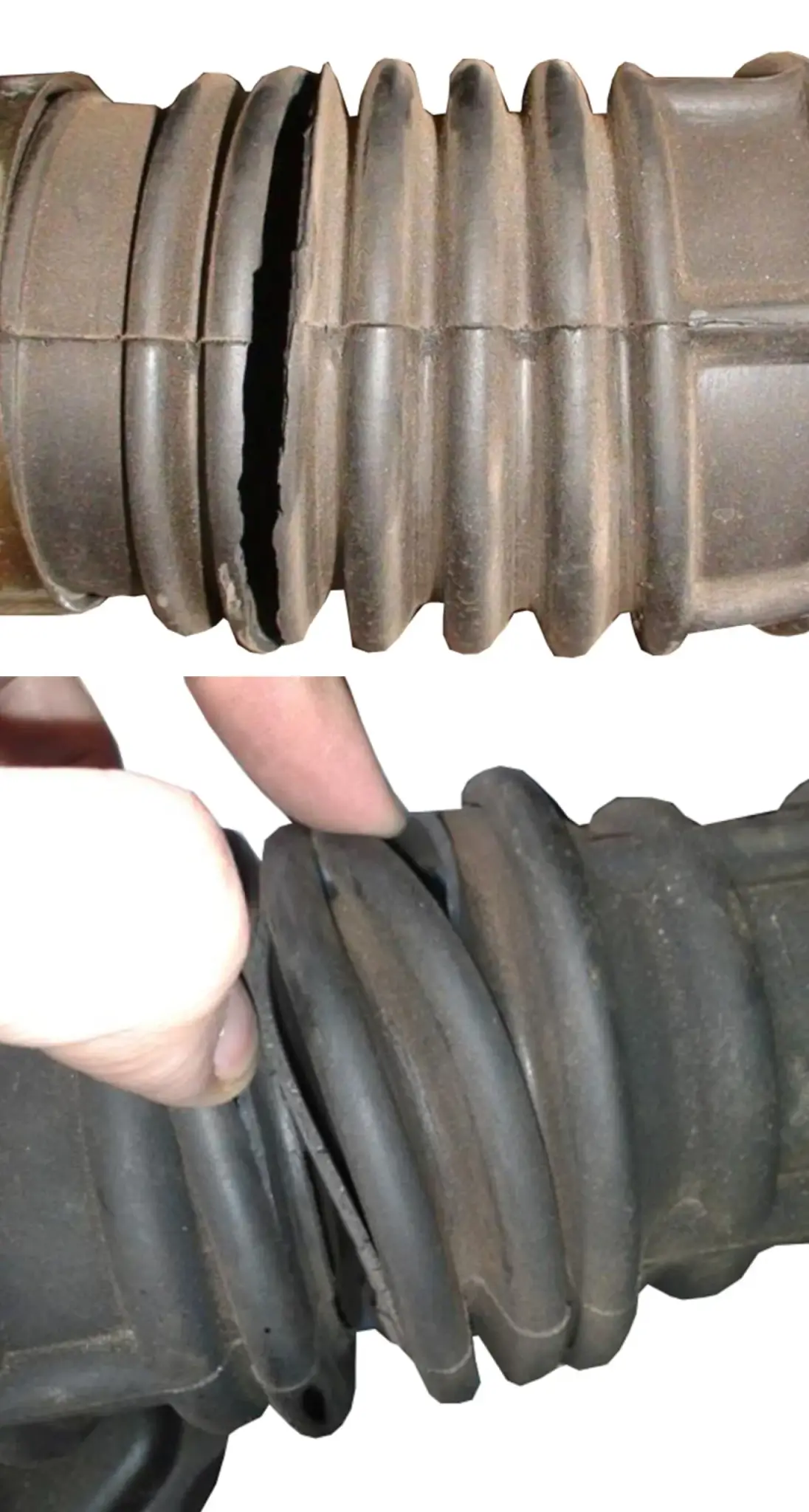
Torn intake air duct
Too much unmetered air can lean out the mixture and prevent your car from starting when cold. Torn air ducts, cracked vacuum hoses, or a leaking intake gasket are common in older engines—and colder weather makes rubber and plastic more brittle.A disconnected or cracked vacuum line, leaking intake manifold gasket, or even a tear in the air duct (common on Honda engines) leading from the air filter box to the throttle body can cause too much un-metered air into the engine, resulting in an air/fuel mixture that too lean to start a cold engine.
What I recommend: Pop the hood and check for a disconnected vacuum line, an improperly connected air duct, or cracks/tears in the air duct. Reconnect any disconnected vacuum lines. For tears in the air duct, temporarily wrap it with duct tape until you can buy a replacement. Do NOT try to seal a tear using any caulk or RTV. That can get sucked into the engine and cause serious problems.
#5 Inaccurate air/fuel mixture due to dirty MAF sensor— Oiled engine air filters can contaminate the hot wire elements in MAF sensors, causing them to send inaccurate air density data to the ECM/PCM.
What I recommend: If you have an oiled air filter and are experiencing cranks but won’t fire up condition, clean the MAF sensor with MAF sensor cleaner. If that corrects the problem, clean the air filter and apply less oil or replace the oiled air filter with a regular air filter.
#6 Bad engine coolant temperature sensor (ECT)
Another common reason a car won’t start when cold is a faulty engine coolant temperature sensor (ECT).
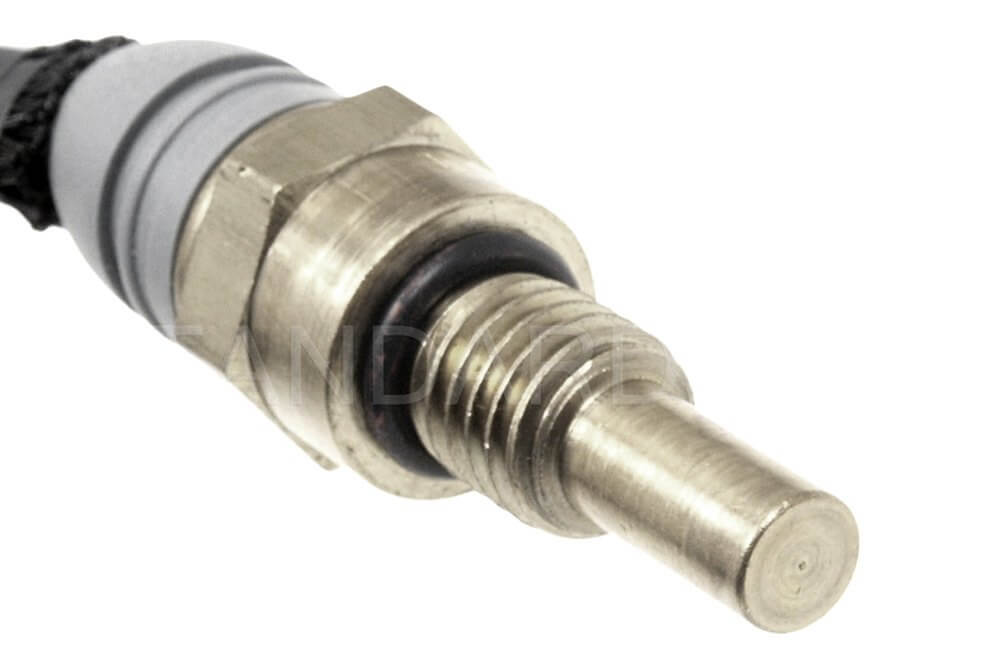
Engine Coolant temperature sensor
The ECT sensor helps the ECM determine how much fuel to inject during cold starts. If it’s sending incorrect data—like reporting that the engine is warm when it’s actually cold—your car won’t start when cold because the computer won’t enrich the mixture.Your car’s computer determines the proper air/fuel mixture based on ambient temperature, engine coolant temperature, and barometric pressure. The most common failure in this system is the engine coolant temperature sensor. If it’s sending bad information, the computer will think the engine is warmer than it is, and the ECM won’t provide enough fuel to start a cold engine.
What I recommend: To test the engine coolant temperature sensor, partially depress the gas pedal and hold it there while starting. A partial gas pedal will override the computer and provide more fuel to the engine. If the engine starts, have a shop test and replace the engine coolant temperature sensor.
#7 Clogged engine air filter— Late-model vehicles measure the density and volume of air coming into the engine and meter the proper fuel based on the incoming air. But a clogged air filter can screw up the air/fuel calculation, especially on a cold start. If the computer sees less air coming into the engine, it will cut back on fuel accordingly. In a severely clogged air filter situation, the air restriction may be so great that the computer can’t compensate. It will cut fuel to the point where the engine may not start. So check your air filter. If it’s clogged with debris, replace it.
©, 2020 Rick Muscoplat
Posted on by Rick Muscoplat