
Clean An Air Filter vs Replace Air Filter: Tips for DIYers
Can You Clean An Air Filter?
Quick Summary
Modern paper air filters are designed to trap and permanently hold microscopic dirt particles. Some people believe they can clean a cellulose or synthetic-fiber car air filter by blowing it out with compressed air, vacuuming, washing, or shaking it. They’re wrong. In fact, those methods only damage the filter media, reducing its ability to protect your engine. When it comes to the debate of clean air filter vs replace air filter, replacement is the only option that restores proper filtration and engine protection.
Why You Can’t Clean a Paper Or Synthetic Fiber Air Filter
As someone who has spent decades working with engines and studying filtration systems, I’ve heard every air filter myth imaginable. One of the most persistent beliefs is that you can clean a paper air filter and get more life out of it.
At first glance, the idea seems logical. If a filter is dirty, cleaning it should restore airflow, right? Unfortunately, that’s not how modern engine air filters work.
A paper air filter isn’t designed to be cleaned. It’s designed to capture contaminants and permanently hold them until the filter reaches the end of its service life. Once dirt becomes embedded in the filter media, there’s no practical way to remove it without damaging the fibers that perform the filtering.
That’s exactly why automakers recommend replacing paper air filters instead of cleaning them.
How Engine Air Filters Really Work
Understanding how filters trap dirt makes it clear why cleaning doesn’t help. A quality air filter has two distinct layers that work together:
The Fluff Layer – Captures the Big Stuff. The outer layer, often called the “fluff layer,” captures large debris like sand, leaves, and bugs. This layer uses impingement — particles collide with fibers and stick due to surface adhesion. It’s similar to how dust clings to walls.
The Screen Layer – Trapping the Dangerous Particles. Underneath the fluff layer is the dense “screen” layer that captures microscopic dirt particles — the ones that cause real engine wear. As the filter collects dirt, those small openings begin to fill in, actually improving efficiency.
That’s right — a slightly dirty filter works better than a brand-new one. The tiny holes that once allowed fine dust through become partially blocked, creating a tighter mesh that traps even more.
When you clean an engine air filter, you destroy this structure. The embedded dust doesn’t come out — instead, air pressure or washing simply tears the fibers apart and opens the holes, allowing more dirt into your intake system.
In other words:
• If you try to blow out the dirt with compressed air, you will remove the largest particles but also enlarge the pores of the filter. After the “cleaning,” the enlarged pores will actually let in more dirt. It won’t improve filtration efficiency, and it won’t bring efficiency back to when it was new
• If you vacuum the filter, you will remove the large particles, but not the smallest ones; they’re trapped in the screen layer. If the vacuum is strong enough, it will damage the screen layer and allow more dirt in.
• If you smack the filter on the ground, you will dislodge loosely held debris, but the shock won’t dislodge the trapped debris.
• If you wash the filter, you’ll weaken the bonds between the fibers and lower the fiber’s fluff ratio. That’ll reduce filtration efficiency.
So, cleaning an air filter doesn’t extend its life or improve filtration efficiency.
This is an important point many DIYers don’t realize: a slightly dirty air filter often performs better than a brand-new one. The downside is that airflow eventually decreases to the point that replacement is warranted.
Common Air Filter Cleaning Methods That Don’t Work
Many online videos recommend cleaning a paper air filter using one of several methods.
Compressed Air — Blowing compressed air through the filter may remove larger debris. The filter may look cleaner afterward, but it will allow more dirt into the engine.
Compressed air damages the filter by:
• Stretching filter fibers
• Enlarging microscopic pores
• Reducing filtration efficiency
• Creating holes in the filter media
Vacuuming — Vacuuming removes loose surface debris. Unfortunately, the microscopic particles remain embedded deep within the filter material. Strong vacuum suction can also distort pleats and damage filter fibers.
Smacking the Filter — Many people hit the filter against a hard surface to shake out dirt.
This method:
• Removes only loose debris
• Doesn’t remove embedded contaminants
• Can crack the filter frame
• May damage the sealing gasket
Washing — Washing a paper air filter is one of the worst things you can do. Water weakens the fiber structure and bonding agents that hold the filter media together. Even after drying, the filter will never regain its original filtration capability.
Clean Air Filter vs Replace Air Filter: Which Is Better?
This is one of the easiest maintenance decisions you’ll ever make.
Clean Air Filter
Pros:
• Costs nothing initially
• Removes some visible debris
Cons:
• Reduces filtration efficiency
• Damages filter media
• Allows more dirt into the engine
• Doesn’t restore original performance
Replace Air Filter
Pros:
• Restores proper airflow
• Maintains factory filtration efficiency
• Protects the engine from wear
• Inexpensive maintenance item
Cons:
• Requires purchasing a new filter
When comparing a clean air filter vs. a replacement air filter, the replacement wins every time.
Can You Tell if an Air Filter Needs Replacement by Looking at It?
No. There’s really no scientifically valid way to visually determine the condition of a car’s air filter
Color is not an indication of air filter condition. Most air filters will turn grey very quickly, but still maintain their filtration efficiency.
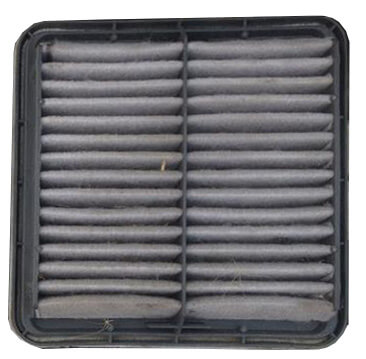
Dirty engine air filter
Some “experts” recommend placing a shop light behind the filter and judging what percentage of the light is blocked off by dirt in the filter. Airflow studies disprove this as a scientifically valid method for determining the filter’s condition.
Others suggest checking how much debris is trapped deep in the air filter pleats. Airflow tests have also disproved this method. However, absent a lab test, checking for debris packed into the pleats is really the only way for DIYers to gauge how much dirt the filter has captured.
One of the biggest misconceptions in automotive maintenance is that a dirty-looking filter automatically needs to be replaced. In reality, appearance alone tells you very little.
Most automakers provide:
• Normal service intervals
• Severe-duty replacement intervals
• Recommendations for dusty driving conditions
These guidelines are based on actual airflow and filtration testing—not visual inspections.
What Happens if You Keep Cleaning Instead of Replacing?
Attempting to clean a paper air filter repeatedly can result in:
• Increased engine wear
• Dirt entering the intake system
• Contaminated mass airflow sensors
• Reduced filtration efficiency
• Higher long-term maintenance costs
The money saved by avoiding a replacement filter is insignificant compared to the cost of engine repairs. A quality replacement engine air filter typically costs less than a tank of fuel.
The Bottom Line
If you’re asking why you can’t clean a paper air filter, the answer comes down to the science of filtration. Paper air filters are engineered to permanently trap microscopic contaminants. Cleaning methods may improve appearance, but they don’t restore performance. In many cases, they damage the filter, reducing its ability to protect your engine.
When faced with the choice of a clean air filter vs. a replacement air filter, always choose replacement. It’s inexpensive, protects your engine, and ensures the filtration system performs exactly as the manufacturer intended.
The next time your air filter is due for service, skip the compressed air, vacuum, and garden hose. Install a new filter and move on with confidence.
©, 2023 Rick Muscoplat
Posted on by Rick Muscoplat