
Electric Vehicle Inverter: What it Does and Why It’s Needed
Understanding The Essential Role of the Electric Vehicle Inverter
An electric vehicle inverter is a critical component in any electric vehicle (EV) operation. To understand why power has to be converted at all, it’s important to understand that electric vehicles use alternating current (AC) motors. AC motors provide the smoothest and most reliable acceleration performance. However, the batteries in electric vehicles store power as direct current (DC). So, at some point, the stored power has to be converted from DC to AC. That’s where the electric vehicle inverter comes into play.
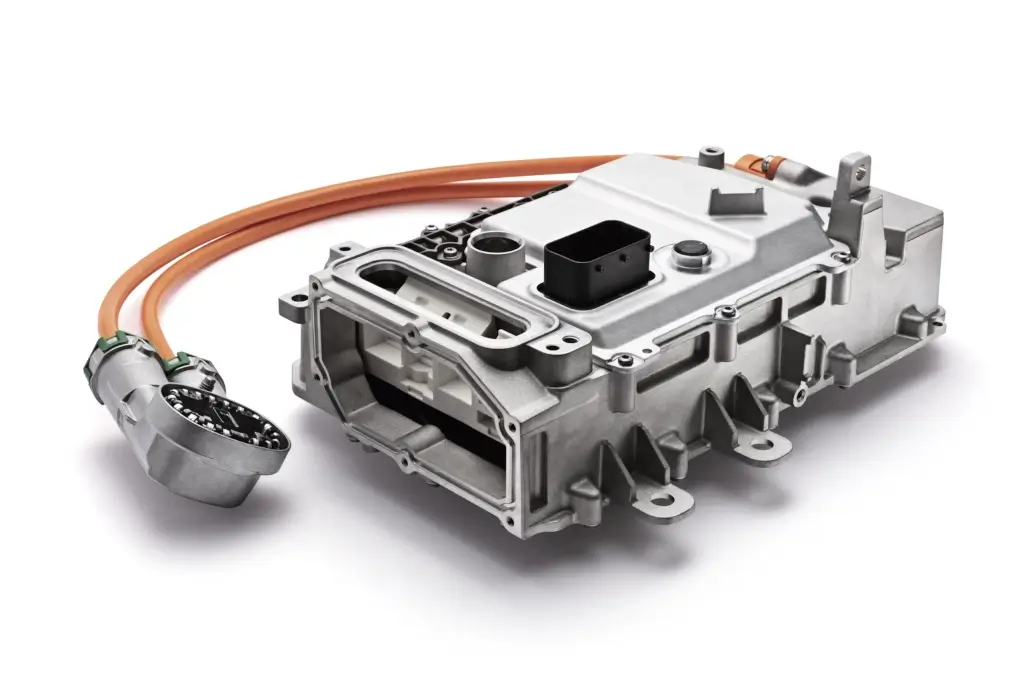
This Marelli inverter is used in the BMW CE 04 electric scooter
The electric vehicle inverter also plays a pivotal role in regenerative braking. When an EV decelerates, the motor reverses its function and acts as a generator, converting kinetic energy back into electrical energy. The inverter takes this AC energy and converts it into DC power, which is then fed back into the battery for future use. This dual functionality of the electric vehicle inverter significantly enhances energy efficiency and extends the vehicle’s range.
How an Electric Vehicle Inverter Works
The electric vehicle inverter uses complicated and sophisticated electronic technology to convert DC electricity into AC power. This process is more complex than a simple transformation. Modern inverters employ a method called pulse width modulation, which creates a smooth and consistent AC output tailored to the motor’s needs. This precision ensures efficient motor operation, providing the necessary power for acceleration, steady cruising, and optimal performance.
Power Inversion Creates Heat
The process of converting electrical energy generates a significant amount of heat. Switching current back and forth between alternating current (AC) and direct current (DC), while stepping voltage up and down, creates a heavy thermal load. If this heat isn’t effectively controlled, it can result in thermal runaway, a dangerous condition that can damage the vehicle’s batteries, posing safety risks for vehicle occupants.
Sources of Heat in Inverters
Every component within an inverter, from high-tech insulated-gate bipolar transistors and MOSFETs to microcontrollers, produces heat during operation. Because this heat must be carefully managed to maintain system reliability and prevent damage, carmakers install inverter cooling systems.
Current Inverter Cooling System Technology
Since the Toyota Prius uses an inverter, I’ll cover the inverter cooling system in that vehicle. The Toyota Prius relies on a dedicated inverter cooling system. The inverter cooling system is separate from the engine cooling system. It has its own radiator and water pump and operates at a lower temperature than the engine cooling system. The Prius inverter cooling system doesn’t rely on thermostats or temperature-based controls. Instead, the inverter pump operates continuously whenever the Prius is in “ON” or “READY” mode.
©, 2024 Rick Muscoplat
Posted on by Rick Muscoplat