
Find Engine Noise Fast With an Automotive Stethoscope
Step-by-Step Automotive Stethoscope Testing
Quick Summary
If you’re trying to track down a mysterious engine noise, don’t waste time guessing or replacing parts. An automotive stethoscope is one of the most effective and inexpensive diagnostic tools you can own. By listening directly to components such as bearings, pulleys, injectors, valve train parts, and accessories, you can pinpoint the exact source of an engine noise in minutes. In this guide, I’ll show you how to use an automotive stethoscope correctly, what sounds to listen for, and how professional technicians isolate engine noises without unnecessary repairs.
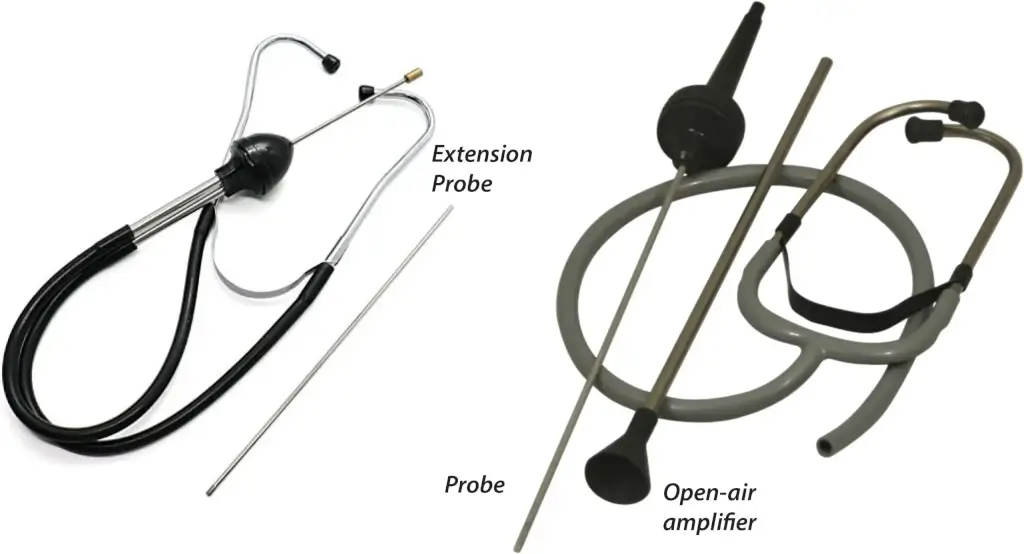
On the left is a cheap stethoscope. On the right is the Lisle 52750 professional-grade unit
How to Use an Automotive Stethoscope to Find Engine Noise
Over the years, I’ve diagnosed thousands of vehicle problems, and one lesson I’ve learned is simple: guessing costs money.
When a customer describes a squeak, knock, chirp, grind, tick, or rattle, many DIYers immediately start replacing parts. They’ll install a new belt, alternator, tensioner, water pump, or even major engine components without ever confirming the source of the noise.
That’s exactly why I recommend learning how to use an automotive stethoscope.
For less than the cost of a tank of gas, this simple tool can help you pinpoint the sources of engine noise with surprising accuracy.
The technique I’m about to show you is the same approach professional technicians use every day. It can save you hundreds of dollars in unnecessary repairs.
What Is an Automotive Stethoscope?
An automotive stethoscope works much like the medical version doctors use. Instead of listening to a heartbeat, you’re listening to mechanical sounds inside an engine or accessory drive system. Most automotive stethoscopes include:
• Headset
• Metal listening probe
• Sound transmission tube
• Optional sound amplifier attachment
The probe transfers vibrations directly to your ears, making it easier to identify abnormal noises that would otherwise blend into the background.
As noted in the original guide, professional-grade units often include an open-air amplifier that helps locate the general area before switching to the probe for precise diagnosis.
Why an Automotive Stethoscope Works So Well
Engine noise travels. A bad bearing in an alternator can sound like it’s coming from the engine block. A failing idler pulley can mimic a bad power steering pump. A noisy rocker arm can sound like a rod knock.
An automotive stethoscope isolates those vibrations so you hear only the component you’re touching. That dramatically improves diagnostic accuracy.
Attach the amplifier attachment to this Lisle automotive stethoscope (Lisle 52750 Stethoscope Kit). It has a bell-shaped end that picks up and amplifies sound waves. Pop the hood of your car and move it around until the suspect sound gets louder. The amplifier will pinpoint exactly where the car noises are coming from.
Don’t forget, you can also use a stethoscope to locate a noisy wheel bearing. For more information read How to Diagnose a Bad Wheel Bearing
Safety First
Before using an automotive stethoscope:
• Keep loose clothing away from belts
• Tie back long hair
• Remove jewelry
• Wear safety glasses
• Never touch rotating components
• Only touch the stationary metal surfaces with the probe
This is especially important when working around serpentine belts and cooling fans.
Step 1: Locate the General Area of the Noise
If your stethoscope includes an amplifier attachment, start there. The amplifier acts like a directional microphone, helping you identify where the noise is strongest before moving to individual components.
Move slowly around:
• Alternator
• Water pump
• Power steering pump
• A/C compressor
• Belt tensioner
• Idler pulleys
• Valve covers
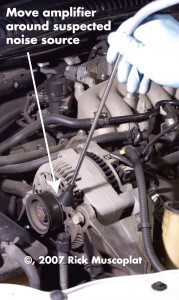
Step 2: Use the Probe to Pinpoint the Source
Once you’ve narrowed down the area, switch to the metal probe. Touch the probe to the stationary housing of each component. Listen carefully for differences.
A healthy component typically produces:
• Smooth humming
• Consistent mechanical noise
• Minimal vibration
A failing component often produces:
• Grinding
• Growling
• Clicking
• Chirping
• Metallic scraping
Compare multiple components side-by-side. The loudest or roughest sound is often your culprit.
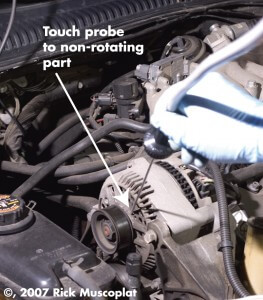
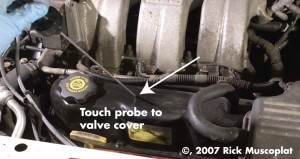 If you have a metallic screeching car noise, switch to the metal probe attachment.
Diagnosing Common Engine Noises
Squealing Noise — Use the stethoscope to compare the bearings in each accessory component. One bearing will usually sound noticeably rougher than the others.
A squeal often points to:
• Worn serpentine belt
• Misaligned pulley
• Failing idler pulley
• Weak tensioner
• Bearing failure
Grinding Noise — Grinding sounds are often loudest directly at the affected component. Grinding usually indicates:
• Bearing failure
• Water pump failure
• Alternator bearing wear
• A/C compressor damage
Engine Ticking Noise — One of the best uses for a stethoscope is tracing valve train noise. Moving the probe along the valve cover can help identify a noisy rocker arm or lifter.
A ticking sound may come from:
• Rocker arms
• Hydraulic lifters
• Fuel injectors
• Valve train components
Knocking Noise — Move the probe along different areas of the engine block and oil pan to identify where the knock is strongest.
A deeper knock may indicate:
• Connecting rod issues
• Wrist pin wear
• Main bearing damage
Components You Can Test With an Automotive Stethoscope
An automotive stethoscope works well on:
• Alternators
• Water pumps
• Power steering pumps
• A/C compressors
• Belt tensioners
• Idler pulleys
• Fuel injectors
• Timing covers
• Valve covers
• Engine block
• Transmission housings
Common Mistakes DIYers Make When Trying to Stop An Engine Noise
I see these mistakes all the time:
Replacing Parts Without Testing — Never assume a noise is coming from the most obvious component.
They spray the Belt and Pulleys with Belt Dressing — Many people spray belt dressing on a squealing belt. Belt dressing is sticky and attracts dirt and debris that can accelerate pulley and belt wear.
Touching Moving Components — Always place the probe on stationary housings, never on pulleys or belts.
Ignoring Sound Comparisons — The real power of a stethoscope comes from comparing one component to another.
Is an Automotive Stethoscope Worth Buying?
Absolutely. It’s one of the best diagnostic tools available for DIY mechanics.
For a small investment, you can diagnose:
• Bearing noise
• Engine ticking
• Belt squeals
• Accessory failures
• Valve train problems
• Injector noise
Instead of guessing, you’ll know exactly where the sound is coming from. That’s how professionals diagnose noises—and it’s how you should too.
Final Thoughts
Whenever I hear a mysterious engine noise, the automotive stethoscope is one of the first tools I reach for. It quickly narrows down the source, reduces guesswork, and prevents unnecessary parts from being replaced.
If you’re serious about diagnosing vehicle problems correctly, learning how to use an automotive stethoscope is one of the most valuable skills you can develop. It turns noise diagnosis from an expensive guessing game into a precise, professional process.
© 2012 Rick Muscoplat
Posted on by Rick Muscoplat