
Gear Oil vs Motor Oil: What’s the Difference?
Gear Oil Explained: How It’s Different Than Motor Oil and How to Choose the Right Oil
Quick Summary
After years of working on differentials and drivetrains, I can tell you this: gear oil is not motor oil, and confusing the two is one of the fastest ways to destroy expensive components. Gear oil is designed for extreme pressure and sliding gear contact, not combustion. Choosing the right gear oil viscosity, API rating (GL-4 vs GL-5), and differential type is critical. Get it right, and your gears can last the life of the vehicle. Get it wrong, and failure comes fast—and it’s not cheap.
What Gear Oil Really Does (From a Mechanic’s Perspective)
Gear oil lives in one of the harshest environments in your vehicle. Inside a differential, you’ve got hypoid gears—and unlike engine components,
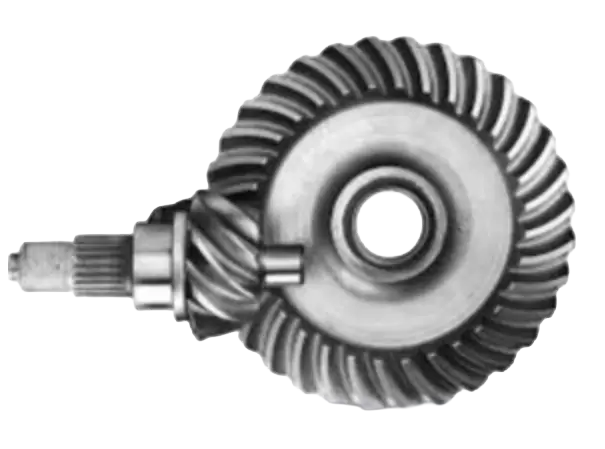
A typical hypoid gear used in differentials
these gears don’t just rotate. They slide across each other under extreme pressure. That sliding motion creates intense friction and load, which is exactly why gear oil exists in the first place.
This is where it separates itself completely from motor oil.
Motor oil is built to handle combustion byproducts, fuel dilution, and heat cycles. Gear oil is built to survive extreme pressure (EP conditions) and prevent metal-to-metal contact when gear teeth are literally trying to tear each other apart.
Why Gear Oil Is Completely Different From Motor Oil
I’ve seen people pour motor oil into a differential, thinking “oil is oil.” It’s not. Gear oil contains extreme-pressure additives that form a protective layer under heavy loads. Motor oil simply doesn’t have those additives because it doesn’t need them.
Without those EP additives:
• Gear teeth wear rapidly
• Heat builds up
• Noise develops
• And eventually, you’re replacing a differential
That’s not theory—that’s real-world failure.
Gear Oil Viscosity: Why Thicker Isn’t Always Better
One of the most common questions I get is about gear oil viscosity.
Typical gear oil grades:
• 75W-90
• 75W-140
Compared to motor oil, it is much thicker—and that’s intentional. It creates a strong oil film that protects gear teeth under load.
But here’s the part most people get wrong: Thicker oil is not always better.
If you go too thick:
• You increase internal drag
• You generate more heat
• You reduce lubrication flow in cold weather
The right viscosity depends on:
• Load conditions
• Climate
• Manufacturer specs
GL-4 vs GL-5 Gear Oil (Critical for Choosing the Right Gear Oil)
If you’re trying to choose the right oil, this is one of the most important decisions.
GL-4 Gear Oil
I typically see this used in:
• Manual transmissions
• Lighter-duty gear systems
It provides moderate protection.
GL-5 Gear Oil
This is what most differentials require.
• Designed for hypoid gears
• Higher extreme pressure protection
• Common in rear axles
But here’s where experience matters:
GL-5 gear oil contains more aggressive additives, and in some applications, those additives can damage certain metals. That’s why I always tell people:
Don’t guess—follow the manufacturer’s spec.
Limited Slip vs Open Differential: Why Gear Oil Choice Matters
This is where I see the most mistakes.
An Open Differential is the most common type
• Uses standard gear oil
• No special additives required
But Limited Slip Differentials (LSD) are a completely different animal
Limited-slip differentials use:
• Clutch packs
• Friction plates
And those components require specific friction characteristics.
If you use the wrong gear oil:
• You’ll get chatter
• Engagement will feel rough
• Wear increases dramatically
That’s why you need:
• Limited-slip gear oil, or
• The correct friction modifier
I’ve seen this mistake more times than I can count, especially after DIY fluid changes.
Other Differential Types That Change Gear Oil Requirements
Not every differential uses standard gear oil.
Some vehicles use:
• Torsen differentials (gear-driven torque transfer)
• Viscous differentials (fluid-based systems, sometimes using silicone fluid instead of traditional gear oil)
This is why identifying your differential type is critical before choosing gear oil.
How I Choose the Right Gear Oil (Real-World Process)
When I’m selecting gear oil, I don’t guess—I follow a process:
First, I look up the manufacturer’s specification:
• Correct viscosity
• Correct API rating
• Limited-slip requirements
Then I consider how the vehicle is used.
If it’s towing or under heavy load, I lean toward a higher viscosity like 75W-140. For normal driving, 75W-90 is usually the right choice.
If the vehicle operates in cold climates, I pay attention to how well the gear oil flows at low temperatures.
And if it has a limited-slip differential, I make absolutely sure the fluid includes the correct friction modifiers.
Common Gear Oil Mistakes I See All the Time
After years in the field, these mistakes come up again and again:
• Using motor oil instead of gear oil
• Choosing the wrong GL rating
• Ignoring limited-slip requirements
• Assuming thicker gear oil is always better
• Using low-quality gear oil
Every one of these can lead to:
• Gear noise
• Premature wear
• Complete differential failure
My Professional Take on Gear Oil
Here’s the truth most people don’t think about:
Gear oil is one of the most overlooked fluids in a vehicle.
People stay on top of engine oil changes—but completely ignore the fluid protecting the gears that actually move the vehicle.
And when gear oil fails:
• It’s not gradual
• It’s not subtle
• It’s expensive
But if you choose the right gear oil and maintain it properly, your differential can last the life of the vehicle.
©, 2026 Rick Muscoplat
Posted on by Rick Muscoplat