
How a Powered Anode Rod Stops Water Heater Corrosion
How a Powered Anode Rod Works
Quick Summary
A powered anode rod replaces the traditional sacrificial anode with an electrically driven corrosion protection system. Instead of slowly dissolving into the water, it uses a small external power supply to protect the steel tank from rust. These systems can last the life of the water heater, dramatically reduce odor problems, and are especially effective in softened or high-temperature water. When properly installed and powered, it can significantly extend a water heater’s lifespan—but only if you understand how it works and where it makes sense.
Want to know more about how a regular anode rod works? See this post.
What Is a Powered Anode Rod?
Most water heaters rely on a sacrificial anode made of magnesium or aluminum. That rod intentionally corrodes, so the steel tank doesn’t. A powered unit operates on the same electrochemical principle—keeping the tank cathodic—but it provides that protection electrically rather than chemically.
In technical terms, it is an impressed-current cathodic protection system scaled for residential water heaters. Instead of sacrificing metal, the system uses a low-voltage DC power supply to inject electrons into the tank. As long as electrons are supplied, the steel tank cannot oxidize and form rust.
This is a fundamentally different approach to corrosion protection that solves several long-standing problems associated with traditional anode rods.
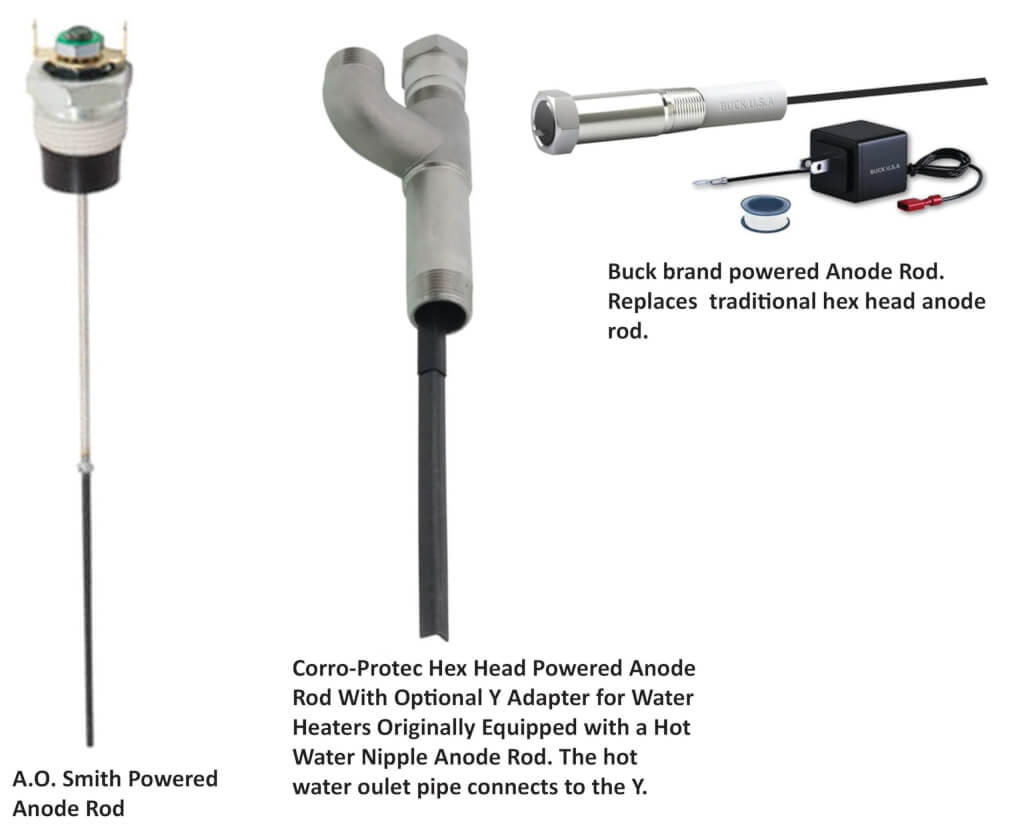
How It Works Inside the Tank
To understand how it works, it helps to start with the causes of corrosion. Steel rusts when iron atoms lose electrons. Traditional anode rods prevent that by supplying electrons through the corrosion of magnesium or aluminum.
It cuts out the middleman.
The rod is typically made of titanium or another corrosion-resistant metal. That rod is connected to a small control module plugged into a standard wall outlet. The module sends a controlled DC current through the rod and into the water heater tank. The current supplies electrons directly to the steel tank, reducing it to a cathodic state.
Because the rod is not being consumed, nothing dissolves into the water. The corrosion protection is continuous, predictable, and independent of water chemistry.
How It Eliminates Odor Problems
One of the most common complaints with traditional magnesium anodes is the “rotten egg” sulfur smell in hot water. That odor is caused by sulfate-reducing bacteria interacting with hydrogen gas produced during magnesium corrosion.
A powered anode rod produces no hydrogen gas because no sacrificial metal reaction occurs. As a result, powered anode rods are among the most effective permanent solutions for sulfur odor problems—especially in homes with well water or softened water.
This odor-control benefit alone is why many plumbers recommend a powered anode rod even when corrosion protection isn’t the primary concern.
How Long Does a Powered Anode Rod Last?
This is where powered systems really stand apart.
A traditional sacrificial anode rod lasts anywhere from 1 to 6 years, depending on water chemistry, temperature, and usage. In contrast, a powered anode rod is not consumed. The titanium rod itself can last decades, and the electronics are typically rated for 10–20 years.
In real-world terms, a powered anode rod often lasts the entire remaining life of the water heater. The only true failure point is loss of power. If the unit is unplugged or the outlet fails, corrosion protection stops.
That’s why most manufacturers include LED indicators or alarms to confirm the system is operating.
Does a Powered Anode Rod Extend Water Heater Life?
When installed correctly and kept powered, the answer is yes—often dramatically so. A powered anode rod maintains constant cathodic protection regardless of:
Water softness
Water temperature
Chloride content
Dissolved oxygen levels
These are the exact conditions that rapidly destroy sacrificial anodes. In softened water systems, where magnesium rods may deteriorate within a year or two, a powered anode can prevent tank corrosion indefinitely.
That said, it’s important to be realistic. A powered anode rod cannot reverse existing corrosion or heal deep pitting that has already started. It works best when installed early in the heater’s life or as soon as water chemistry issues are identified.
When a Powered Anode Rod Makes the Most Sense
In my experience, powered anode rods are most valuable in a few specific situations. Homes with water softeners benefit tremendously because softened water aggressively consumes sacrificial anodes. High-temperature water heaters, including commercial and high-demand residential systems, also deliver significant benefits.
They’re also an excellent choice for homeowners who want to avoid periodic anode inspections or who have experienced recurring odor issues and premature tank failures.
The Limitations Of a Powered Anode Rod
A powered anode rod is not a magic wand. It requires electricity, which means it won’t protect the tank during extended power outages. It also costs more upfront than a standard anode rod. Installation requires access to a nearby outlet and a bit more care than simply threading in a magnesium rod.
However, when you compare the cost of a powered anode rod to the cost of replacing a water heater early, the economics usually favor the powered option.
The Bottom Line
A powered anode rod replaces sacrificial corrosion with controlled electrical protection. It doesn’t dissolve, it doesn’t create odor, and it isn’t affected by softened water or high heat. When properly installed and powered, a powered anode rod can protect a water heater tank for its entire service life and is one of the most effective upgrades available for corrosion prevention.
Posted on by Rick Muscoplat