
How To Diagnose Automotive Wiring Faults Like a Pro
How to Read an Auto Wiring Diagram and Find Electrical Problems Fast
Quick Summary
If you can read an auto wiring diagram and understand how a circuit is supposed to work, you can diagnose almost any electrical problem. Most wiring faults fall into three categories: 1) A short circuit, 2) An open circuit, or 3) Excessive resistance causing a voltage drop. The key is testing correctly—using proper back probing techniques, voltage drop testing under load, and continuity checks without damaging connectors. Done right, you protect sensitive modules and avoid creating new problems while chasing old ones.
Article
Automotive Wiring Diagnosis: How I Track Down Shorts, Opens, and Voltage Drops the Right Way
After decades in this business, I can tell you one thing with absolute certainty: guessing doesn’t work well; you have to test. Because finding wiring faults requires more than wiggling a harness and hoping something changes.
Modern vehicles are packed with control modules, networked systems, and low-voltage signal circuits that are incredibly sensitive. If you don’t understand how to read an auto wiring diagram and test circuits correctly, you can easily cause more damage than the original problem.
Let me walk you through how I approach automotive wiring, how I diagnose a short, how I confirm an open circuit, and how I find a voltage drop that others miss.
Understanding the Anatomy of Automotive Wiring
Every circuit begins with a plan. That plan lives in the auto wiring diagram. If you’re not starting there, you’re already behind.
An auto wiring diagram tells you power source, ground location, connector pin numbers, splice points, and current path. It shows whether you’re working with a simple switched circuit or a module-controlled low reference system. Without a wiring diagram, diagnosing wiring faults becomes guesswork.
Why Back Probing Is My Go-To Method
When diagnosing wiring faults, I rarely

Lisle 11 Piece Back Probe and Alligator Clip Set
unplug connectors unless absolutely necessary. Instead, I back probe.
Back probing allows me to test a live circuit without disturbing it. Using fine pin probes, I slide alongside the wire at the rear of the connector. This keeps the circuit intact and prevents damage to terminals or weather seals.
With modern high-density connectors, this is critical. You don’t want to spread terminals or compromise a connector seal chasing a voltage reading.
Diagnosing High Resistance and Voltage Drop
High resistance is one of the most common wiring faults I see—and one of the most misunderstood. The cause of high resistance is usually corrosion, or a loose terminal. And resistance under load causes voltage drop. Here’s how I test it properly.
First, rely on ohm testing, that can produce a misleading result. Instead, I perform a voltage drop test under load. I turn on accessories to create current flow. Then I measure voltage from one end of the wire to the other.
On most 12-gauge circuits, I expect to see less than 0.2 volts drop. Anything higher tells me I’ve got resistance in the circuit. The auto wiring diagram helps me confirm wire gauge and expected load so I know what’s acceptable.
Voltage drop testing under load is one of the most powerful tools you have for diagnosing wiring faults. It tells you what’s happening in real time—not in theory.
Diagnosing an Open Circuit
An open circuit is exactly what it sounds like: a break in the conductor. Using the auto wiring diagram, I isolate the section of wire I want to test. With the circuit powered down and disconnected, I perform a continuity test. If the meter shows OL or infinite resistance ∞, I know I have an open. But that’s only step one. Now I need to find where.
I look at known failure points:
• Door hinge areas
• Underhood harness bends
• Areas where technicians perform routine service like, near the air filter box and air intake, radiator, ignition coils, alternator, and battery.
• Near exhaust components
• Areas exposed to moisture
• Near rodent nests
Sometimes the break is visible. Other times, it’s internal corrosion under intact insulation. That’s when careful sectional testing comes into play.
Diagnosing a Short to Ground or Short to Voltage
Short circuits are dramatic. They blow fuses immediately, trip modules, and cause erratic behavior. Again, I start with the auto wiring diagram. I confirm what the wire is supposed to be doing. Is it a signal wire? A power feed? A ground reference?
To check for a short to ground, I isolate the wire from the circuit and measure continuity between it and battery negative. There should be none. If there is, I have a short.
To check for a short to voltage, I back probe with the circuit powered and look for voltage where none should exist.
Short-related wiring faults often involve insulation damage. Harness chafing against brackets is a common cause. I’ve seen sharp edges slice into looms that looked perfect from the outside.
Don’t Ignore Connector and Terminal Issues
Half the wiring faults I diagnose aren’t in the 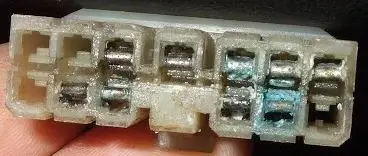 wire at all. They’re in the connectors. Corrosion inside terminals increases resistance. Poor terminal tension causes intermittent opens. A terminal drag test tells me whether the female terminal still grips properly.
Again, the auto wiring diagram helps me identify the exact terminal and circuit before I disassemble anything.
When replacing terminals, I always use the correct crimp tool. A poor crimp introduces future wiring faults. And every repair gets heat shrink protection. Every time.
Repairing Wiring the Right Way
If I can replace a wire section cleanly, I will. If not, I solder the repair. I twist the conductors tightly, apply heat properly, and allow solder to flow—not blob. Then I seal it with adhesive-lined heat shrink.
Crimp repairs can work, but only with proper ratcheting crimpers and environmental sealing (heat shrink tubing). Otherwise, you’ve just built the next failure point. Remember, every repair is a potential weak link. Quality matters.
150-Character SEO Meta Description
Learn how to use an auto wiring diagram to diagnose wiring faults including shorts, opens, and voltage drop like a professional technician.
Sources
Posted on by Rick Muscoplat