
How to Perform a Battery Load Test with a Multimeter
Step-by-Step Guide to Conducting a Battery Load Test with a Multimeter
Quick Summary
Professionals use a carbon pile load tester to accurately test a battery. However, you can perform a battery load test at home using a multimeter, as long as your meter has a MIN/MAX function. I’ll explain how to do that test here. Done correctly, this simple test can prevent unnecessary starter replacement and save real money.
Article
How to Perform a Battery Load Test Using Only a Multimeter
Over the years, I’ve seen more starters replaced due to weak batteries than due to actual failed starter motors. That’s why I always begin with a proper battery load test before condemning anything else in the starting system.
The beauty of doing a load test with a multimeter is that you don’t need an expensive carbon pile tester. If your meter has a min/max recording feature, you already have what you need.
Step One: Verify State of Charge Before the Test
Before performing any battery load test, I check the open-circuit voltage. That means measuring battery voltage with the engine off and no load applied. A fully charged battery should read around 12.6 volts. 12.4 volts represents roughly 75% charge. If the battery is below 12.4 volts, I stop right there and charge it before continuing. That’s because a battery load test with a multimeter only yields meaningful results if the battery is sufficiently charged. Testing a discharged battery doesn’t prove it’s bad—it only proves it’s low.
Step Two: Set Up the Multimeter for the Load Test
Set the meter to DC volts and connect the leads directly to the battery
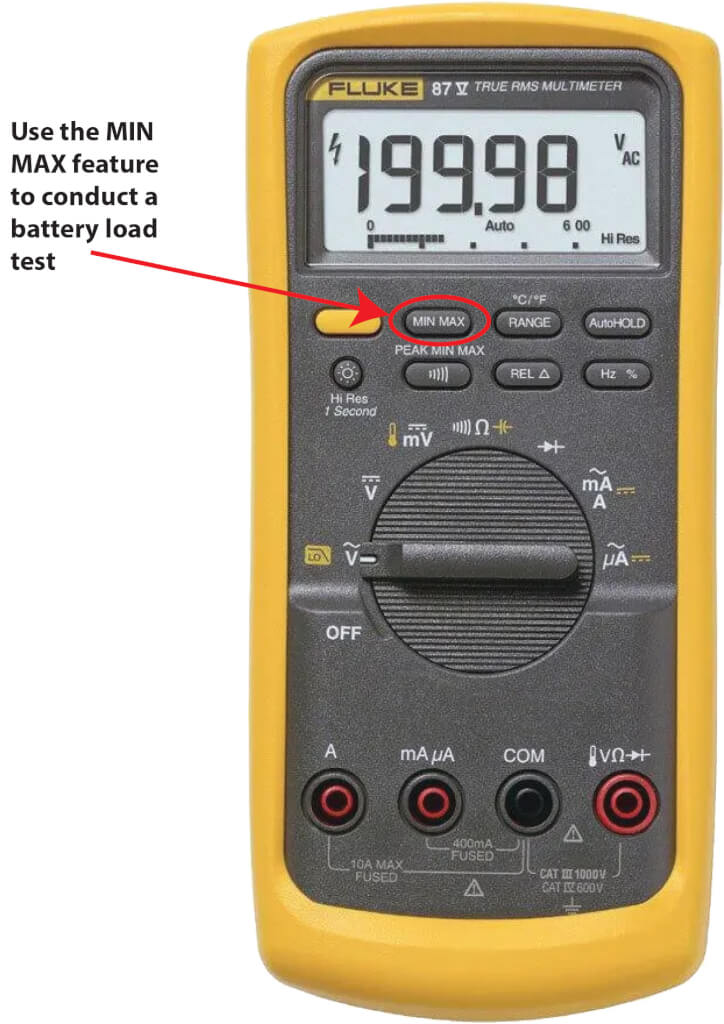
Use a multimeter with a MIN MAX function to conduct a battery load test
terminals—not the cable ends, but the actual lead posts.
Set the meter to use its min/max function. That feature captures the lowest voltage during starter engagement, which is exactly what we need in a proper battery load test.
Step Three: Crank the Engine and Capture the Lowest Voltage
When the starter motor engages, it draws a large surge of current. That inrush current causes battery voltage to dip. A healthy battery should not drop below 9.6 volts during cranking. That 9.6-volt threshold is critical.
If the voltage stays above 9.6 volts, the battery load test passes. If it drops below 9.6 volts—even briefly—the battery fails.
I’ve seen batteries drop to 8.8 volts and still show 12.6 volts at rest. That’s why a static voltage reading alone is meaningless. A properly performed battery load test with a multimeter immediately exposes weaknesses.
Understanding What the Numbers Mean
When reviewing the min/max readings after cranking, I look at two numbers:
• The high reading, usually around 14 volts once the engine starts, confirms the charging system is working.
• The low reading during crank tells the real story.
• If it’s 9.96 volts or greater, the battery passes the battery load test.
• If it reads 9.4 volts or lower, the battery fails and should either be recharged and retested or replaced, depending on age and condition.
How This Test Relates to Starter Performance
If a battery passes a proper battery load test but the engine still cranks slowly, I shift my attention to voltage drop in the cables or to excessive starter current draw.
A strong battery combined with slow cranking often points to:
• High resistance in battery cables
• Poor engine ground
• Internal starter motor drag
Common Mistakes I See
One mistake I see constantly is people testing voltage without engaging the starter. That’s not a battery load test.
Another mistake is testing at the cable terminals instead of the battery posts. Corrosion between the post and terminal can hide problems.
And finally, some people ignore temperature. Cold weather reduces battery capacity significantly. A borderline battery may pass in summer but fail in winter.
That’s why I always perform a proper battery load test with a multimeter before replacing a starter motor.
When to Recharge and Retest
If the battery fails the battery load test but is only partially discharged, I recharge it fully and repeat the battery load test with a multimeter.
If it fails again below 9.6 volts, it’s done.
Why This Simple Test Matters
Modern vehicles demand high current to crank. A weak battery doesn’t just cause slow cranking—it can trigger module resets, false trouble codes, and electronic glitches.
If you don’t have a carbon pile tester, this multimeter MIN MAX test is one of the most reliable tests in automotive diagnostics.
©, 2026 Rick Muscoplat
Posted on by Rick Muscoplat