
Is Metal on the Transmission Magnet a Sign of Trouble?
Why There’s Metal on the Transmission Magnet
If you’ve ever dropped your transmission pan during a fluid change or inspection, you probably noticed a small magnet sitting at the bottom—coated in grayish sludge. That metallic gunk is a normal byproduct of your transmission’s internal wear. But how much is too much? And when is metal on the transmission magnet a red flag?
I’ve pulled hundreds of pans in my career as a technician, and I’ve seen everything from a light dusting of metal to thick, glittery sludge with broken gear teeth stuck to the magnet. Let me walk you through what’s normal, what’s not, and how to interpret what you’re seeing.
In this article, I’ll clarify the difference between powdery metal on the transmission magnet versus normal wear and tear transmission dust. Car makers install a magnetic transmission in the transmission, drive axle, and transfer cases to collect and hold small metallic wear particles and prevent them from circulating through bearings and gears. Since these major metallic components wear, it’s perfectly normal to find wear particles on the drain plug. So the question is, how much is normal?
Fine metallic particles on a transmission magnet are normal
Some metal on the transmission magnet is perfectly normal, especially in newer transmissions or after hard use. In fact, if the magnet were completely clean, I’d be more suspicious that someone wiped it down before you saw it.
When new, all transmissions shed a small amount of machining dust, which is picked up by the transmission magnet. In some cases, the metallic particles look like black gunpowder, only finer in texture. But it can also look silvery powder. Those silvery particles are steel and iron particles—worn from gear teeth, bearing races, and shafts—that are too small to be filtered out but can still cling to a magnet.
If you rub it between your fingers, it should feel like graphite or extremely fine silt. That’s normal. It’s also common for this material to build into a thin, fuzzy coating on the magnet. However, if the particles feel gritty or see larger, shiny flakes or chunks, you’re looking at something more serious.
As you rack up the miles, you shouldn’t be surprised to find a larger accumulation of this metal on the transmission magnet. Neglecting transmission fluid changes can accelerate wear because the transmission fluid has lost some of its lubricating abilities.
How Much Metal Is Too Much?
Since DIYs confuse transmission dust or black powder with metallic shavings, let’s see exactly what’s normal and what’s not.
But if you see:
• Thick, paste-like sludge over 1/8” thick
• Shiny flakes embedded in the sludge
• Sharp metallic fragments
• More than one magnet covered in heavy buildup
Then it’s time to start asking questions. I’ve seen transmissions with that level of metal on transmission pan magnet fail within months. It suggests that a component—like a clutch drum, planetary gear, or pump—is deteriorating faster than it should.
In some extreme cases, I’ve even found pieces of snap rings or bearing cages stuck to the magnet. That’s catastrophic wear, and the transmission is probably already failing.
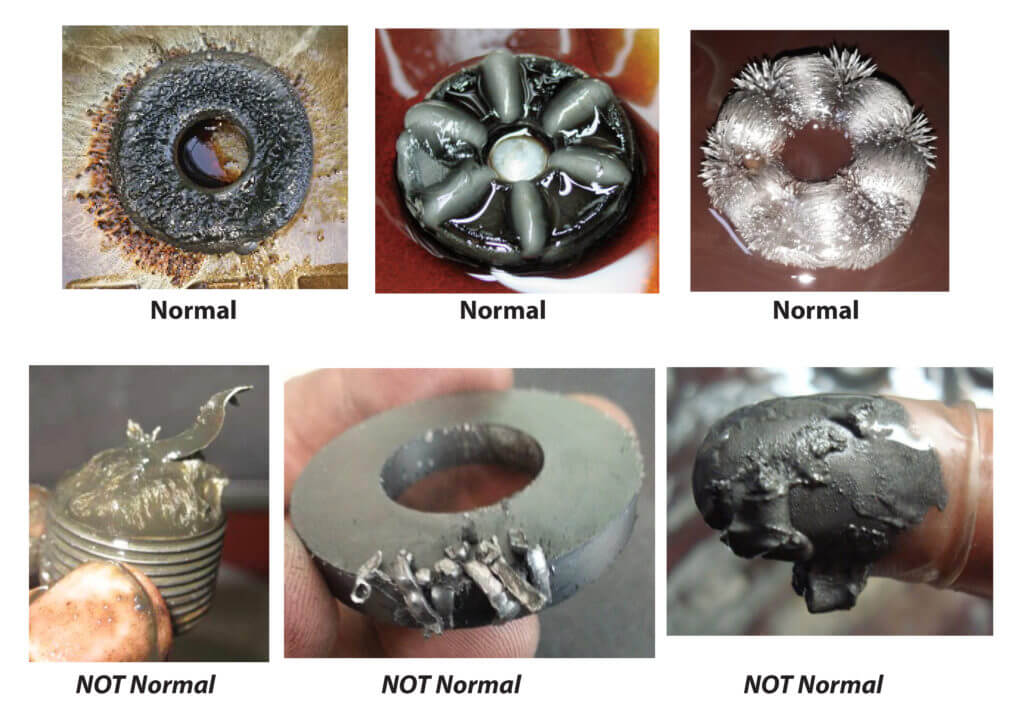
Metallic shavings on a transmission magnet. Normal versus not normal
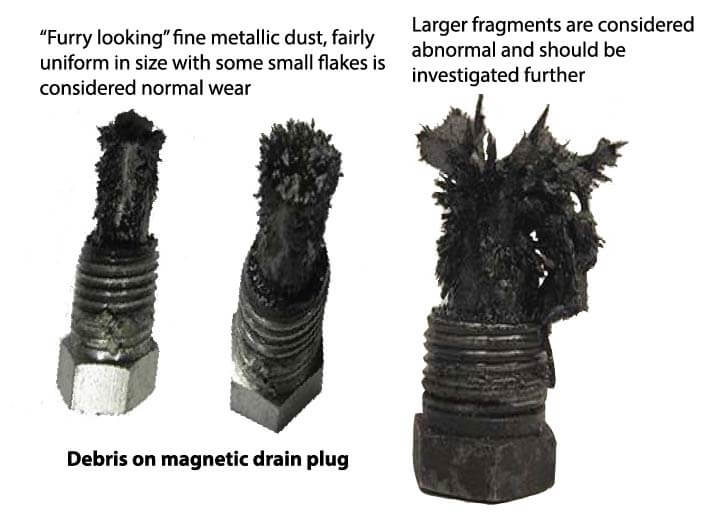
Normal and abnormal metallic particles on the magnetic drain plug
Where do those metallic shavings come from?
Simple, the metallic shavings come from the gears. Brass colored shavings come from the bushings. Black chunks are from the clutch discs.
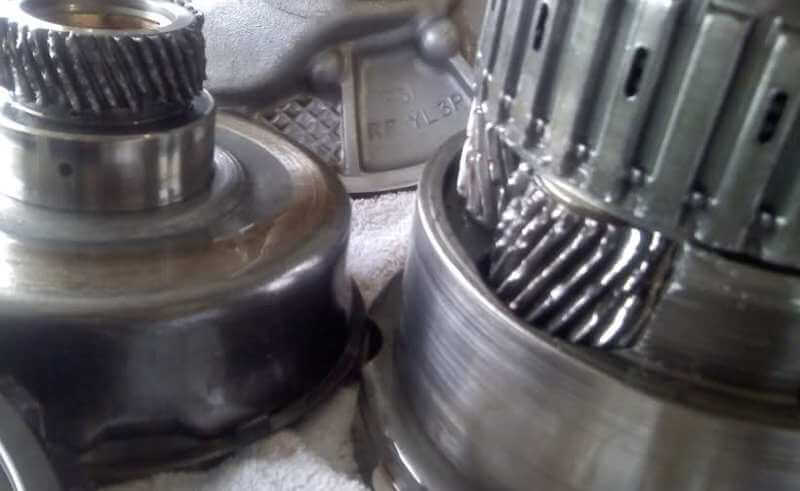
Chipped teeth on transmission gears
Other Clues to Watch Alongside the Magnet
The magnet alone doesn’t tell the whole story. When I inspect a transmission pan, I always look for:
• Color of the fluid: Burnt-smelling, dark brown or black fluid often accompanies excessive metal on the transmission pan magnet.
• Debris in the pan: Fibrous clutch material floating in the pan is a bad sign, especially if it looks like ground-up coffee.
• Filter condition: A clogged or collapsed filter indicates excessive wear or contamination in the system.
• If the fluid still looks reddish and clean, and the filter is in good shape, you might just be seeing normal wear—even with moderate metal on transmission pan magnet.
©, 2017 Rick Muscoplat
Posted on by Rick Muscoplat