
Kia P2096 Code: Causes and Fixes Explained
Most Common Causes of Kia P2096 Code
Quick Summary
The Kia P2096 code means the engine is running too lean after the catalytic converter—in simple terms, there’s too much oxygen in the exhaust stream downstream. In my experience, the most common causes are exhaust leaks, a failing downstream O2 sensor, vacuum leaks, or a fuel delivery issue. The key to fixing the Kia P2096 code is not guessing—it’s verifying fuel trim data, checking for leaks, and testing sensors before replacing parts.
What the Kia P2096 Code Really Means
A Kia P2096 code is defined as: Post-catalyst fuel trim system too lean (Bank 1). Modern Kia engines use
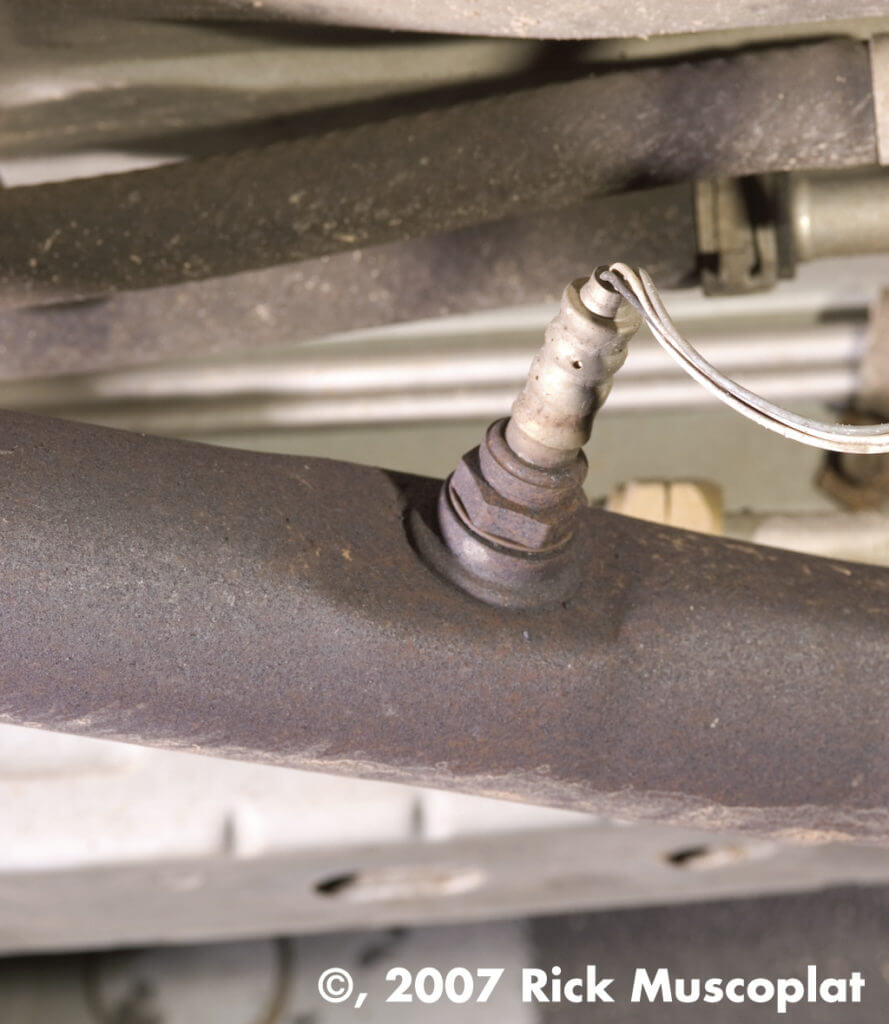
Screw in oxygen sensor
upstream and downstream oxygen sensors to monitor combustion and catalytic converter efficiency. The upstream sensor controls fuel delivery, while the downstream sensor verifies how well the catalyst is performing.
When the ECU detects a persistent lean condition downstream of the catalyst, it sets the Kia P2096 code.
Here’s the key insight most people miss:
This code doesn’t always mean the engine is actually lean—it means the computer thinks it is based on sensor data.
The Most Common Causes of a Kia P2096 Code
After diagnosing hundreds of lean codes, I can tell you the root causes usually fall into a handful of categories:
1. Exhaust Leaks (Most Overlooked Cause) — Even a small leak upstream of the downstream O2 sensor can pull in outside air and trick the sensor into reading lean.
• Cracked flex pipe
• Loose flange connections
• Rusted exhaust components
2. Faulty Downstream Oxygen Sensor — The rear O2 sensor is often blamed—and sometimes rightly so. Check the downstream O2 sensor for:
• Slow response time
• Biased lean readings
• Internal heater failure
3. Vacuum Leaks or Unmetered Air — Extra air entering the engine will lean out the mixture. Check for:
• Cracked intake boots
• Failed PCV hoses
• Intake manifold gasket leaks
4. Fuel Delivery Issues — If the engine isn’t getting enough fuel, it will run lean. Check for:
• Weak fuel pump
• Clogged fuel filter
• Dirty or restricted injectors
5. Exhaust Restriction or Catalyst Issues (Less Common) — A partially restricted catalytic converter can alter sensor readings.
How I Diagnose a Kia P2096 Code (Step-by-Step)
I’ll say this upfront: don’t throw parts at this code. I’ve seen too many wasted O2 sensors. Here’s the process I use in the shop:
Step 1: Check Fuel Trim Data — Start with a scan tool.
• Look at short-term and long-term fuel trims — If trims are high positive (+10% or more), the engine is compensating for a lean condition
Step 2: Compare Upstream vs Downstream O2 Sensors
• The Upstream sensor should switch rapidly
• The downstream sensor should be relatively stable
If the downstream sensor mirrors the upstream sensor, the catalyst may not be doing its job.
Step 3: Inspect for Exhaust Leaks — This is where I spend a lot of time.
• Listen for ticking noises
• Use a smoke machine if needed
• Check flex pipes and welds
Even a pinhole leak can trigger a Kia P2096 code.
Step 4: Check for Vacuum Leaks — Smoke test the intake system
• Inspect hoses and gaskets
• Pay close attention to PCV routing
Step 5: Test the Fuel System —
• Check fuel pressure under load
• Look at injector balance if needed
• Consider fuel quality issues
Step 6: Evaluate the Downstream O2 Sensor — Only after ruling out everything else:
• Check sensor response time
• Verify heater circuit operation
• Replace only if proven faulty
How to Fix the Kia P2096 Code
Common Repairs That Solve the Problem
• Repair exhaust leaks (very common fix)
• Replace the faulty downstream O2 sensor
• Fix vacuum leaks or intake issues
• Clean or replace fuel injectors
• Replace weak fuel pump (if pressure is low)
In rare cases:
• Replace catalytic converter (only after testing)
Mistakes I See People Make With the Kia P2096 Code
If I had to list the biggest mistakes, they’d be these:
• Replacing the O2 sensor without testing
• Ignoring exhaust leaks
• Not checking fuel trims first
• Assuming the catalytic converter is bad
The truth is, the catalytic converter is often blamed—but it’s rarely the root cause of a Kia P2096 code.
Can You Drive With a Kia P2096 Code?
Yes—but I don’t recommend ignoring it.
Driving with a lean condition can lead to:
• Poor fuel economy
• Increased engine temperatures
• Potential long-term engine damage
Fix it early, and you avoid bigger problems later.
Final Thoughts: My Diagnostic Philosophy
When it comes to a Kia P2096 code, I always go back to the same principle: Stop guessing and start testing.
This code is a symptom—not a diagnosis. If you follow a structured diagnostic approach—fuel trims, leaks, sensor behavior—you’ll fix it right the first time and avoid wasting money.
©, 2022 Rick Muscoplat
Posted on by Rick Muscoplat