
New Serpentine Belt Squeal
What Causes New Serpentine Belt Squeal and How to Fix It
If you’ve recently replaced your serpentine belt and are now dealing with an annoying serpentine belt squeal, you’re not alone. Many drivers experience this issue and wonder why a brand-new belt would make such an irritating noise. As someone who has diagnosed and fixed countless belt issues, I can assure you that understanding the root cause is key to resolving the problem effectively.
Why a New Serpentine Belt Squeals
A serpentine belt squeal can occur for several reasons, even when the belt is brand new. Here are some of the most common causes:
1. Improper Belt Tension Due To a Worn Out Automatic Tensioner
Automatic belt tensioners don’t last forever. In fact, they’re designed to last the life of an EDPM belt, which is around 100,000 miles. If you’ve replaced your belt, have an automatic belt tensioner, and now have a new serpentine belt squeal, head right for the tensioner. Here’s what’s causing it.
Rusted or Binding Spring— The torsion spring in
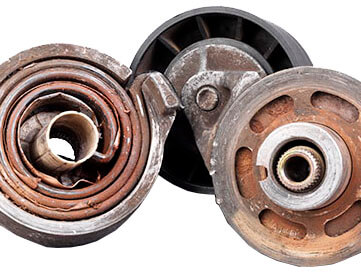
Broken/rusted belt tensioner spring
your old tensioner can work fine until it’s time to change the belt and then fail to produce enough tension afterward. Here’s why. To remove the old belt, you or the technician had to rotate the tensioner fully to release tension. That wound the oil spring to its maximum wind. If there is any rust or debris in the spring, it can bind after you release the tension. That prevents it from applying the right tension, causing the belt to squeal. Replace the tensioner because you can’t fix this.
Worn Pivot Bushing— The pivot bushing allows the tensioner arm to rotate. The bushing is plastic and can wear out, causing the tensioner arm to bind and not apply full tension to the belt.
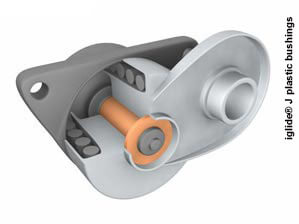
The tensioning arm rotates around the yellow plastic pivot arm bushing
Worn Tensioner Idler Bearing— A worn bearing can cause the idler to drag. An old belt can sometimes slide across the dragging idler, but a new belt won’t, causing a squeal. Always check the condition of idlers when replacing a belt.
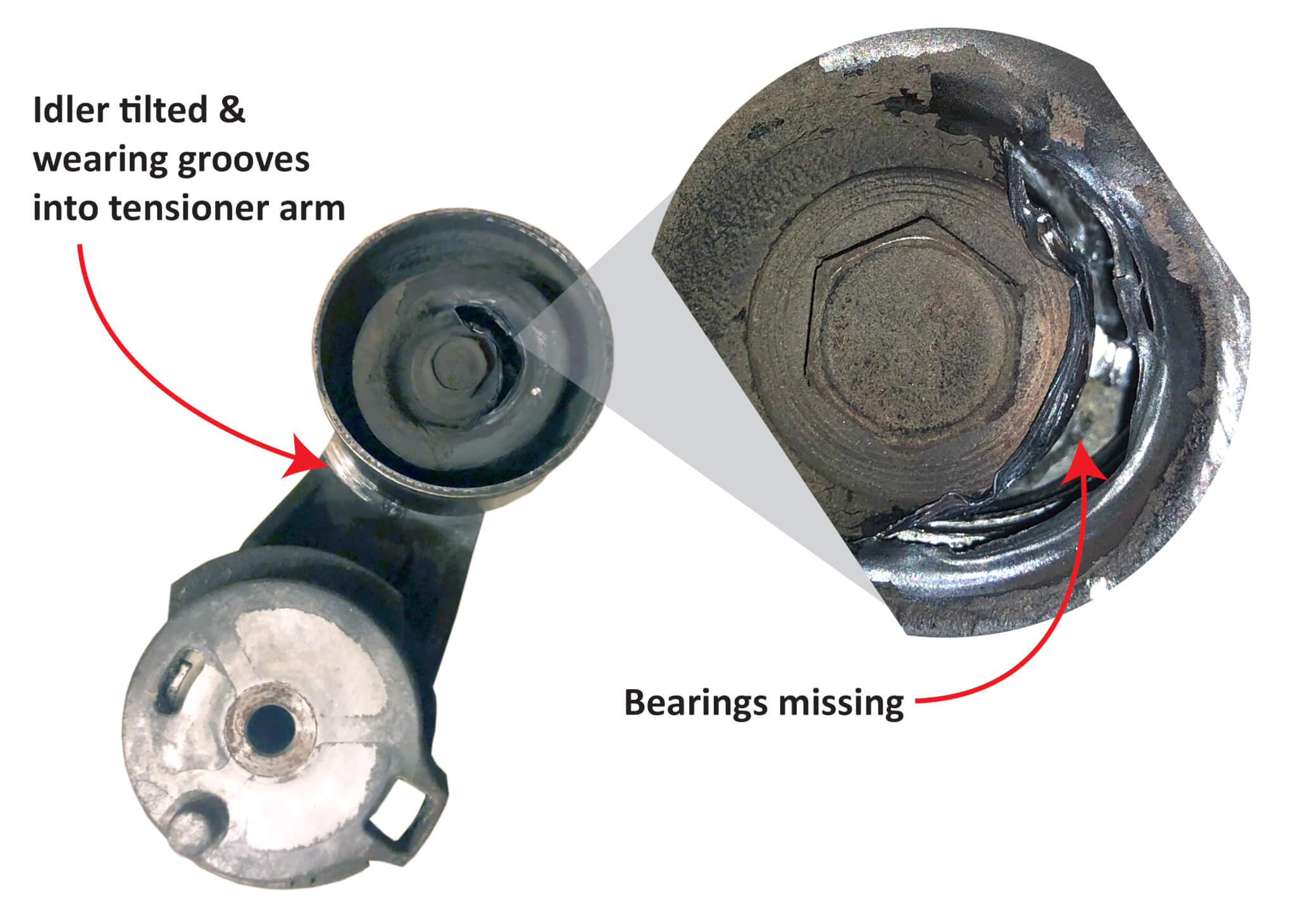

Components of an automatic belt tensioner
2. Pulley Misalignment
Another common reason for serpentine belt squeal is pulley misalignment. If the pulleys aren’t properly aligned, the belt won’t sit correctly, leading to noise and potential damage over time. Misalignment can result from improper installation or worn components.
Solution: Use a straightedge to check the alignment of the pulleys. If you notice any offset, it may indicate a worn-out component such as an idler pulley or harmonic balancer that needs to be replaced.
©, 2025 Rick Muscoplat
Posted on by Rick Muscoplat