
Seized Brake Caliper: Causes and Solutions Explained
How to Tell If You Have a Seized Brake Caliper and What to Do About It
If you’ve ever driven and noticed your car pulling to one side, feeling sluggish, or experiencing uneven brake wear, you might be dealing with a seized brake caliper. A seized caliper can wreak havoc on your braking system, reducing stopping power and even leading to dangerous driving conditions. I’ve worked on enough cars to know that recognizing a stuck caliper early can save you from costly repairs down the road. In this guide, I’ll walk you through how to diagnose a seized brake caliper, what causes it, how to fix it, and when you absolutely must replace it.
Know Your Brake Parts
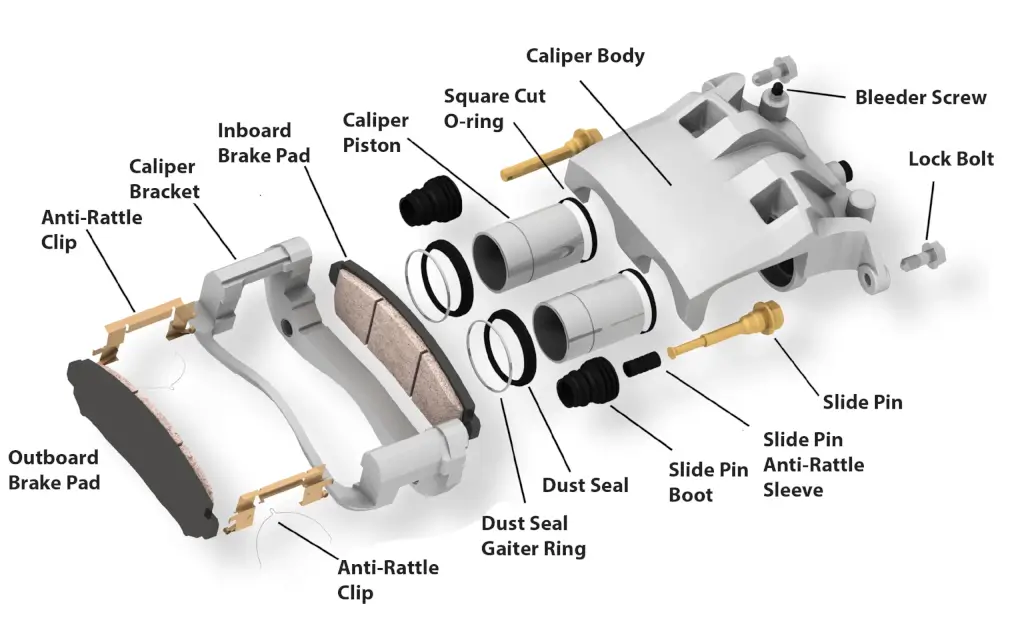
How to Tell If Your Brake Caliper Is Seized
The first step in dealing with a seized caliper is knowing how to spot the symptoms. Here’s what you need to watch for:
• Car Pulling to One Side – A stuck caliper can cause uneven braking force, making your car pull to the side opposite the seized caliper when braking. If you feel your car pulling even when you’re not on the brakes, that caliper may be partially stuck.
• Unusual Brake Pedal Feel – If your brake pedal feels unusually soft or spongy, or if you need to press harder than normal to stop, a seized brake caliper could be the culprit.
• Excessive Heat or Coming From One Wheel – After driving for a few miles, get out and carefully feel each wheel. A seized caliper generates excessive heat, making the wheel much hotter than the others. Be cautious—touching it directly can burn you.
• Uneven Brake Pad Wear – When you check your brake pads, a stuck caliper is probably to blame if one side is significantly more worn than the other.
• Reduced Fuel Efficiency – A seized brake caliper drags on the rotor, making your engine work harder and lowering your fuel economy.
• Burning Smell or Smoke – In extreme cases, a seized caliper generates so much friction that it burns up the brake pad and rotor, leading to a burning odor or even visible smoke.
What Causes a Seized Brake Caliper?
A seized caliper doesn’t just happen out of nowhere. There are several common causes, and knowing them can help you prevent the issue in the future:
#1 Most Common Cause: Corroded Caliper Slide Pins – Deteriorated caliper slide pin boots and rust around the boots allow moisture and road salt inside the slide pin bore where it corrodes the slide pin, causing it to stick.
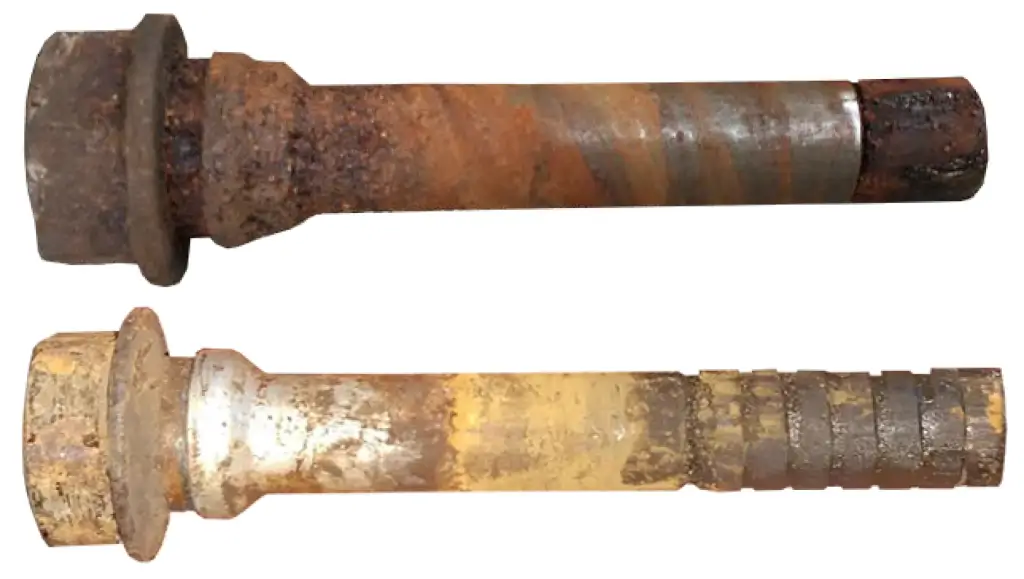
Corroded caliper slide pins
#2 Hardened Square Cut O-ring—The square cut O-ring “rolls back” the caliper piston. Over time, heat and age cause the O-ring to harden and resist twisting and rolling back. Once that happens, the brake application will force the caliper piston out, but the O-ring won’t roll it back, causing the caliper to apply pressure to the brake pads constantly.
#3 Damaged Caliper Piston Dust Boot—A tear 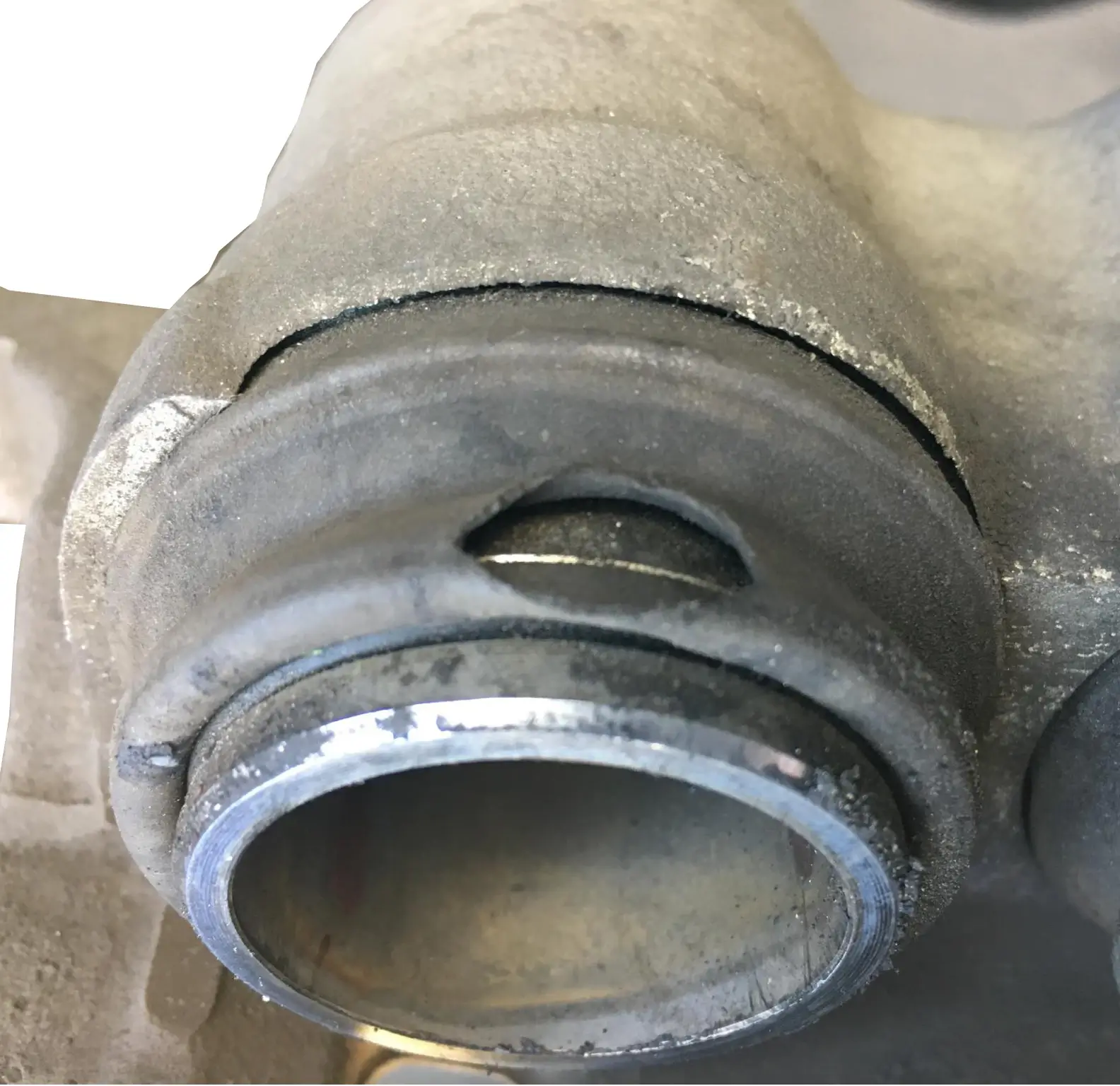 in the dust boot allows water to contact the caliper piston, causing it to rust. Once rusted, the piston scrubs against the square-cut O-ring, causing it to bind and not roll back. This prevents the caliper from releasing brake pressure on the pads.
This image shows a missing caliper dust boot that causes corrosion of the caliper piston.
#4 Contaminated Brake Fluid— Contaminated brake fluid causes all the rubber parts in the brake system to swell. That prevents the caliper piston from retracting.

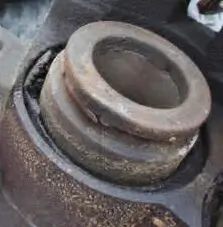
This image shows a swollen square cut O ring from brake fluid contamination.
How to Fix a Seized Brake Caliper
If you suspect a seized brake caliper, you need to act quickly. Here’s how I handle a stuck caliper and what you can do to fix it.
1. Inspect the Caliper and Slide Pins
Start by jacking up the vehicle and removing the wheel. Look at the brake caliper and see if it appears stuck against the rotor. Remove the caliper bolts and check the slide pins. If they’re corroded, clean them with brake cleaner and lubricate them with high-temperature grease before reinstalling. If the pins are pitted, replace them. Using a wire wheel or sandpaper will remove the protective anti-corrosion finish. New pins are cheap. Don’t risk messing up your brake job by reusing old slide pins.
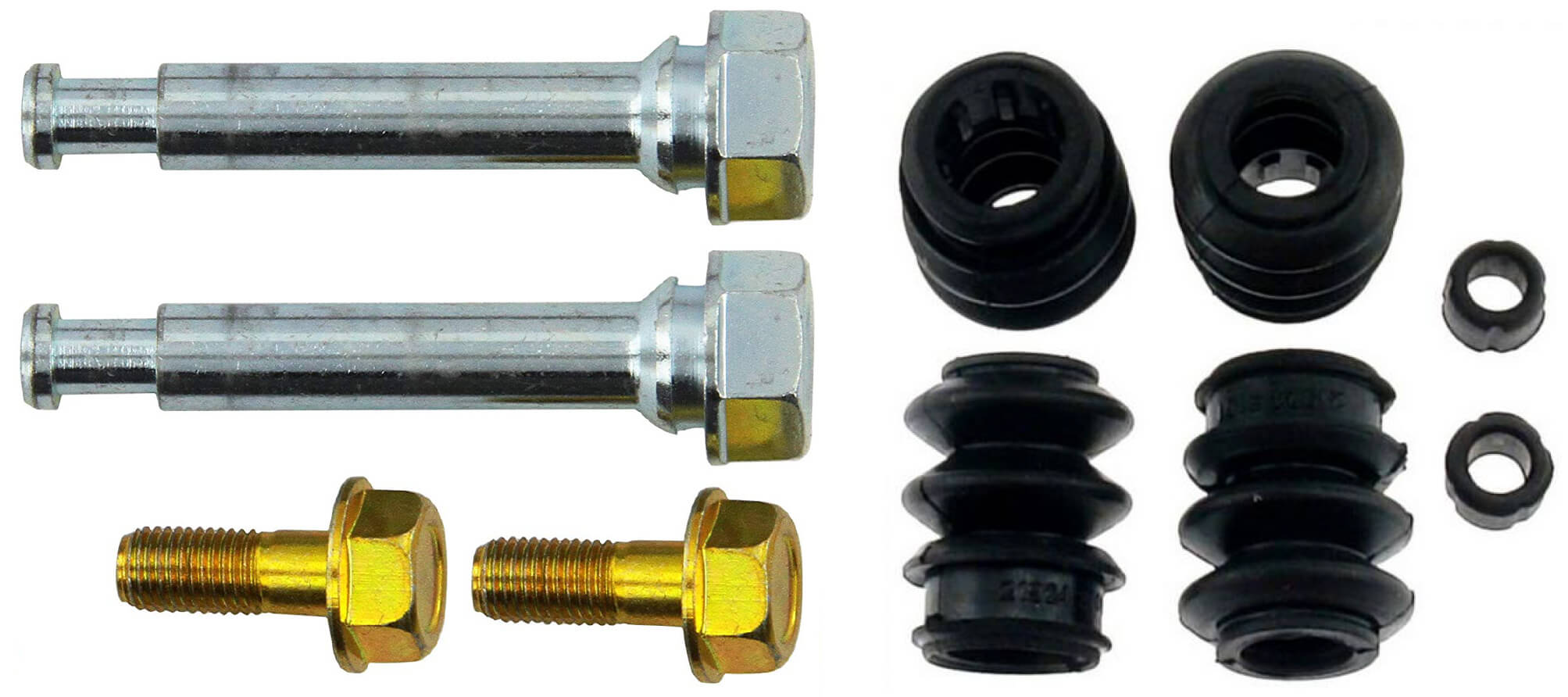
A set of new slide pins, sleeves and boots costs around $12. That’s a small price to pay for smoothly operating brakes
2. Replace the Old Square Cut O-ring—Purchase a caliper rebuild kit. It comes with new dust boots (for a dual-piston caliper), new square-cut O-rings, and a bleeder cap. This kit for a 2015 Subaru Forester costs around 4 from rockauto.com.
3. Check the Condition of the Caliper Piston— If the piston is rusted, replace it.
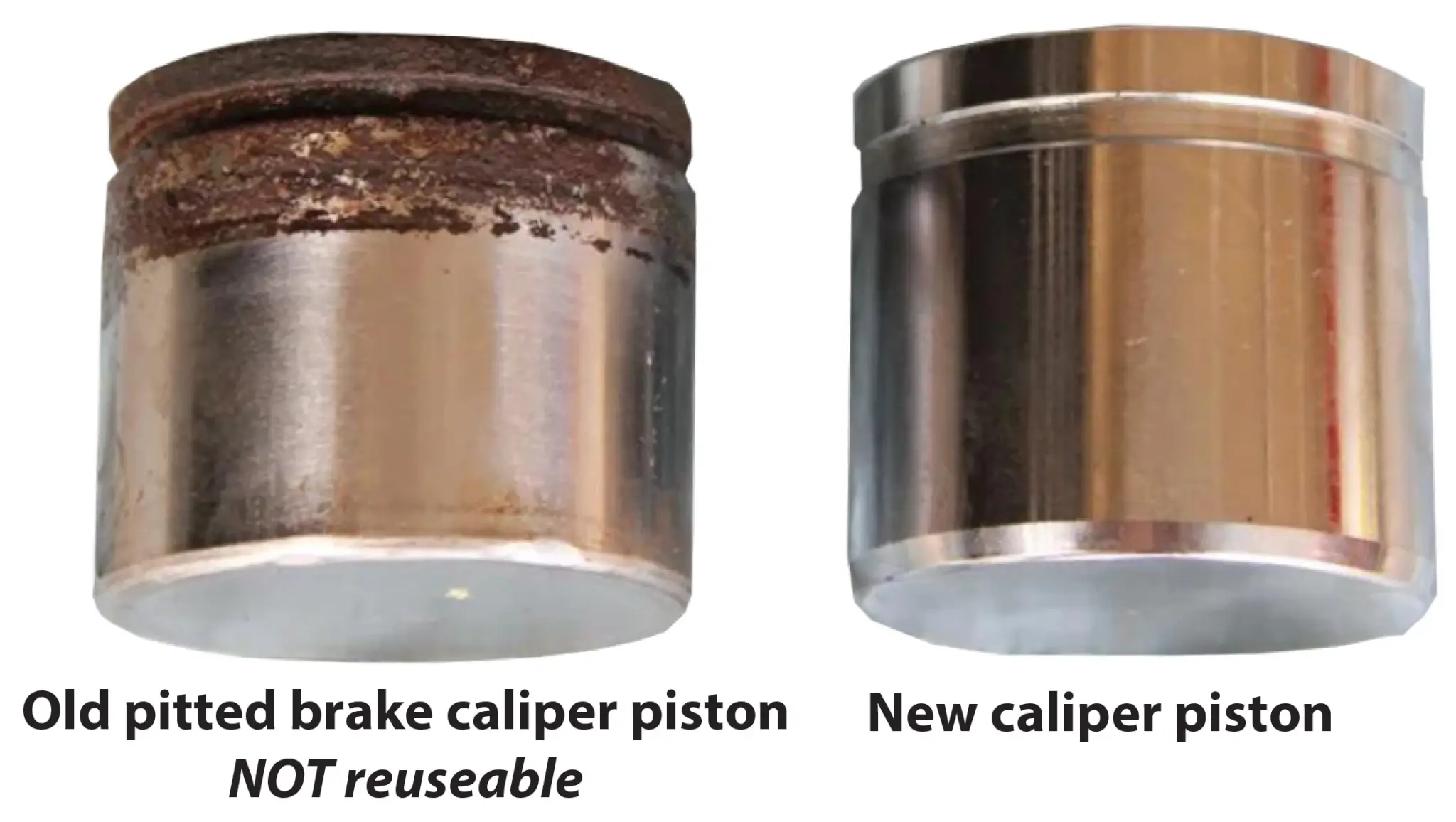
4. Flush and Replace Brake Fluid— If contamination is the issue, you’ll need to flush the entire brake fluid. Old, dirty fluid can accelerate corrosion and cause future seized caliper problems. Bleed the system and replace it with fresh, high-quality brake fluid.
Posted on by Rick Muscoplat