
Starter Makes Whirring Sound Instead Of Cranking
Why Your Starter Makes a Whirring Sound and How to Fix It
If you turn the key to start your engine and the starter makes a whirring sound instead of cranking your engine, that’s the sign of a worn out starter drive. In this article, we’ll explore the common causes of a starter making a whirring sound instead of cranking, the underlying mechanics of the starter system, and what steps you can take to diagnose and remedy the problem.
Understanding the Starter System
The starter is an electric motor that rotates the engine at a high enough speed to allow it to start. When you turn the key or press the start button, an electrical current flows from the battery to the starter motor. The starter solenoid connects the battery to the starter motor, allowing it to spin. In many starter designs, the starter solenoid also moves the starter gear (pinion gear) toward the ring gear on the flywheel, so the teeth mesh, allowing it to rotate the flywheel.
The starter system typically consists of three main components:
Starter Motor: The electric motor that drives the pinion gear.
Solenoid: A relay that acts as a switch to engage the starter motor.
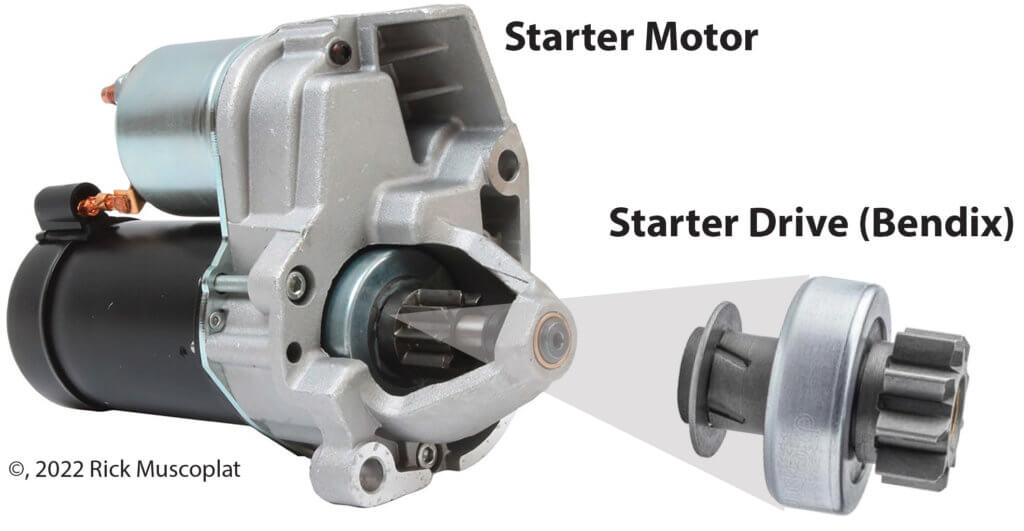
Starter drive gear (Pinion Gear): The small gear attached to the starter motor that engages with the flywheel or flexplate.
Starter makes a whirring sound: The Three Possible Causes
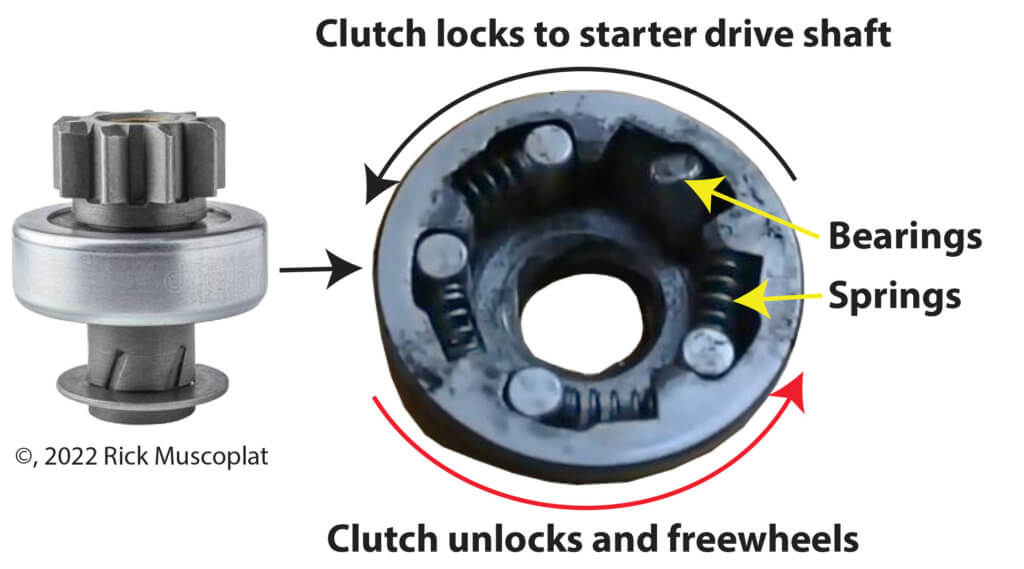
1) Failed starter drive— The one-way clutch in the starter drive has failed, allowing it to spin but not turn the flywheel.
2) Failed solenoid linkage— It works to connect power to the starter motor, but is not moving the starter drive to mesh with the ring gear on the flywheel.
3) Teeth missing from the ring gear on the flywheel— Teeth have been broken off the ring gear so the starter drive just free-wheels instead of contact the ring gear and turning the flywheel. This is the least common cause.
Here’s what fails in the starter drive
The starter drive contains a drive gear to mesh with the flywheel and a one-way clutch. The clutch is designed to transfer rotation and torque from the starter motor to the flywheel during cranking.
Once the engine begins to fire on its own, the flywheel rotates much faster than the starter motor. To prevent the engine from driving the start motor at high speeds that would damage the motor, the clutch allows the starter drive gear to freewheel, disengage from the flywheel, and spin backward into the starter.
A faulty one-way clutch in the starter drive is what makes the whirring sound
If the one-way clutch fails, the starter driver gear will engage with the teeth on the ring gear, and the starter motor will spin, but the starter gear won’t transfer the spinning motion to the flywheel’s ring gear. It’s that high-speed spinning that creates the whirring sound you hear.
A failed clutch prevents the starter motor from transferring rotation force to the flywheel
Starter drive clutch symptoms.
It’s the clutch in the starter drive that wears and causes starting problems. When it fails, the starter makes a whirring sound instead of cranking the engine. The first sign of clutch wear is a whine sound when you first try to start the engine. It sounds like this:
Multiple starting attempts can heat up the starter drive and make it work
As the starter shaft spins in the starter drive clutch, the clutch warms and can then engage. So, it may take 3 or more attempts before the starter works properly. Don’t kid yourself; this is not a fix. You must either replace the starter drive or replace the entire starter. One day, it will fail completely.
Replacing a starter drive requires the complete disassembly of the starter
Shops used to routinely replace the starter drive. However, due to the high cost of labor, these days, they replace the entire starter. However, you can replace a faulty starter drive yourself. Here’s the step-by-step guide to replacing a bad starter drive.
Step 1: Remove the Starter Motor
1) Disconnect the Battery: Disconnect the negative terminal of the battery to prevent any accidental electrical shorts or shocks. This is crucial for your safety.
2) Locate and Remove the Starter Motor: Using a wrench or socket, note the location of all wires connected to the starter motor. Then, remove and label each one. Then remove the starter bolts and the starter
Step 2: Disassemble the Starter Motor
3) Clean the Exterior: Before disassembling the starter motor, clean off any dirt or grime from the exterior with a cloth. This will help prevent contaminants from entering the motor during disassembly.
4) Remove the End Cap On The Starter Drive End: Depending on the design of your starter motor, there may be screws or bolts holding the end cap (or drive housing) in place. Remove these to expose the starter drive.
5) Remove the Starter Drive: The starter drive is usually held in place by a retaining ring or clip. Use pliers or a screwdriver to carefully remove the retaining ring, then slide the starter drive off the shaft. Take note of the orientation and any washers or spacers that are in place.
Step 4: Install the New Starter Drive
6) Compare the New and Old Drives: Before installing the new starter drive, compare it to the old one to ensure it’s the correct replacement part.
7) Install the New Drive: Slide the new starter drive onto the shaft, ensuring it’s oriented the same way as the old one. Reinstall any washers or spacers that were present.
8) Secure the Drive: Reattach the retaining ring or clip to secure the new starter drive in place. Make sure it’s firmly seated, and the drive moves freely on the shaft.
9) Reassemble the Starter Motor: Reinstall the end cap or drive housing and secure it with the screws or bolts you removed earlier.
Step 5: Reinstall the Starter Motor
10) Position the Starter Motor: Carefully position the starter motor back into its mounting location on the engine or transmission housing and install the mounting bolts.
11) Reconnect Electrical Connections: Reattach the electrical connections to the starter motor. Ensure the connections are tight and secure.
Step 6: Test the Installation
12) Reconnect the Battery: Reconnect the negative terminal of the battery.
13) Test the Starter: Start the vehicle to ensure the starter motor engages properly and the engine turns over smoothly. Listen for any unusual noises, which could indicate improper installation.
©, 2022 Rick Muscoplat