
Symptoms of a rack and pinion leak
Recognizing the Symptoms of a Rack and Pinion Leak
As someone who has worked on many vehicles over the years, I can tell you that diagnosing a rack and pinion leak early can save you from more costly repairs down the road. The rack and pinion system is essential for steering, and when it starts to fail, you’ll notice signs that shouldn’t be ignored. Let me walk you through the symptoms of a rack and pinion leak, so you can address the issue before it becomes a bigger problem.
1. Low or Leaking Power Steering Fluid
Power steering systems don’t use up fluid. So, if you have to add power steering fluid to the reservoir more than once a year, it’s because you have a hose or rack and pinion leak. Any noticeable drop in your power steering fluid level is a problem. If you see that the reservoir is low, check under your vehicle for reddish or light-brown fluid pooling on the ground. It’s often most visible near the front of the car, beneath the steering rack.
Also, I recommend inspecting the area around the rack and pinion for dampness or visible drips. The seals in the system can wear out over time, leading to leaks. Ignoring this will eventually lead to steering problems.
2. Difficulty Steering
When the power steering system starts losing fluid, the steering becomes harder and jerky, especially at lower speeds. If you find yourself using more effort to turn the wheel when parking or making tight turns, that’s a red flag. A rack and pinion leak disrupts the hydraulic pressure needed for smooth steering.
In my experience, many drivers attribute this to “just getting older” or “needing more strength,” but the truth is, it’s a mechanical issue, not a personal one. Don’t dismiss this symptom.
3. Unusual Noises When Turning
A whining or groaning noise when you turn the steering wheel is another sign of low power steering fluid caused by a hose or rack and pinion leak. These noises typically indicate that the power steering pump is struggling due to low fluid levels. You might also hear hissing or bubbling if air has entered the system through the leak.
Take it from me: noises like these shouldn’t be ignored. Driving with a failing steering system can lead to more severe damage, including to the power steering pump itself.
Check the Most Common Locations for a Rack and Pinion Steering leak
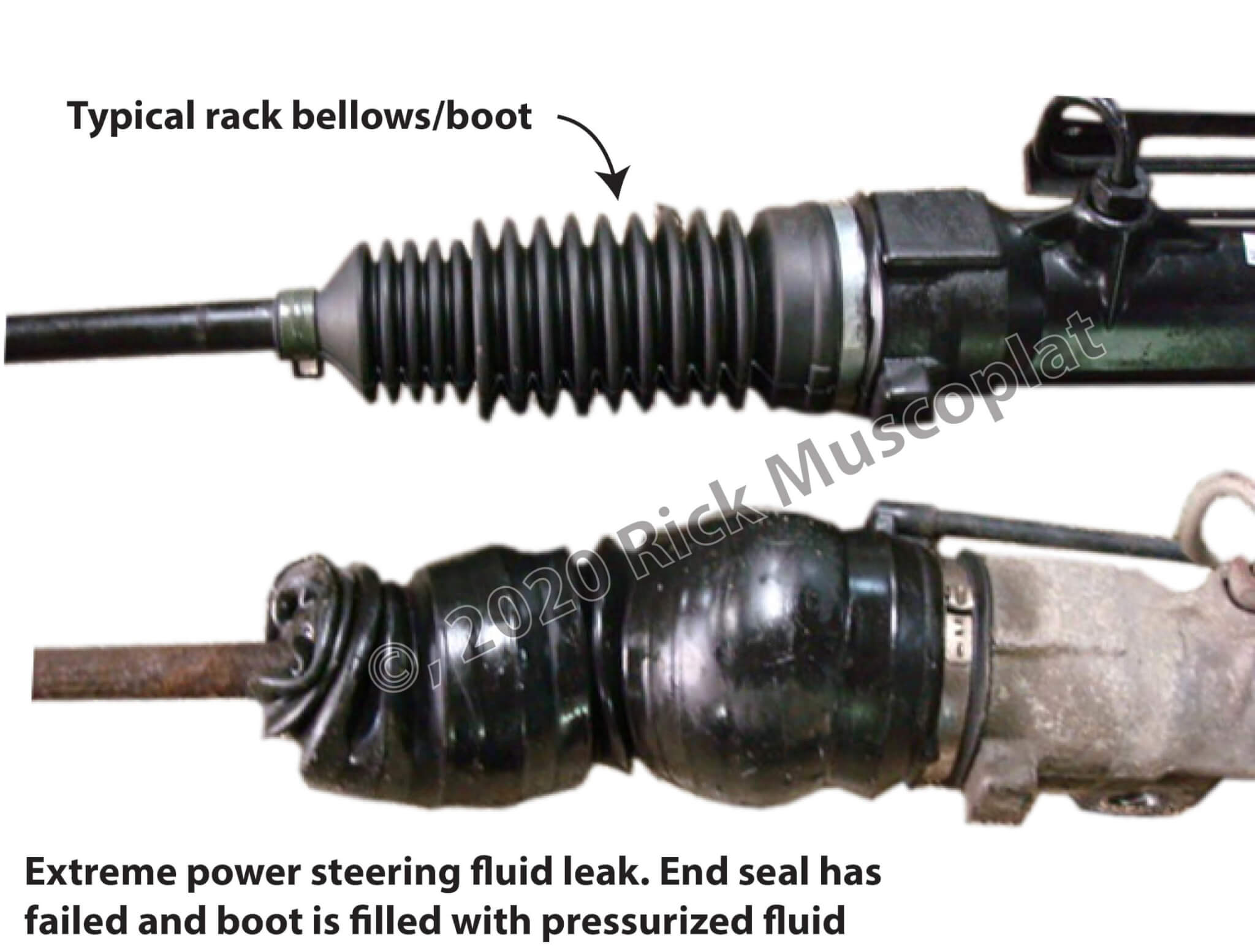
• End seal leaks show up as a boot leak— The protective boots at the ends of the rack and pinion aren’t designed to keep fluid in. Instead, they’re designed to keep water and road debris out. In other words, the boot/bellows should always be dry inside. If the boots have power steering fluid inside or are leaking, the boot isn’t at fault; the end seal is. That requires a full rebuild, and that’s not a typical DIY project. The boot/bellows
• Leaks around power steering hose fittings— Power steering hose fittings seal with a flare end, an O-ring, or a Teflon seal. Over-tightening an O-ring or Teflon seal can damage the seal, causing a leak.
• Leaks around the input shaft— The input shaft seals hold in high pressure fluid. If the wet spot is coming from the top of the rack, the cause could be a failed input shaft seal.
• Leaks at the hose fittings—Power steering hose fittings seal at the rack using a flare, O-ring, or Teflon seal. If you or a shop has recently installed new hoses or had to disconnect them, chances are the fittings are either over or under-tightened. Over-tightening the fitting can easily damage an O-ring or Teflon seal, forcing you to obtain and install new seals. So resist the temptation to tighten the fitting unless you have new O-ring or Teflon seals available. If you damage the O-ring or Teflon seal, the fitting will leak faster.
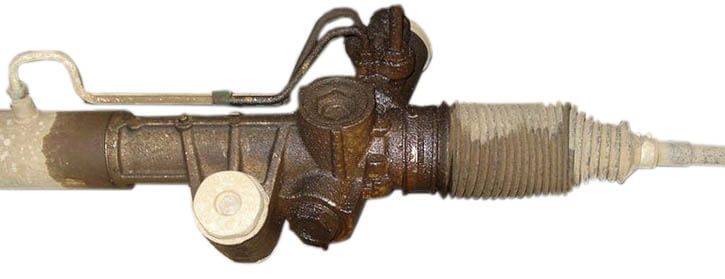
Power steering fluid leak from fittings
• Leaks from power steering hose crimp connector— Power steering hoses tend to leak at the metal-to-rubber junction at the crimp connector. Over time, the rubber shrinks and the crimp connector can no longer maintain the seal. If you find a leaking hose at the crimp connector, you have three choices:
1) Replace the entire hose with a new unit.
2) Purchase new high pressure hose rated for power steering fluid and replace the rubber portion of the line. Use a cutting wheel on a rotary tool to slice through the crimp collar. Then use a flat blade screwdriver to pry it off. Install the new hose and use two worm drive clamps at each end of the metal-to-rubber connection.
3) Remove the crimp connector using the procedure above. Remove the rubber hose and cut off the leaking portion. Reinsert the remaining portion onto the metal line and secure with hose clamps. This method should only be used until you can replace the aging rubber hose with a new section.
In my years of automotive experience, I’ve seen firsthand how small issues with the rack and pinion leak can snowball into significant problems. If you suspect a leak, inspect the system thoroughly or take your vehicle to a professional. Addressing it early can save you a lot of hassle—and money.
©, 2024 Rick Muscoplat
Posted on by Rick Muscoplat