
Timing belt inspection: A Step-by-Step Guide
How To Perform A Visual Timing Belt Inspection
The timing belt is responsible for synchronizing the rotation of the crankshaft and camshaft. This synchronization ensures that the engine’s valves open and close at the proper times during the intake and exhaust strokes. If the timing belt fails, it can lead to catastrophic engine damage, especially in interference engines, where the pistons and valves occupy the same space at different times. Therefore, performing a timing belt inspection is vital to maintaining the health of your engine and avoiding costly repairs. In this article, we’ll cover the steps to take to perform a timing belt inspection yourself and determine whether it needs replacement.
If you’re the original owner of a vehicle equipped with a timing belt, you should follow the carmaker’s recommendation for timing belt change based on the recommended time and mileage intervals. But if you’re not the original owner and don’t know how many miles are on the current timing belt or how long it’s been in the engine, you’ll have to check it yourself.
Step 1: Remove the upper timing belt cover
Most engines have at least one removable timing belt inspection cover. If yours has multiple covers, you only need to remove one to inspect the timing belt.
Step 2: A timing belt inspection includes viewing the backside and cogs sides of the belt
• Inspect the timing belt’s backside to check for a glossy (glazed) or gritty surface
A glossy look is caused by running against a smooth idler roller, while a gritty appearance indicates rust or corrosion on an idler roller that is constantly wearing away the belt’s backing. If you see either, replace the belt, idlers, and tensioner now.
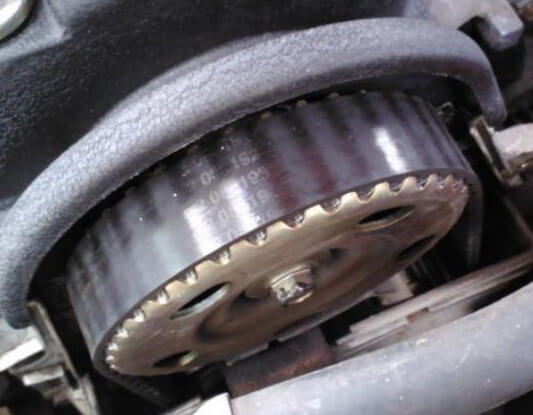
Notice how the cogs through the backside of the belt. This belt should be replaced as soon as possible.
• Check for cracks on the back side of the timing belt
Age, ozone, and heat cause a timing belt to crack. Once cracks appear on the backside of the belt, failure is imminent. Replace the belt ASAP if you see cracks like these.
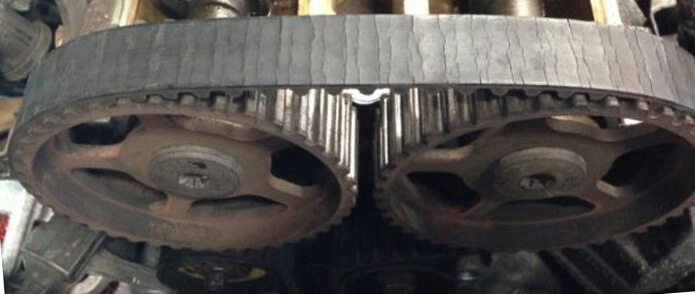
This timing belt needs to be replaced based on the cracks on the backside of the belt. It could fail at any time.
• Check the timing belt condition by looking for cog wear patterns
A cog pattern on the backside of the belt is an indication of age and wear. If you see cog impressions showing through the backside of the belt, it’s time to replace it.
• Check for an uneven wear pattern
This image shows evidence of an impending idler roller failure. It indicates that the bearing is starting to bind and cause the timing belt to slide over the idler instead of rolling over/under it. If you see uneven wear on the backside of the timing belt, replace it and all the idler rollers.
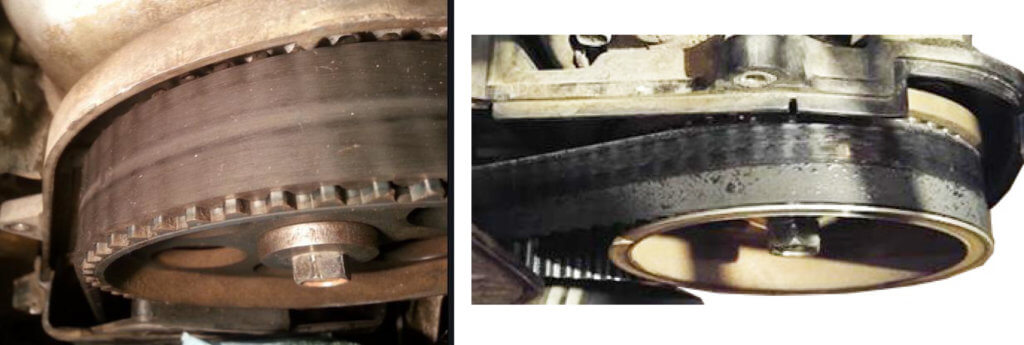
These timing belts were damaged by at least one worn-out idler roller that’s binding
Step 3: Inspect the teeth on the timing belt
• Smooth teeth on the timing belt
The teeth (cogs) on a good timing belts should be smooth and symmetrically shaped. If the teeth have an hourglass shape, the timing belt is worn and should be replaced.
• Missing timing belt teeth
Rotate the engine by hand and inspect the teeth/teeth on the entire belt. If you see any missing teeth, replace the belt immediately. The maximum allowable tolerance for missing or damaged timing belt teeth is 0.
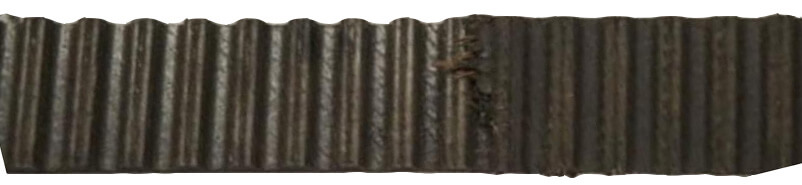
This timing belt is missing teeth and must be replaced immediately.
Step 4: Inspect the timing belt for fraying
• Check for edge fraying
Examine the front and back edges of the belt for any signs of fabric fraying. That’s a sign of a worn/cocked idler roller that’s not allowing the belt to run in the center of the pulleys. If you see fraying, replace the belt and the worn idlers.
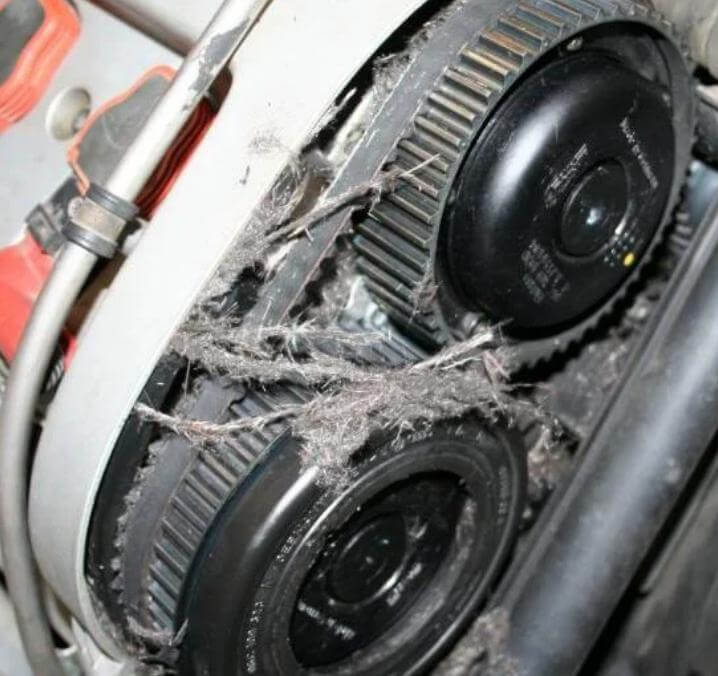
This timing belt was destroyed by misalignment due to a worn idler roller.
Step 5: Check for contamination
Check for wet spots on the belt. They could be caused by leaking coolant or an oil leak. Either type can damage the belt.

This image shows a contaminated timing belt caused by a coolant leak.
Performing a visual timing belt inspection is a straightforward process that can help you catch potential issues before they become serious. If you’re unsure about the condition of your timing belt or if you find signs of wear during your inspection, it’s always best to consult a professional mechanic for further evaluation and replacement. Taking the time to perform a timing belt inspection is a small investment that can pay off in the long run by keeping your vehicle running smoothly and reliably.
Posted on by Rick Muscoplat