
Turbocharger Failure: Diagnose and Fix Problems Fast
Understanding Turbochargers: How They Work, Fail, and Get Diagnosed
As a professional who has diagnosed and repaired my share of boosted engines, I can tell you firsthand that the rise in turbocharged vehicles has changed the game for every shop in America. Back in 2010, only about 10% of vehicles left the factory with a turbo. Fast forward to 2025, and nearly half of all new vehicles are turbocharged. That means turbocharger failure diagnosis is no longer a specialty—it’s an everyday requirement in every bay.
My goal here is to share not just how turbochargers work, but also what goes wrong, and how I approach diagnosis without tearing the entire system apart unnecessarily.
How a Turbocharger Works at Its Core
A turbocharger relies on three main components: the turbine, the compressor, and the bearing system that connects them. Exhaust gases spin the turbine wheel, which is mechanically linked to the compressor wheel via a shaft supported by precision bearings. The compressor wheel pulls in and compresses fresh air before it enters the engine, significantly increasing engine power.

The size of the turbine and compressor wheels matters. If they’re too small, exhaust backpressure can cause a loss of power. Too large, and turbo lag will frustrate the driver. This is why OEM engineers spend a significant amount of time balancing size for efficiency and responsiveness—mistakes here can lead to early turbocharger failure.
The Crucial Role of the Wastegate, Blow Off Valve, and Bypass Valve in Boost Control
Understanding how the wastegate, blow-off valve, and bypass valve interact is the fastest way to diagnose a turbocharger failure before disassembly.
Wastegate— The wastegate’s job is to divert excess exhaust gases away from the turbine, controlling the speed of the turbine and preventing it from spinning too fast.
When boost pressure climbs past the calibrated limit, the excess pressure compresses the spring, forcing the wastegate to open. As it opens, a portion of the exhaust gas is diverted around the turbine, controlling turbine speed and preventing excessive boost. If a wastegate sticks open, you’ll see underboost. If it sticks closed, overboost can occur, which often leads to severe turbocharger failure.
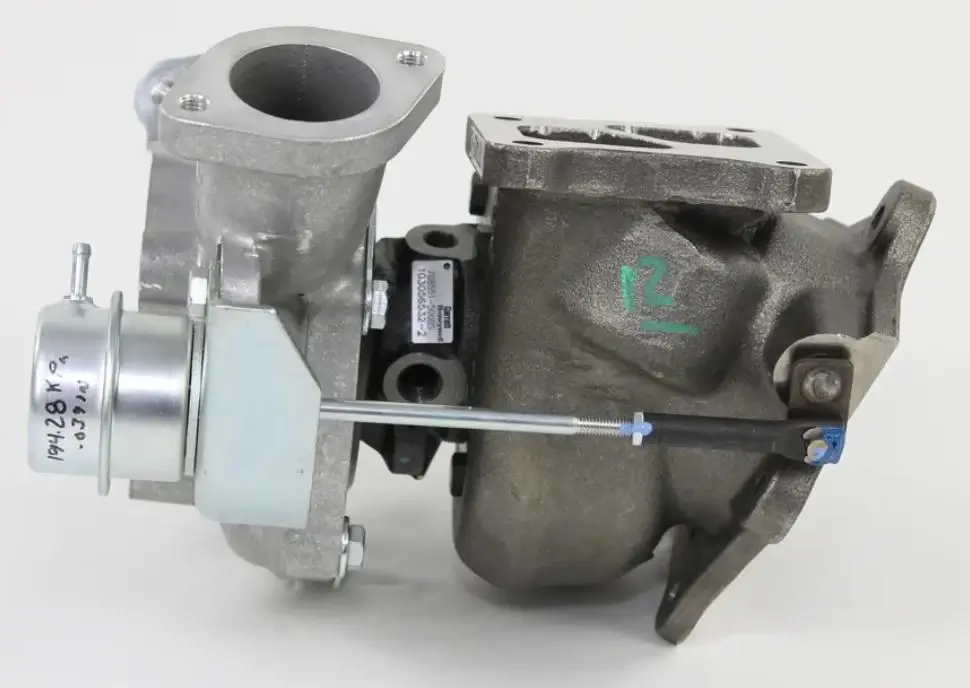
This image shows a vacuum-operated wastegate

Blow off valve— When the throttle snaps shut under boost, the blow off valve vents excess pressure to prevent compressor surge. A leaking or stuck blow-off valve can cause erratic boost levels and strange noises.
Bypass valve— Similar to a blow-off valve, but often recirculates air back into the intake, the bypass valve helps keep airflow smooth during throttle changes. A failed bypass valve can mimic the symptoms of a turbocharger failure by disrupting boost control.
On many modern vehicles, these components are electronically or vacuum-controlled, and testing them before pulling a turbo can save hours.
What Leads to Turbocharger Failure
Over the years, I’ve seen the same culprits again and again:
1) Oil starvation or contamination – This kills the bearings quickly.
2) Wastegate malfunction – Either stuck open or closed, both cause rapid turbocharger failure.
3) Blow-off valve leaks – This leads to compressor surge and shaft damage.
4) Bypass valve failure – Can cause boost spikes or dropouts.
5) Foreign object ingestion – Even a small piece of debris can destroy the compressor wheel.
Recognizing these patterns means I can often diagnose the problem before ever removing the turbo.
The Critical Role of Oil and Coolant in the Life of a Turbocharger
Turbochargers can spin at speeds of up to 300,000 RPM. To protect against overheating and bearing failure, the bearing surfaces are fed a constant supply of oil and the unit is cooled by engine coolant.
Most turbocharged engines also have an oil cooler where heat is removed from the oil as it exits the turbo.
The high heat created in the turbo has the potential to cause the thermal breakdown of oil. So, following the correct oil change interval as specified by the carmaker is critical to maintaining turbo operation. Most drivers follow the NORMAL service recommendations for oil changes when their driving habits more closely fit the SEVERE service category. That can cause early and expensive turbo failure.
My Step-By-Step Turbocharger Diagnosis Process
1. Visual Inspection— I start with the simple stuff. Missing under-engine covers often mean hoses or connectors are exposed to road debris—this is how I’ve caught cracked boost hoses and damaged bypass valves before hooking up a scan tool.
2. Scan Data Analysis— Next, I check the boost pressure against the desired values. A large deviation points me toward a faulty wastegate or a sticking blow-off valve. I’ll pulse the actuator using a vacuum pump or scan tool to verify movement.
3. Manual Testing— Whenever possible, I manually actuate the wastegate and test the bypass valve with a hand vacuum pump. If either fails to hold pressure or vacuum, I know we’ve found the root cause of the turbocharger failure.
4. Controlled Road Test— With live data logging, I drive under controlled conditions. If the boost curve shows sudden drops, the blow-off valve may be bleeding pressure. If boost skyrockets unexpectedly, the wastegate or bypass valve is likely stuck.
Preventing Turbocharger Failure
From my experience, prevention boils down to:
• Timely oil changes with the correct spec oil.
• Regular inspection of wastegate, blow off valve, and bypass valve operation.
• Ensuring all hoses and clamps are secure to avoid boost leaks.
By following these checks, I’ve seen customers extend turbo life well past 150,000 miles.
©, 2025 Rick Muscoplat
Posted on by Rick Muscoplat