
Understanding Reserve Capacity versus Amp Hours
What is Reserve Capacity versus Amp Hours (AH) on a Battery?
When it comes to automotive and deep-cycle batteries, two of the most critical metrics you’ll encounter are Reserve Capacity (RC) and Amp Hours (Ah). Both of these measurements are crucial for understanding a battery’s performance and suitability for specific applications, but they represent different aspects of battery power and endurance. Understanding the difference between reserve capacity versus amp hours can help you choose the right battery for your needs, whether it’s for your car, boat, RV, or any other application requiring reliable power storage. This article will explore what Reserve Capacity and Amp Hours mean, how they differ, and how each measurement applies to various battery uses.
What is Reserve Capacity (RC)?
A battery’s reserve capacity, or reserve capacity rating, measures the time in minutes that a 12V battery can sustain a 25-amp load before its voltage drops to 10.5V. This rating is crucial for understanding a battery’s ability to deliver energy consistently without relying on the vehicle’s charging system. Essentially, the reserve capacity tells us how long a fully charged battery can continue to provide power before it needs to be recharged or replaced. Comparing the RC of several batteries allows for a direct comparison of power.
Reserve capacity is especially significant for lead-acid batteries, commonly used in vehicles, as 10.5 volts is considered the point at which a lead-acid battery is “dead.” This makes the reserve capacity rating a critical factor when selecting the right battery, representing the maximum amount of energy available rather than just a standard measurement.
Reserve Capacity Testing
To determine a battery’s reserve capacity, the battery must be fully charged first. The manufacturer then draws 25 amps of power from the battery at 80°F until the voltage falls below 10.5 volts. The time it takes for this to happen is recorded as the battery’s reserve capacity, expressed in minutes.
Although reserve capacity is essential for lead-acid batteries, it also applies to lithium batteries, which can offer more power than traditional lead-acid batteries due to their advanced technology and ability to reach a deeper depth of discharge without causing significant harm. However, most lithium batteries, including those in our ProConnect Series and Baja Series, typically do not list a reserve capacity rating. Instead, they use the amp-hour measurement to describe battery capacity.
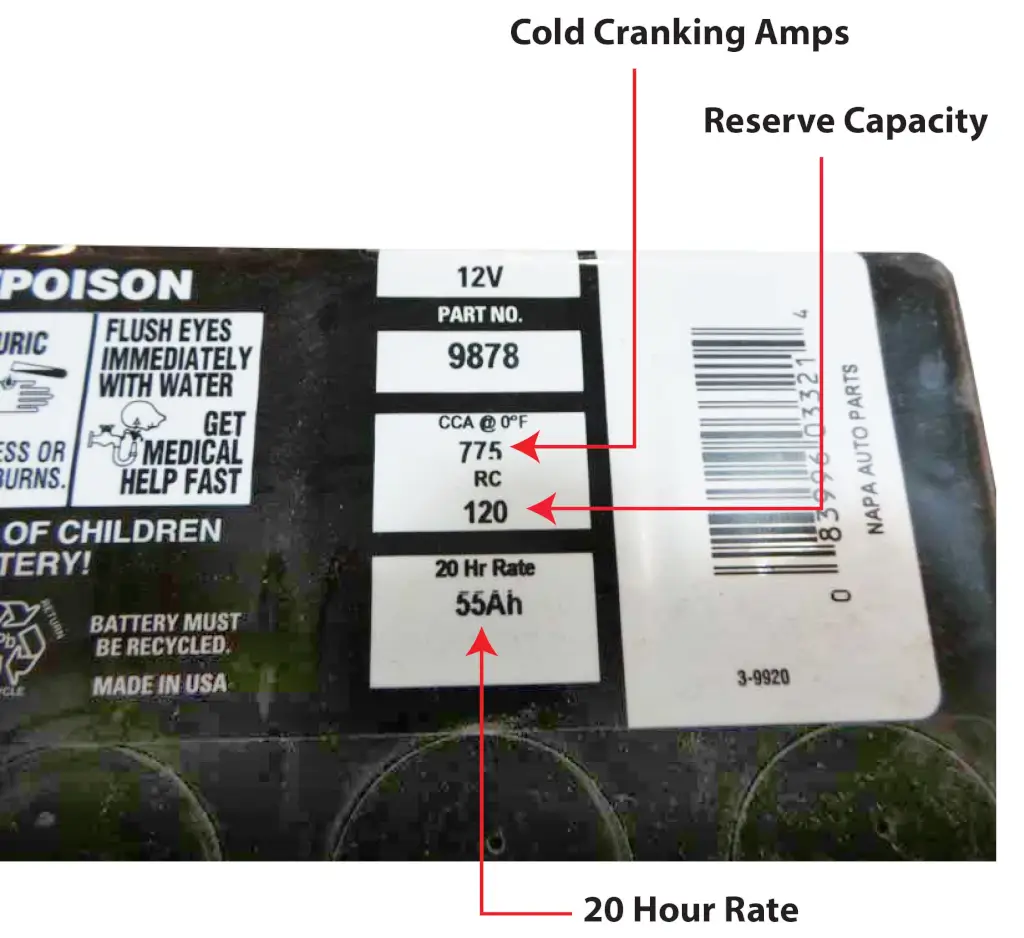
How much reserve capacity do you need?
Here are some typical current (amp) draw for vehicle accessories when run without the engine or charging system operating
Ignition system 2-9-amps
Radio 0.5 –5-amps
Windshield Wipers 7.5-amps
Headlamps (Low Beam, Dim) 17-18-amps
Headlamps (High Beam, Bright) 19-20-amps
Parking Lights 4-10-amps
Fog Lamps 8-amps
Brake Lights 6-11-amps
Interior Lights 2-4-amps
Hood Light 0.5-1.0-amps
Horn 4-amps
Power Window (one window) 5-amps
Trunk Light 0.5-1.0-amps
Blower motor 10-14-amps
Heated Rear Window Defogger 13-28-amps
Heated Seat 4-5-amps
Power Seat Motor 10-13-amps
Starter motor (Summer—Gas) 150-200-amps
Starter motor (Diesel) 450-550-amps
Starter motor Winter (Gas) 250-350-amps
Starter motor (Diesel) 700-800-amps
Battery Reserve Capacity vs. Amp Hours
While reserve capacity is a key factor in understanding a battery’s power potential, it’s not the only metric to consider. Both reserve capacity and amp hour ratings offer unique insights into a battery’s performance and power delivery, and it’s important to understand how each one contributes to a complete picture of a battery’s capabilities.
The amp hour (Ah) rating is a crucial measure often more commonly referenced than the reserve capacity (RC) rating. While RC is a measure of time—specifically, how long a battery can sustain a load before its voltage drops to a certain level—the amp hour rating indicates how many amps the battery can deliver over the course of one hour.
Where reserve capacity verus amp hours is important
Reserve Capacity is More Important For Automotive Use
Reserve Capacity is automotive use is important because it indicates how long the battery can support the vehicle’s electrical systems in the event of an alternator failure. This can be crucial if you’re stuck on the road and need to keep lights, emergency flashers, or even the radio running while waiting for help.
Amp Hours is More Important for Deep Cycle Marine and RV applications
Amp Hours is typically associated with deep-cycle marine batteries, which are designed to be discharged and recharged regularly, making total energy capacity the primary concern. Ah measures the total energy capacity of the battery, making it crucial for applications requiring long-term, steady power supply.
The differences between reserve capacity versus amp hours
• Reserve capacity is measured in minutes, whereas amp hours are measured in amps per hour.
• Reserve capacity (or RC rating) is most commonly found on lead-acid batteries and not lithium or AGM batteries.
• Battery reserve capacity rating and amp hours are important metrics for assessing a battery’s stored energy, particularly in marine and RV applications.
• Cold Cranking Amps (CCA) and RC rating should both be considered when selecting the right starter battery type for your vehicle.
Use This Formula To Convert Reserve Capacity to Amp Hours
To convert reserve capacity to amp hours (AH), divide the reserve capacity by 60 and multiply the result by 25.
Ah = (RC / 60) x 25
To convert amp hours to reserve capacity, one must divide the amp hours (AH) by 25 and multiply the result by 60.
RC = (Ah / 25) x 60
Understanding the relationship between these two metrics is essential for accurately assessing a battery’s capacity and performance across various applications. This knowledge also allows for better comparisons between different vehicle batteries, helping you choose the right battery for your specific needs.
Posted on by Rick Muscoplat