
Understanding Tire Dry Rot: Causes and Prevention
Tire Dry Rot: Causes, Prevention, and Your Driving Safety
Tire dry rot, also known as sidewall cracking or sidewall checking, is a common issue that affects tires over time, especially those exposed to sunlight, heat, and certain environmental conditions. Understanding the causes, effects, and prevention of tire dry rot is crucial for maintaining vehicle safety and prolonging tire life.
NOTE: The term dry rot relating to tires is really a misnomer because tires don’t rot like lumber. Tires do dry out, but cracks in the rubber can also be caused by other factors. The tire industry doesn’t use the term “dry rot;” instead, they call it “Weathering.”
Tire dry rot is caused by these 7 things
• Age— As tires age they experience a breakdown of the rubber compounds. The useful life of a tire is 10 years from the date of manufacture. Tires older than 10 years will start to develop cracks from the breakdown.
• UV Exposure—Exposure to ultraviolet (UV) rays from the sun accelerates the degradation of tire rubber. UV radiation causes oxidation, which weakens the molecular structure of the rubber over time.
• Heat— Environmental heat and excessive heat caused by driving on underinflated tires. High temperatures, especially prolonged exposure to heat, can accelerate the chemical reactions that leads to rubber degradation. This is particularly problematic in hot climates or when tires are frequently exposed to heat sources such as asphalt roads. Driving with underinflated tires causes the tire shoulder areas to flex more than normal, causing excess heat buildup and degradation.
• Poor storage conditions— Storing tires at extremely high temperatures can also cause this type of degradation. This pertains more to wholesalers that improperly store tires. However, it can apply to car owners that store off-season tire in a hot garage or outdoor and exposed to sunlight.
• Not using the tires for long periods— The anti-ozonant additives in tires are distributed through the rubber through regular use and tire flexing. Tires that are only driven occasionally may present a brown discoloration known as “blooming.” Blooming is caused by ozone degradation at the surface caused by infrequent tire usage.
• Ozone damage— Storing tires near electric motors, battery chargers, generators, welding equipment, or other ozone-generating sources
• Chemical degradation— The application of tire dressing treatments can also accelerate rubber degradation. Avoid using any tire shine or tire dressing products that contain petroleum distillates or silicone. A motor oil leak can also cause rubber degradation. If you get oil or grease on your tires, remove it immediately.
The Practical Effects of Tire Dry Rot
Tire dry rot reduces the lifespan of your tires. But it also affects your safety.
Reduced Traction: Cracked rubber reduces the tire’s ability to grip the road surface effectively, compromising traction. This is especially dangerous in wet or slippery conditions.
Increased Risk of Blowouts: Dry rot weakens the tire structure, increasing the likelihood of blowouts, particularly at higher speeds or under heavy loads.
Handling and Stability Issues: Cracked tires may lead to uneven wear and affect the vehicle’s handling and stability, causing vibrations or steering abnormalities.
Aesthetics and Resale Value: Dry rot also affects the appearance of tires, making them look aged and worn. This can reduce the resale value of a vehicle.
How to prevent or slow down tire dry rot
While tire dry rot is inevitable with age, several preventive measures can help prolong tire life and minimize its effects:
• Proper Inflation— Aside from age, sunlight, and storage conditions, maintaining proper tire inflation according to the manufacturer’s recommendations is the most important thing you can do to delay dry rot. Under-inflation increases heat buildup and accelerates dry rot.
• Storage— Store tires in a cool, dry place (not your garage) away from direct sunlight when not in use. Consider covering tires or storing them indoors to protect them from UV exposure and weather elements.
• Use care when buying tire dressings and conditioners—Avoid all tire dressing products that contain petroleum distillates. Also, avoid tire dressings packaged in aerosol cans to avoid the propellant and solvents contained in those products. Choose a pump spray or aerosol spray. Choose a tire dressing for its UV protection abilities, rather than it shine features.
• Avoid Harsh Cleaning Chemicals— When cleaning tires, use mild soaps and avoid harsh chemicals that can accelerate rubber degradation.
• Rotate Tires Regularly— Regular tire rotation helps ensure even wear and extends tire life, reducing the likelihood of sidewall cracking due to uneven stress.
What does tire dry rot look like?
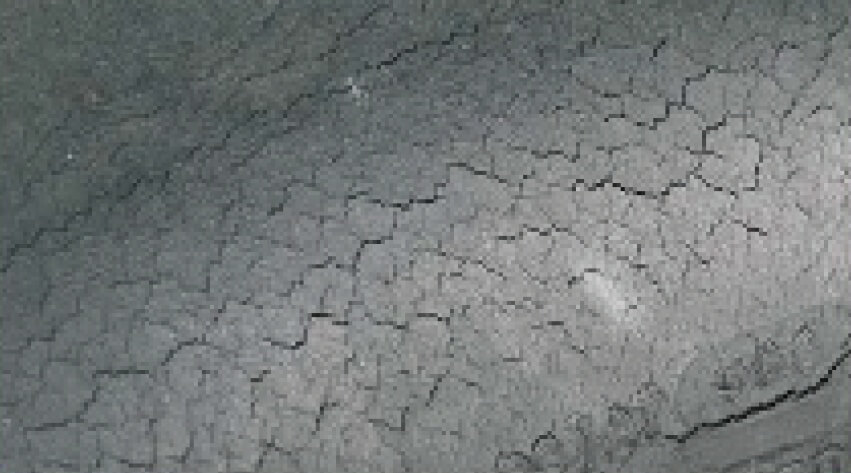
Cracks from underinflation
Tire dry rot is most noticeable on the sidewall, 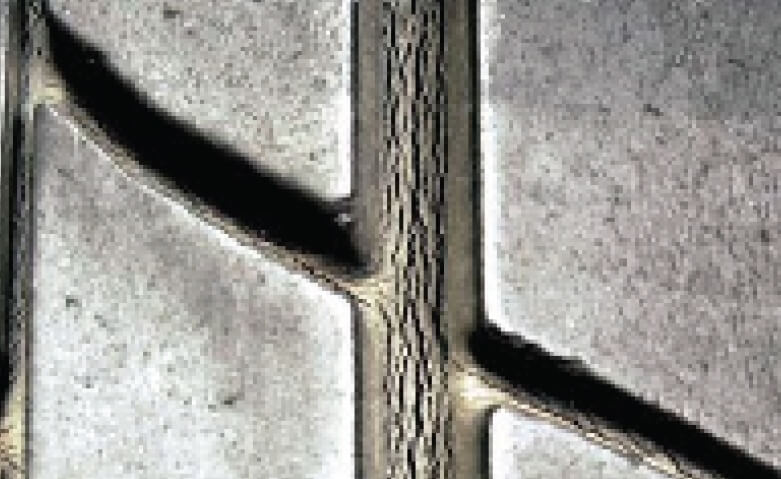 in-between tread blocks, and on the tread block itself. In advanced tire rot, the rubber starts to separate from the carcass. This can cause tire wobble at low speeds, something you can feel in the steering wheel. Dry rot usually appears all around the tire, not just in certain spots.
If you touch a dry rotted tire, you’ll notice that the rubber is hard and brittle. The rubber appears more grey than black.
Dry rot can also appear as brittleness
Breakable Appearance: The rubber may feel harder in some spots near the crack and may actually flake off.
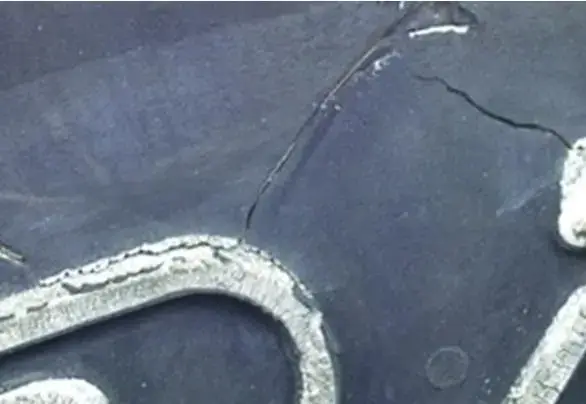
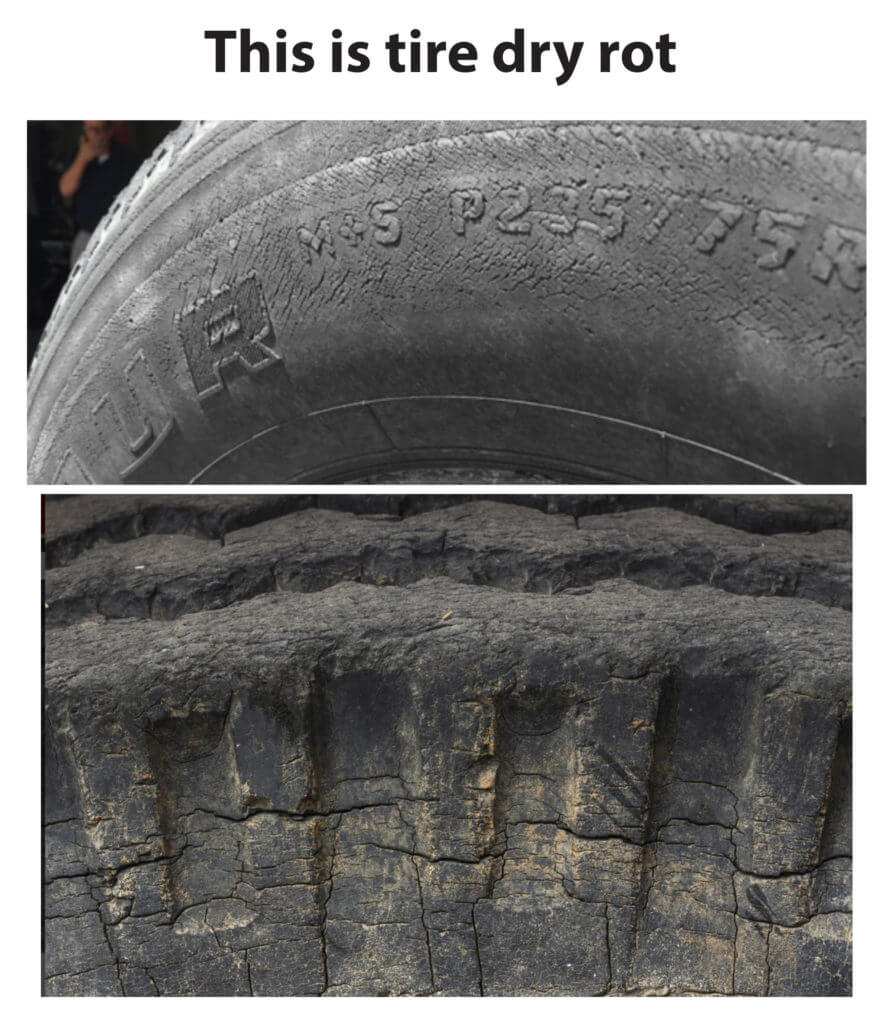
Tire dry rot
What’s the difference between dry rot and damage caused by underinflation?
This comes up quite a lot. Drivers see cracks in their tires and immediately suspect tire dry rot. They submit photos to online forums, and everyone says, “Oh yeah, that’s dry rot. Take them back to the tire store and get them replaced under warranty.” I’ve got news for you: cracks on the tire shoulders and sidewall near the shoulders are most often caused by underinflation, NOT tire dry rot.
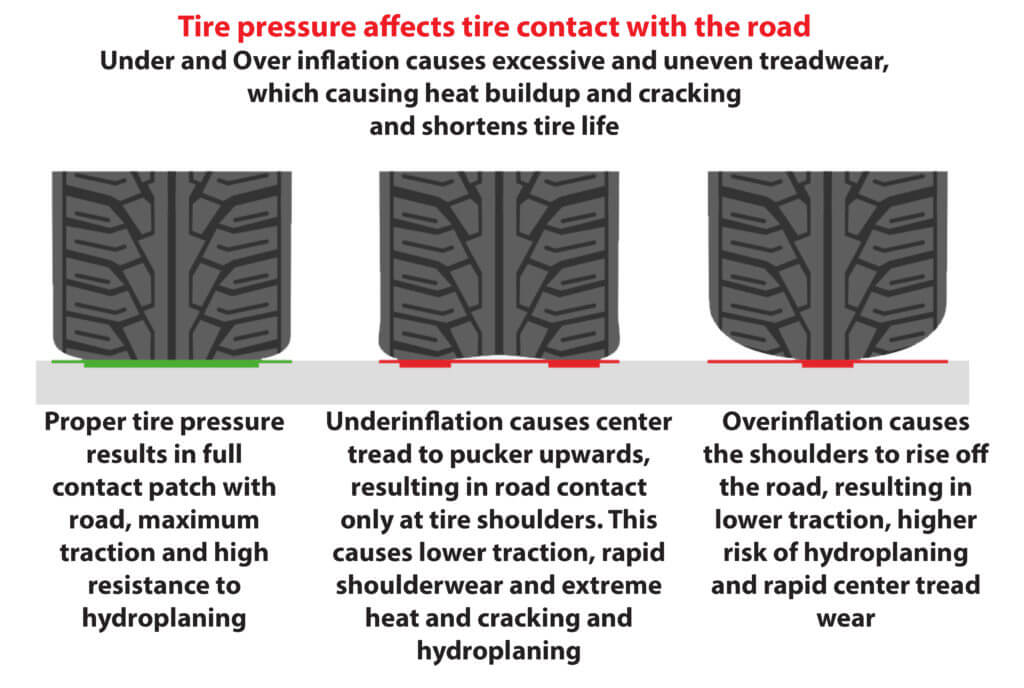
Tire pressure and tread wear
How does underinflation cause tire cracking?
When you drive on underinflated tires, the bulk of the vehicle’s weight is riding on the shoulders of the tires. This causes excessive tread wear and excessive heat building due to the additional flexing. It’s the heat buildup that accelerates rubber degradation and YOU caused it by not checking your tire inflation.
How to spot tire cracking caused by underinflation
What’s the difference between dry rot cracks and cracking caused by underinflation? Simple. First, underinflation causes rapid tread wear on the shoulders. So, the center tread will be deeper than the tread depth near the shoulders. Underinflation also wears off the sipes on the shoulder tread faster than the center tread.
If you notice shoulder tread wear, along with cracks but the center tread is in better condition, you’re got underinflation damage, not tire dry rot. Don’t expect any tire manufacturer to cover your tires under warranty.
Underinflation damage can also show up as deep, circular cracks on the sidewall. These large deep cracks are caused by excessive sidewall flexing due to underinflation, not dry rot.
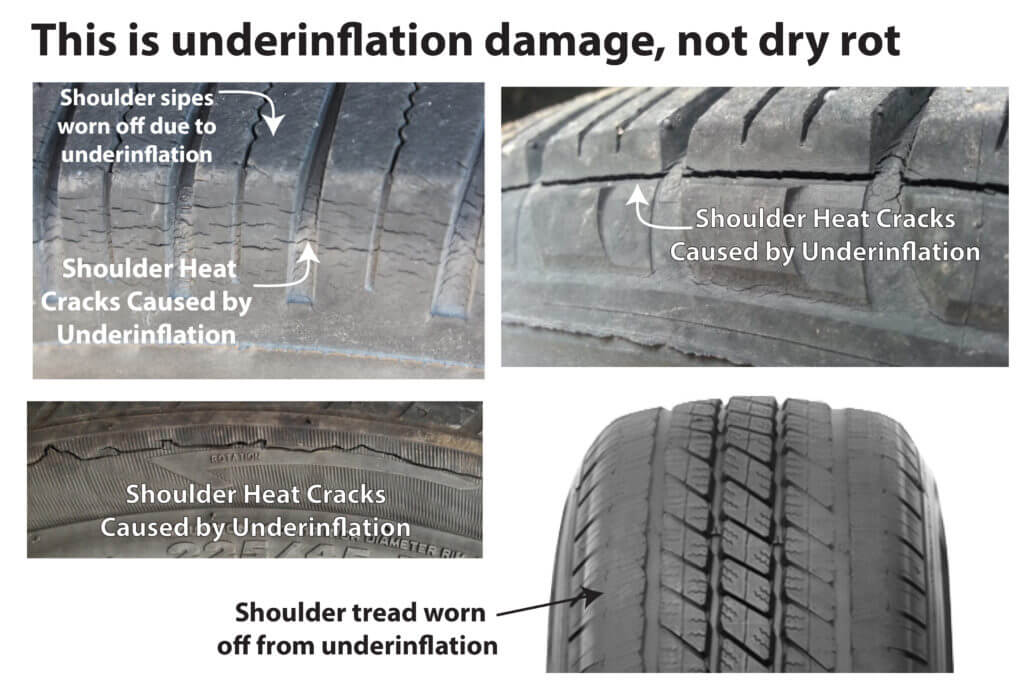
This is underinflation, not dry rot
That’s why tire inflation pressure is so important!
©, Rick Muscoplat
Posted on by Rick Muscoplat