
Can you plug a flat tire after you’ve driven on it?
Understand when it’s appropriate to use a tire plug
Repairing a tire with a tire plug after driving on it depends on several factors, including the extent of the damage and the condition of the tire. Here’s a breakdown of what you should consider:
Inspect the Tire Internally
Driving on a flat tire, even it its only for a block, can severely damage the internal structure. That’s why it’s critical to remove the tire from the rim to inspect it before performing any kind of tire repair.
Remove the tire and check for:
• Rubber dust or particles: Indicating internal breakdown.
• Blisters or bubbles: Indicating sidewall damage.
• Cracks or splits: In the internal structure, which can compromise the tire’s integrity
Here’s an example of a brand new flat tire that was punctured with a perfectly repairable hole but was driven on long enough to pull over to the side of the road
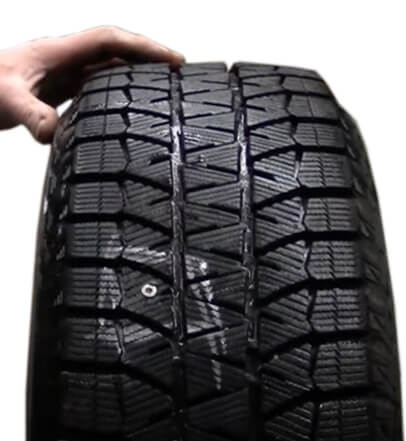
This tire would have been repairable had the driver not driven on it
Now let’s look at the INSIDE
Examine the sawtooth wear pattern near the tire bead. That’s caused by the wheel rubbing against the folded portion of the bead.
Then look at the powdered rubber that was scrubbed off of that sawtooth area. This tire is SEVERELY compromised. If you simply plugged this tire, you’d be driving on a death trap.
For the full video go to South Main Auto Repair’s Youtube site
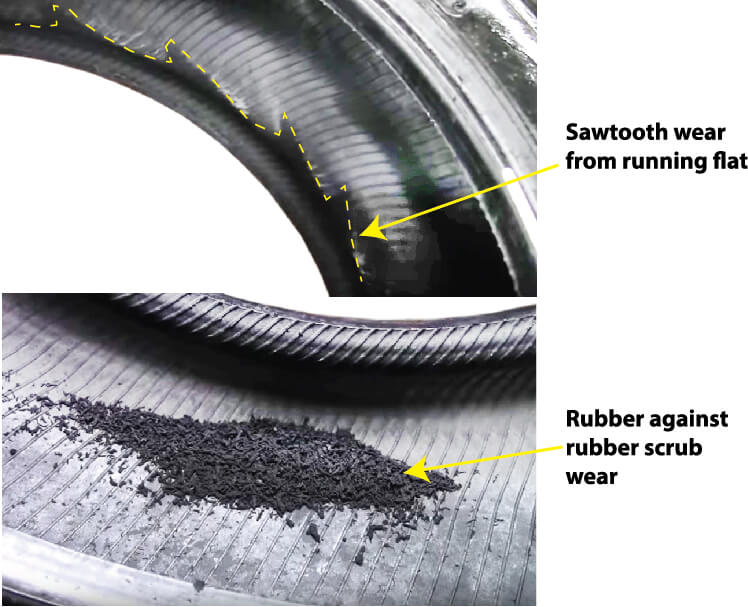
Here’s what the inside of the tire looks like after driving on it while flat. Notice the saw tooth wear on the side wall and all the rubber that’s been scrubbed off. This otherwise repairable tire is now junk.
Posted on by Rick Muscoplat