
Uneven brake pad wear patterns: Common Causes
Understanding Uneven Brake Pad Wear Patterns: What You Need to Know
As an experienced auto technician with years of experience diagnosing and correcting brake issues, I’ve seen firsthand how uneven brake pad wear patterns can lead to premature failure, poor braking performance, and unnecessary repair costs.
A recent study by Frost and Sullivan revealed that brakes are being replaced 34% more often than necessary due to uneven wear patterns and friction material separation. The Global Brake Safety Council (GBSC) supports this, pointing to cheap steel backing plates as a leading cause. Let me walk you through the real reasons your pads are wearing unevenly and what to look out for.
This article will examine the most common causes of uneven brake pad wear patterns.
1) Poor-quality backing plates are the most common cause of uneven brake pad wear patterns and friction separation
In my experience, the number one cause of uneven brake pad or rotor wear patterns is low-grade steel used in aftermarket backing plates. Unlike original equipment (OE) parts, aftermarket pads aren’t held to the same engineering standards. They’re designed to fit a wide range of vehicles but often fail to match the carmaker’s precise specifications. That’s where the problems begin.
When poor-quality steel is used in the brake pad backing plate, you’ll experience uneven brake pad wear and friction material separation.
What is a low-quality backing plate?
When steel is hot rolled, it develops a surface layer of iron oxide (rust) called mill scale. Some brake pad manufacturers rely on shot blasting to remove the scale before bonding the friction material to the pad. Then they paint the backing plate to slow down further rusting. Unfortunately, shop blasting still leaves pockets of rust that continue to corrode and expand. The result? A process called rust jacking, where the expanding rust pushes the friction material away from the steel plate, eventually breaking the glue bond. The result is a bulge and a low spot created by the separation.
That friction material deformation throws off critical dimensions, and those “painted” backing plates end up failing salt spray tests in less than 20 hours—when they should survive at least 96 hours. Cheap black steel simply doesn’t hold up, and it leads to uneven brake pad wear patterns or even total pad separation.
Salt spray tests conducted by GBSC on these black steel backing plates show that after 96 hours of contact with an industry-standard salt spray (ASTM B117) test, all of the painted black steel backing plates failed the test. To pass, the steel plates must show no more than 5% red rust. Worse yet, all of the samples failed before the test passed the 20-hour mark. Not only did the backing plates show rust, but most showed out-of-spec dimensions in critical areas. Some of these inexpensive backing plates were out of tolerance right out of the box! Most economy and even some “OE” pads are made from cheap black steel.

Total brake pad separation caused by backing plate rust
When steel rusts, the oxide buildup grows and exerts outward pressure
This phenomenon is called “oxide jacking” or “rust jacking.” When a low-quality backing plate rusts, the rust bloom literally pushes the friction material off the backing plate. Rust is stronger than the bonding adhesive. In the example below, the center of the friction material has been pushed up, causing uneven brake pad contact with the rotor. Paint doesn’t stop rust on black steel!

What is a high-quality backing plate?
A high-quality brake pad backing plate doesn’t rust. It’s made from high-quality steel and rust-proofed with a sacrificial galvanized zinc coating. It doesn’t require paint because the galvanized coating provides all the protection. A high-quality backing plate is flat. Surface irregularity causes bonding and flexing issues. A high-quality backing plate is stamped and finished to the exact dimensions. A high-quality backing plate doesn’t flex during application.
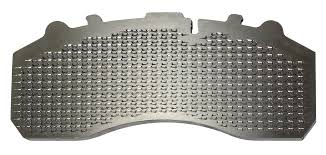
High-quality galvanized steel backing plate. Photo Courtesy of Nucap Corporation
Missing friction material increases stopping distances dramatically.

Brake pad backing plate flex causes internal cracking as well. This will cause friction material to break-off
2) Corroded or seized caliper guide pins
Corroded caliper guide pins prevent the caliper from moving smoothly as the caliper piston applies. This causes the caliper to tilt slightly, preventing the outboard pad from gaining full contact with the rotor friction ring. The result is a rapid pad and rotor wear on the outer circumference of the rotor’s friction ring.
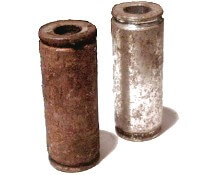
Corroded slide pins
3) Damaged or age-hardened caliper piston O-ring
The square-cut O-ring in the caliper is designed to roll the piston back to its home position to release pressure on the brake pads. If the O-ring is damaged due to corrosion on the piston or is age/heat-hardened, it won’t return the piston to the home position, causing a portion of the brake pad to remain in contact with the rotor.
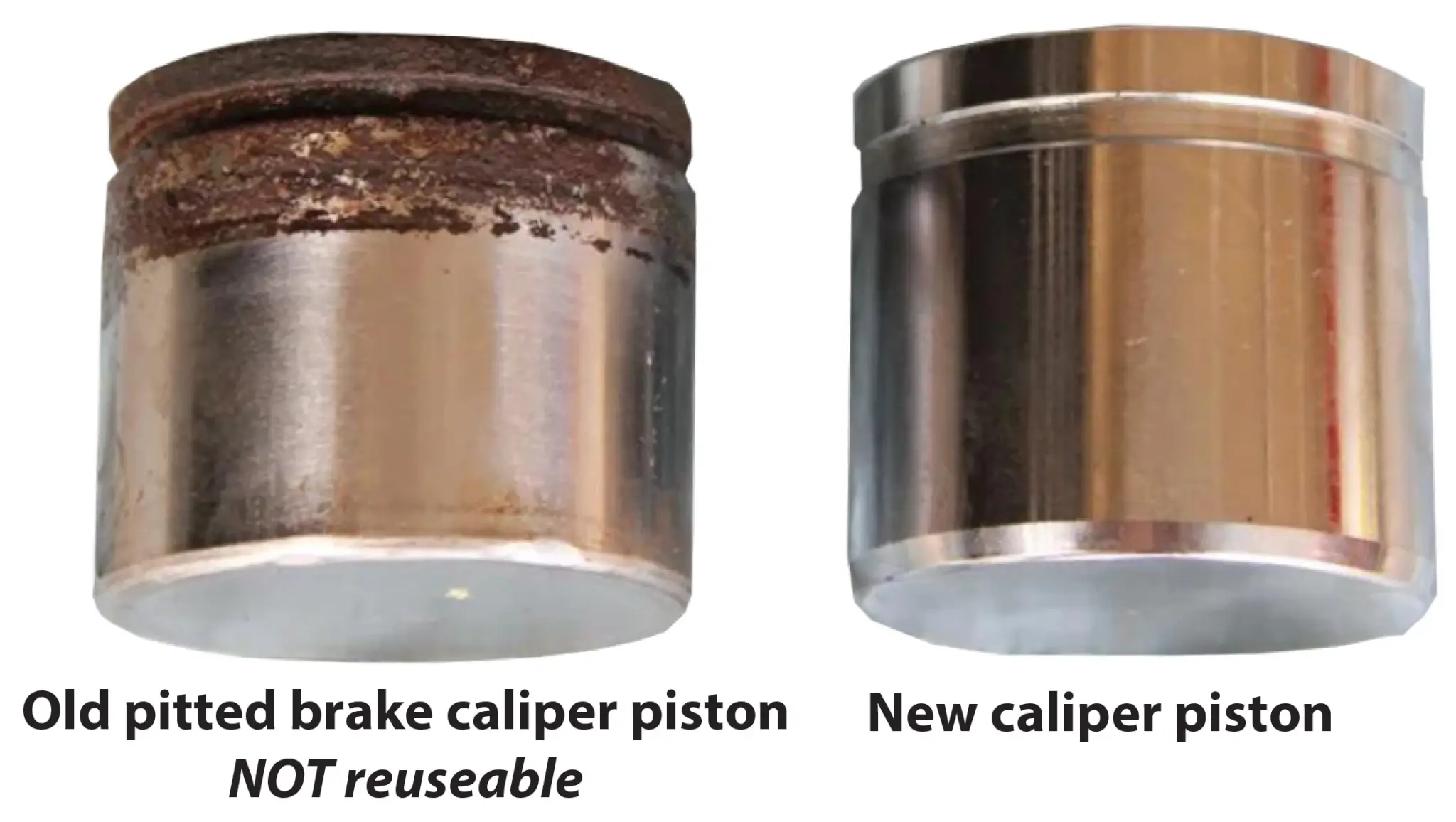
A damaged dust boot allows water to reach the caliper piston. Rust on this piston not only grinds up the O-ring but prevents the piston from rolling back. The result is uneven brake pad wear patterns.
Why the sudden increase in backing plate failures?
Simple. Strong price competition from new players, a flood of low-priced offshore brake products, and a lack of federal regulations have created a situation where substandard brake pads are marketed and sold as replacements for OE brakes. In the past, independently owned repair shops, dealers, and franchised tire shops were used to perform the bulk of all brake repairs. Now they have major competition from muffler shops that continually advertise low-cost ($99 to $149) brake job “specials” that include a “lifetime” brake pad warranty. That’s putting severe pressure on brake parts manufacturers. Many brake parts manufacturers have responded by manufacturing economy versions of their product that have more filler, less of the expensive fibers and resins, and thinner, cheaper steel backing plates. Or, they may simply source economy brake pads from an offshore supplier and package them as an economy version of their name-brand product. The result is a dramatic decrease in brake pad quality.
Low brake pad quality is a MAJOR safety issue that puts you at risk
As rust forms, it builds height, and that height lifts the friction material off the backing plate, causing cracking and delamination, which decreases braking performance. Worse yet, rust jacking breaks off portions of the friction material, so you’re braking on only a portion of the friction material. Watch what happens when you try to stop a vehicle when a portion of the brake friction material is missing.
DISCLAIMER: In accordance with Federal Trade Commission (FTC) rules regarding endorsements, I have not received any financial remuneration from NUCAP or any other company in return for posting this press release on my site.
©, 2019 Rick Muscoplat
Posted on by Rick Muscoplat