
What Causes a P0420 Code? Complete Diagnostic Guide
Most Common P0420 Code Causes
Quick Summary
If your check engine light comes on and your scan tool displays a P0420 code, don’t automatically assume you need a new catalytic converter. Always start by checking the items listed below. For example, first check and eliminate:
• Exhaust leaks
• Engine misfires
• Excessive oil consumption
• Internal coolant leaks
• Fuel trim problems
• Damaged oxygen sensors
These can all trigger a P0420 catalyst system efficiency below threshold code.
The key to fixing a P0420 code is identifying the root cause before replacing parts. In this article, I’ll explain the most common causes, symptoms, diagnostic procedures, and repair options to help you avoid wasting money on unnecessary repairs.
What Does a P0420 Code Mean?
The P0420 code definition is: Catalyst System Efficiency Below Threshold (Bank 1). Bank 1 refers to the side of the engine containing cylinder #1.
Your vehicle’s computer constantly compares the readings from the upstream and downstream oxygen sensors to evaluate catalytic converter performance. When the downstream sensor starts behaving too much like the upstream sensor, the PCM concludes that the catalytic converter is no longer storing oxygen efficiently and sets a P0420 code.
Most Common P0420 Code Causes
1) Physical Damage— Start with a visual inspection. Crawl under the car and inspect the catalytic converter for dents, scrapes, or impact damage. Tap the converter lightly with a rubber mallet. If you hear rattling, the internal ceramic substrate is shattered — replacement is your only option. No amount of cleaning or sensor swapping will fix that.
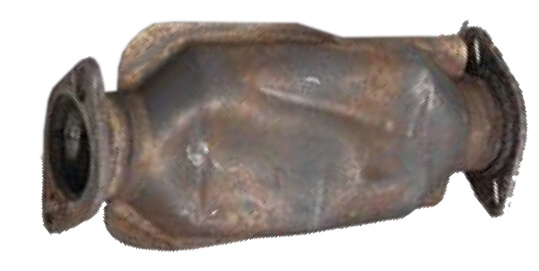
2) Overheating— A converter with a blue or reddish tint has overheated internally. This usually happens when the engine runs too rich or burns oil. Overheating melts the ceramic substrate and ruins the converter. You’ll often hear a dull rattle when you tap it. If that’s the case, the converter is finished — but you also need to fix the underlying cause before replacing it.
What causes overheating?
Engine Misfires — When an engine misfires, unburned raw fuel enters the converter, where it burns internally. This creates excessive heat that can melt the ceramic substrate.
Common causes include:
• Worn spark plugs
• Bad ignition coils
• Faulty injectors
• Vacuum leaks
• Low compression
If your vehicle recently had a P0300-series misfire code, fix that issue before replacing the converter.
Excessive Oil Consumption — Burning oil is another leading cause of converter failure. Oil additives contaminate the catalyst coating and reduce efficiency.
Look for:
• Blue exhaust smoke on cold startup
• Low oil level between changes
• Fouled spark plugs
• Excessive crankcase pressure
Many high-mileage vehicles eventually develop a P0420 code due to long-term oil consumption.
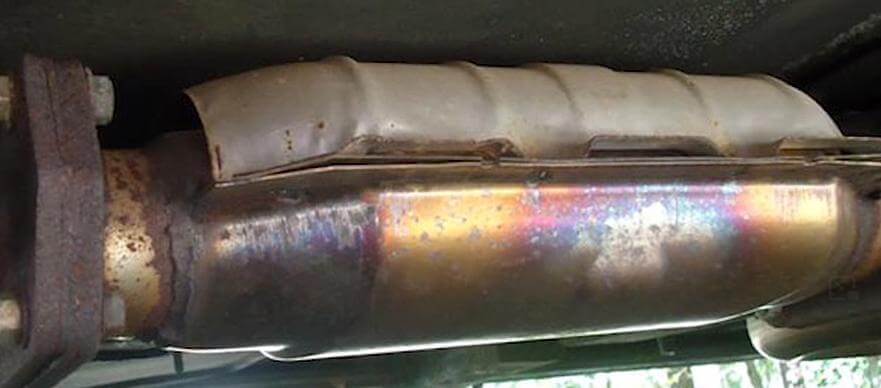
Overheated catalytic converter viewed from the outside
3) Exhaust Leak Causing P0420
One of the most overlooked causes I see is an exhaust leak that can trigger P0420. Even a small leak upstream of the converter allows outside air into the exhaust stream. That extra oxygen can fool the downstream oxygen sensor into reporting poor catalyst efficiency.
Common leak locations include:
• Exhaust manifold gaskets
• Flex pipes
• Exhaust flange connections
• Cracked manifolds
• Welded joints
I’ve seen many converters replaced unnecessarily when a simple exhaust repair solved the problem.
4) Coolant Contamination
A leaking head gasket can destroy a catalytic converter. When coolant enters the combustion chamber, silicates coat the catalyst surface, reducing its effectiveness.
Symptoms include:
• Coolant loss
• White exhaust smoke
• Sweet exhaust odor
• Engine overheating
5) Fuel Trim Problems
Abnormally high long-term fuel trim values can eventually trigger catalyst efficiency codes.
Common causes include:
• Vacuum leaks
• Dirty MAF sensors
• Intake duct leaks
• Fuel delivery problems
If LTFT values exceed ±10%, I investigate fuel control issues before condemning the converter.
6) Oxygen Sensor Problems
One of the most-searched questions is: Can a faulty O2 sensor cause P0420? The answer is yes—but not usually in the way most people think.
A failing downstream oxygen sensor may yield inaccurate catalyst-monitoring data. A faulty upstream sensor can cause fuel control problems that eventually damage the converter.
That’s why proper scan tool analysis is critical.
Why a P0420 or P0430 Code Rarely Means a Bad Oxygen Sensor
After years in the shop, I can tell you with confidence — when a car sets a P0420 catalytic converter code or P0430 code, the oxygen sensor is rarely the problem.
Here’s how the system actually works.
Once the engine warms up, the computer performs a catalyst efficiency test. It commands the engine to switch between rich and lean fuel conditions. The upstream oxygen sensor should show a rapid rich-lean response, proving it’s functioning. The downstream sensor, located after the catalytic converter, should show a slow, steady signal if the converter is working properly.
If the downstream signal starts mimicking the upstream signal, it means the converter isn’t cleaning up emissions — that’s when the computer triggers a P0420 or P0430 code.
In short: if the computer can run this test at all, the upstream O₂ sensor is already working. A bad oxygen sensor would set a different code entirely, not P0420 or P0430.
Step-by-Step Diagnostic Guide for a P0420 or P0430 Code
Step 1: Check for Additional Trouble Codes — before addressing the catalyst code, repair:
• Misfire codes
• Fuel trim codes
• Oxygen sensor codes
Step 2: Inspect the Converter
Look for:
• Impact damage
• Broken substrate
• Overheating discoloration
• Missing heat shields
Inspect the Heat Shields—Most people ignore missing or rusted-off heat shields, thinking they’re just noise dampers. They’re wrong. Heat shields help the converter retain heat, which is critical for proper operation. Without them, the converter runs too cool to “light off” properly, triggering a P0420 catalytic converter code.

A typical broken off heat shiled

Check for a clogged or melted substrate inside the converter
Step 3: Check For Exhaust Leaks
Repair any leaks before proceeding with further diagnosis.
Step 4: Review Live Data
Evaluate:
• The upstream O2 sensor switching rate
• Downstream O2 sensor activity
• Long-term fuel trim
• Short-term fuel trim
Step 5: Check for Technical Service Bulletins (TSBs)— I can’t stress this enough — always check for manufacturer service bulletins. Automakers often release software updates to correct false converter codes. A short subscription to eautorepair.net or alldatadiy.com can save you hundreds by revealing that the fix may be a simple ECM reflash, not a new catalytic converter.
Step 6: Inspect for Oil or Coolant Consumption— If your engine burns oil or leaks coolant into the cylinders, the by-products contaminate the converter’s catalyst and ruin its efficiency. Replacing the converter without fixing the root cause will only destroy the new one. Pull your spark plugs — if they’re oil-fouled, you’ve found part of the problem.
Step 7: Test for Excessive Backpressure— You can test for a restricted converter using a simple vacuum gauge.
• Connect the gauge to a port on the intake manifold.
• Warm up the engine.
• Perform a quick “snap throttle” test.
Vacuum should drop to zero during the rev and recover to normal (18–22 in-Hg) within three seconds. If it takes longer, your exhaust is partially clogged — often by a melted converter core. Disconnect the muffler to isolate whether the blockage is in the converter or further downstream.
Why Catalytic Converters Fail Prematurely
Catalytic converters are designed to last the life of the vehicle. When one fails early, it’s always due to another problem: misfire, fuel contamination, oil burning, or physical damage. Simply replacing the converter won’t solve the issue unless you address the root cause. That’s why I always check:
• Fuel quality and injector performance
• Misfire counts in Mode $06 data
• O₂ sensor switching rates
• Signs of coolant or oil entry into the exhaust
Only once those are corrected do I install a new converter.
P0420 Code After Catalytic Converter Replacement
Nothing frustrates vehicle owners more than seeing a P0420 code after catalytic converter replacement.
This usually means:
• The original root cause wasn’t fixed
• An exhaust leak still exists
• The engine is running rich
• Oil consumption continues
An aftermarket converter lacks sufficient efficiency
Replacing the converter without correcting the underlying problem often results in the new converter failing quickly.
How to Fix P0420 Code Correctly
If you’re wondering how to fix P0420 code problems permanently, follow this order:
• Repair engine misfires.
• Correct fuel trim problems.
• Fix exhaust leaks.
• Repair oil or coolant consumption issues.
• Verify oxygen sensor operation.
• Confirm converter efficiency.
• Replace the converter only after all other issues are resolved.
Final Thoughts on P0420 Code Causes
After diagnosing hundreds of catalyst efficiency faults, I’ve learned one important lesson: a P0420 code rarely tells the whole story. While a failed converter is certainly one of the most common causes of the P0420 code, many vehicles trigger this code because of exhaust leaks, engine misfires, oil consumption, coolant contamination, or fuel control problems.
The smartest approach is to diagnose first and replace parts second. That’s how you avoid unnecessary repairs and ensure the problem doesn’t return.
©, 2020 Rick Muscoplat
Posted on by Rick Muscoplat