
Who Makes the Best Brake Rotors? Top Brands Reviewed
How to Choose the Best Brake Rotors for Safer Stops
Quick Summary
Choosing the best brake rotor isn’t just about buying a well-known brand. Today’s market is flooded with inexpensive economy rotors that may carry a respected name but are built to lower standards than the manufacturer’s premium line. In my experience, the best brake rotors use high-carbon cast iron, replicate the original-equipment cooling-vane design, match the original rotor’s weight and thickness, and include a long-lasting, corrosion-resistant coating. Those features provide quieter braking, better heat dissipation, longer brake pad life, and fewer brake pulsation problems.
I’ve performed and inspected hundreds of brake jobs over the years, and one lesson stands out: a brake job is only as good as the rotors you install. Many people spend extra money on premium brake pads but then pair them with bargain rotors. That’s a mistake that often leads to brake noise, pedal pulsation, premature pad wear, and reduced stopping performance.
If you’re wondering who makes the best brake rotor, the answer isn’t as simple as picking a brand name. Most major manufacturers now offer economy, mid-grade, and premium product lines. You have to know what separates a premium rotor from a cheap one.
Why Cheap Brake Rotors Cost More in the Long Run
The least expensive rotors usually aren’t a bargain. They’re designed to meet a price point rather than original equipment specifications. To reduce manufacturing costs, they often use less metal, fewer cooling vanes, lower-quality cast iron, and minimal rust protection.
That means the rotor:
• Heats up faster
• Cools more slowly
• Transfers more heat into the brake pads
• Is more prone to brake vibration
• Wears brake pads faster
• Is more likely to develop excessive runout and thickness variation
Saving $20 today can easily cost you a complete brake job much sooner than expected.
Don’t buy the first brake rotor from the auto parts store sales clerk
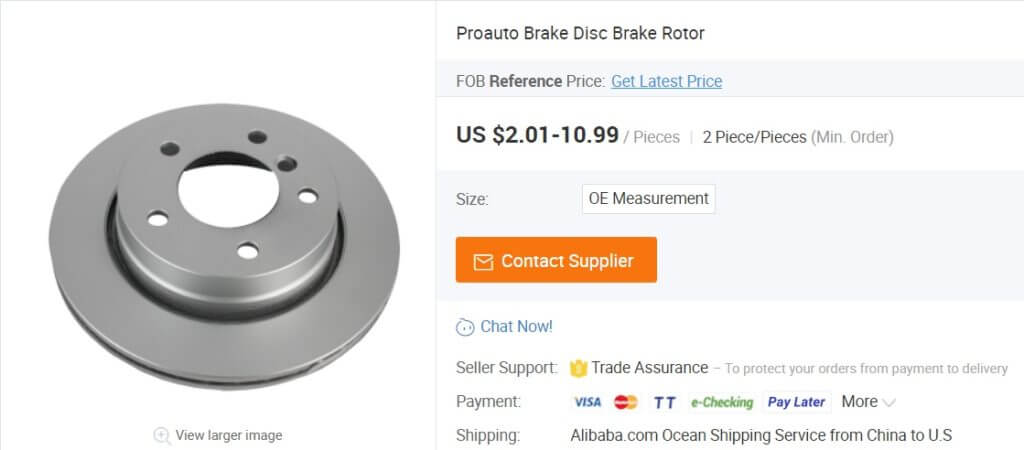
Auto parts stores and chain-operated brake shops can buy brake rotors from Alibaba for as little as $10 each.
When you ask for a brake rotor at an auto parts store, the first one they’ll offer will be their own private-label “house” brand or an economy model from a name-brand manufacturer. They do that for two reasons: first, they make more money on their house brands because they buy them in bulk from offshore manufacturers and domestic importers. Second, they don’t want to scare you away by quoting the price for a premium brake rotor from a name-brand manufacturer.
The lowest-priced private-label house brands are often the lowest-quality rotors, made with the cheapest materials and the lowest quality standards. The store enhances the value of its private-label products by offering a “lifetime warranty” to alleviate your concerns about buying an unknown brand (more on rotor warranties below). But if you ask for a better quality brake rotor, the sales clerk will find one for you.
See how cheap brake rotors are made
What Makes the Best Brake Rotor?
When I compare brake rotors, I don’t pay much attention to the label on the box. Instead, I look for engineering features that affect braking performance.
High-Carbon G3000 Cast Iron — The best brake rotors are manufactured from high-carbon G3000 cast iron.
The additional carbon improves heat management, reduces brake noise, and increases resistance to cracking caused by repeated heating and cooling cycles.
Rotor Weight Matters — One of the quickest ways to identify an economy rotor is by its weight. Two rotors may have identical outside dimensions, but the premium version often weighs one to three pounds more because it contains more cast iron.
That extra mass allows the rotor to:
• Absorb more braking heat
• Resist brake fade
• Reduce rotor distortion
• Extend brake pad life
Weight is one of the easiest ways to distinguish a premium rotor from an economy model.
Brake rotor weigh comparison
Here are two brake rotors for the same year, make, and model. But they don’t weigh the same. The OE quality brake rotor weighs 16.8 lbs., while the economy rotor weighs just 14.2 lbs. That’s 15.4% less metal. What does that mean in actual road use? It means it can’t dissipate heat as well as the premium rotor because it has less mass. And the excess heat will wear out your pads faster. But that’s not the only reason why economy rotors are bad.
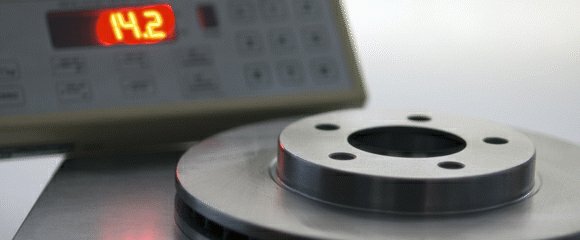
Economy Brake Rotor
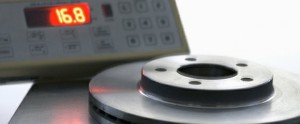
Premium Brake Rotor
Cheap rotors are thinner
Many economy rotors reduce manufacturing costs by making the friction ring thinner.
A thinner friction surface stores less heat and reaches higher temperatures during hard braking, increasing the chance of brake pulsation and uneven pad deposits.
The best brake rotor closely matches the original equipment thickness and overall mass.
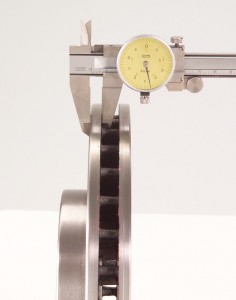
Economy Brake Rotor Friction Surface Thickness
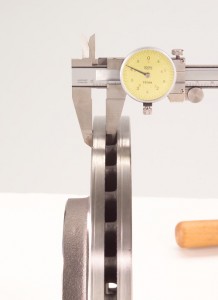
Premium Brake Rotor Friction Surface Thickness
Here we’re looking at the thickness of the friction ring. Look at them side by side, and you’ll see the economy rotor has a thinner friction ring.
Cheap rotors have fewer cooling vanes
Cooling vanes aren’t all the same. Premium rotors duplicate the original equipment vane design, whether it’s curved, pillar, or directional. Those designs move significantly more air through the rotor than inexpensive straight vanes.
Better airflow means:
• Lower operating temperatures
• More consistent braking
• Reduced brake fade
• Longer component life
Economy rotors usually don’t replicate the OE cooling vane design because that design is more costly to manufacture. To cool more effectively, carmakers use curved, pillar, and arcuate vane designs to force more air between the friction rings and improve braking.
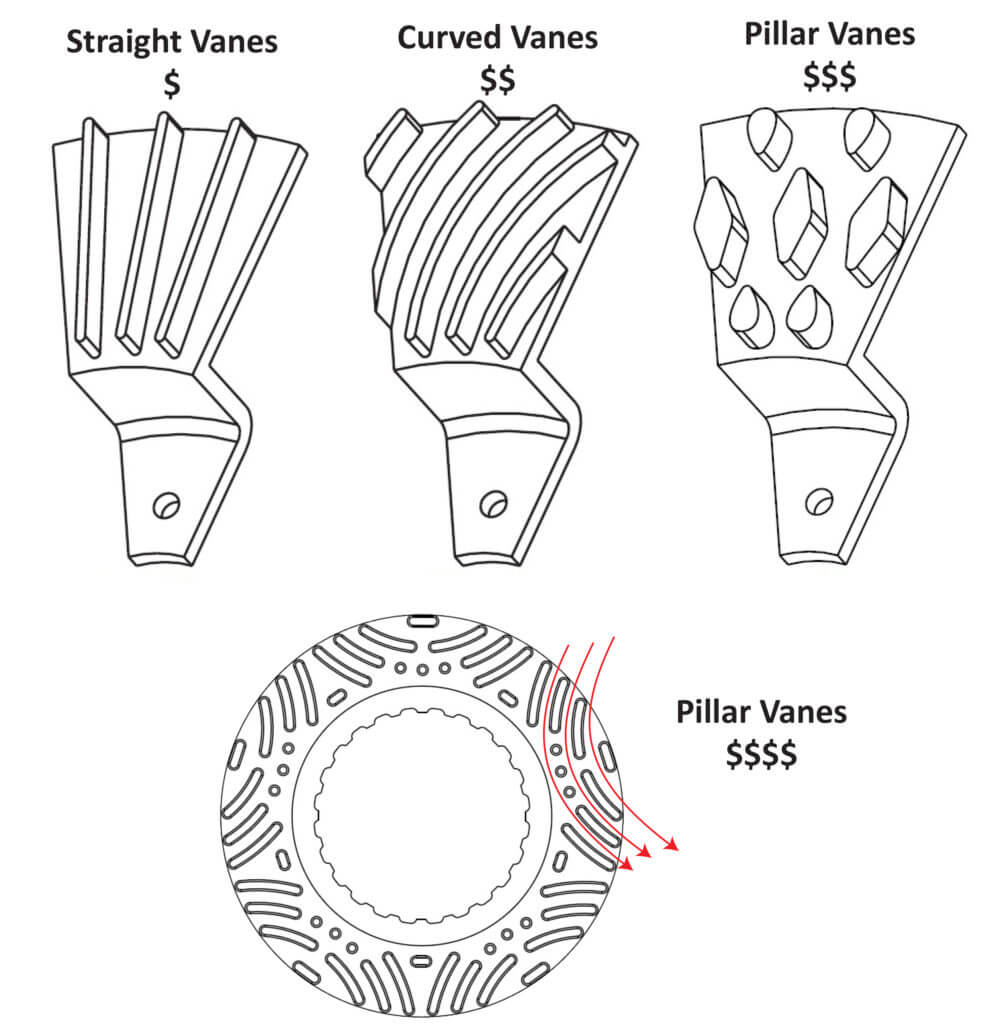
Brake rotor cooling vane designs from cheapest to most expensive
Precision Machining
A premium rotor should arrive with a fine non-directional finish that allows the brake pads to bed in quickly and quietly.
Poor machining can contribute to:
• Brake squeal
• Uneven pad transfer
• Pedal vibration
• Longer break-in periods
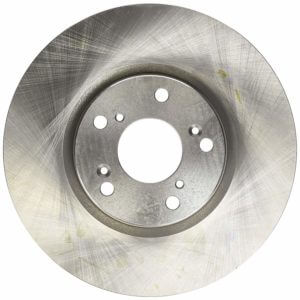
Brake rotor non-directional finish
Long-Lasting Rust Protection
Brake pads continually clean the braking surface, but the rotor hat and internal cooling vanes remain exposed.
Premium rotors use zinc or ceramic-fused coatings that dramatically slow corrosion.
That’s more than cosmetic. Rust inside the cooling vanes reduces airflow, while corrosion between the rotor and hub can cause lateral runout, which eventually produces pedal pulsation.
Premium rotors are coated with a fused-on rust-reducing coating
Rust prevention isn’t needed on the swept area because the brake pads
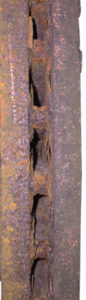
Rust develops in the cooling vanes, dramatically reducing airflow and cooling
removes any rust accumulation. But rust coating is very important to reduce rust in the cooling vanes and the inside and outside the rotor hat areas. Rust expands as it forms, and that expansion can literally force the rotor away from the wheel hub, causing lateral runout, which results in disc thickness variation.
Cheap rotors have less dimensional stability and balance
It takes time and effort to produce a dimensionally stable brake rotor batch after batch. Economy rotor manufacturers try to make up for dimensional instability by machining off the irregular areas. But that causes balance problems, which the manufacturer tries to solve by adding weights. Over time, those weights rust and fall off, causing an off-balance condition that mimics the feeling you get from an out-of-balance tire.
Coating: Rust Prevention Isn’t Cosmetic — It’s Structural
Brake pads keep the swept surface clean — but the hat and internal vanes can rust quickly. Rust expands, forcing the rotor away from the hub and creating runout and thickness variation.
The best brake rotors use zinc or ceramic-fused coatings that resist rust for years — not weeks.
So Who Makes the Best Brake Rotors? Here Are the Brands I Trust
Because of offshore sourcing, brand names alone aren’t enough anymore. Every reputable manufacturer now sells an economy version and a premium line. So you have to request the premium version specifically.
Who Makes the Best Brake Rotors?
Based on years of experience, these are the manufacturers I trust for premium replacement rotors:
• Advics (excellent OE-quality for many Asian vehicles)
• Akebono
• Bosch QuietCast Premium
• ACDelco Gold
• Wagner E-Coated Premium
The important point is this: don’t simply ask for the brand. Ask specifically for that manufacturer’s premium product line.
How to Tell the Difference Between a Premium and Economy Rotor
Here’s the checklist I use before buying brake rotors.
Choose a rotor that has:
• High-carbon G3000 cast iron
• Original equipment weight
• OE cooling vane design
• Correct friction ring thickness
• Precision non-directional finish
• Zinc or ceramic corrosion-resistant coating
• Excellent balance and dimensional stability
Avoid rotors that are noticeably lighter than the originals or advertise only a lifetime warranty without discussing engineering features.
Are Expensive Brake Rotors Worth It?
In almost every case, yes.
Premium rotors typically cost only a modest amount more than economy versions, yet they often provide:
• Longer brake pad life
• Less brake noise
• Better stopping performance
• Reduced brake fade
• Lower chance of brake pulsation
• Longer overall brake service life
Considering the labor involved in replacing brake rotors, the small additional investment usually pays for itself.
Final Thoughts
If someone asks me what the best brake rotor is, I don’t answer with a brand name alone. I tell them to buy the premium rotor from a reputable manufacturer that matches the original equipment design in weight, metallurgy, cooling, and corrosion protection.
Those engineering details—not clever marketing or lifetime warranties—are what separate a rotor that lasts 20,000 miles from one that performs smoothly for 70,000 miles or more.
© 2012 Rick Muscoplat
Posted on by Rick Muscoplat