
Why Your Newer Car May Require an AGM Battery
Why New Cars Need AGM Batteries—and What Owners Should Know
Brief summary
Carmakers use AGM batteries in late-model cars because modern vehicles need dependable power for repeated engine restarts, demanding electronics, and frequent charging cycles. AGM batteries handle these conditions better than conventional flooded batteries. Some start-stop vehicles use EFB batteries instead, so replacement decisions should follow the vehicle’s specifications. Battery testing and registration also matter.
Why Your Car Battery Has a Bigger Job Today
Picture yourself waiting at a red light. The engine shuts off, but the dashboard stays illuminated, the music keeps playing, and the ventilation fan continues running. When traffic moves, the engine restarts almost immediately.
I like this everyday example because it explains why carmakers use AGM batteries better than a list of technical specifications. Your battery has to keep electrical systems operating while the engine is stopped, then deliver another burst of starting power.
A conventional starting battery was designed primarily to crank the engine and recharge afterward. Modern driving can demand that sequence repeatedly throughout a single trip.
What Is an AGM Car Battery?
AGM stands for absorbent glass mat. It is a lead-acid battery that holds its electrolyte in fiberglass mats between the plates, rather than leaving it as free-flowing liquid.
That construction supports low internal resistance, strong starting performance, and efficient recharging. It also helps AGM batteries meet the demands of vehicles with power-hungry accessories. Interstate Batteries
Why Carmakers Use AGM Batteries for Start-Stop Systems
Repeated Restarts Require Better Cycling Performance
Each engine restart draws energy from the battery. During the stop, electrical accessories draw additional energy. The battery then has to recover that charge when conditions allow.
This repeated discharge-and-recharge pattern is called cycling. AGM batteries are designed to tolerate substantially more cycling than conventional starting batteries. VARTA, for example, specifies three times the cycle life for its Dynamic AGM range compared with conventional batteries; that is a product claim, rather than a guarantee for every AGM battery. VARTA
Modern Electronics Need Power Between Restarts
Think about everything competing for electricity:
• Infotainment screens
• Navigation
• Audio systems.
• Lighting
• Ventilation fans
• Heated accessories
• Vehicle computers
• Accident avoidance systems, computers, cameras, LIDAR, etc.
• Phone chargers
The exact combination varies by vehicle, but the battery’s workload extends well beyond starting the engine. AGM batteries are commonly specified for vehicles with start-stop engines and high electrical demand.
Charging Opportunities Can Be Brief
Carmakers also consider the effects of short trip driving and how that affects recharging. Advanced charging systems may vary alternator output and increase charging during deceleration.
AGMs’ charge acceptance helps them capture energy during those opportunities. That combination of cycling durability and charging performance explains its use in more demanding start-stop applications.
AGM vs. EFB: Do All New Cars Need AGM Batteries?
No. EFB, short for enhanced flooded battery, is another technology used in start-stop vehicles.
EFB batteries improve on conventional flooded designs and can suit less demanding start-stop applications. AGM is generally used where cycling and electrical demands are greater.
My advice is to check the manufacturer’s specification before buying. A vehicle originally equipped with AGM should receive an approved AGM replacement. An EFB-to-AGM upgrade may be suitable, but compatibility must be confirmed.
Why a Battery’s Cold Cranking Amps Aren’t the Whole Story
When comparing batteries, I would look beyond the biggest cold cranking amps number.
Cold cranking amps, or CCA, describe cold-weather starting capability. Reserve capacity describes sustained electrical supply under a standardized load. Amp-hours describe charge capacity under specified testing conditions.
These ratings answer different questions. A battery needs adequate starting power, but a modern vehicle also needs sufficient stored energy to support its electrical workload. Reserve capacity is a measure of power supplied when the alternator is not operating.
Match the required specifications instead of choosing by CCA alone.
AGM Battery Replacement: What I Would Check
Before replacing an AGM car battery, I would confirm:
• The approved battery technology and capacity.
• Correct dimensions, terminal layout, and mounting.
• Any required vent connection.
• Whether battery registration or a management-system reset is required.
• The manufacturer’s disconnect and relearn procedures.
Some vehicles learn the replacement battery’s characteristics automatically. Others require a diagnostic procedure to register it. Registration requirements depend on the vehicle, rather than simply on whether the battery is AGM.
Battery testing is becoming more important
Testing battery voltage at rest is no longer a reliable measure of the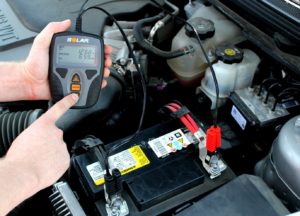 condition of the battery. Batteries must be tested using a resistance, conductance, and simulated load test to determine their condition.
Replacing a car battery in a late-model car takes longer
You could replace an underhood car battery in an older car in about 15 minutes. Try that on a late-model car where the battery is stored under the rear seat. If you’re not doing the work yourself, car battery replacement has changed from a 15-minute job into a 1-hour task. So it pays to buy the best battery to cut down on labor costs down the road.
What else is changing in car battery replacement?
Backup power. If you’re a DIYer planning to replace the battery in a late-model vehicle and you don’t have a jumper pack and backup power cable, you’re begging for trouble. When you disconnect the old battery, you not only lose your radio presets, but you can also lose all your comfort feature presets like the window auto-up feature and your power seat settings. More importantly, however, the computer loses all of its “adaptive memory,” the modifications to factory programming made by the vehicle’s computer to optimize performance as the engine ages. Plus, the computer can lose the electronic throttle body’s “home” position, forcing you to perform a throttle body relearn procedure.
Sometimes you can perform a throttle body relearn without a scan tool, but other cars require one.
©, 2018 Rick Muscoplat
Posted on by Rick Muscoplat