
ABS light on car: How to troubleshoot the problem
ABS Light on car: Learn what it means and how to diagnose and fix it
The Anti-lock Braking System (ABS) is a critical safety feature in modern vehicles, designed to prevent the wheels from locking up during braking and thus maintain tractive contact with the road surface. When the ABS warning light illuminates your car’s dashboard, it signals an issue with the system. Understanding what the ABS light means, how to diagnose the problem, and the steps to fix it are essential for maintaining the safety and performance of your vehicle.
What Does the ABS Light Mean?
The ABS system constantly monitors the wheel speed sensors, ABS control module, and ABS hydraulic unit. When this light comes on, the computer has detected a problem with one of the ABS components. Issues can range from minor sensor malfunctions to more serious failures in the system’s components. While the vehicle’s regular braking system will continue functioning, the anti-lock and stability control features will be disabled, potentially increasing the risk of wheel lockup in emergency braking situations.
What are the most common causes of an ABS trouble code
The wheel speed sensor problems are the most common cause of an ABS light on the car
Wheel speed sensors monitor the speed of each wheel and relay this information to the ABS control module. If a sensor is dirty, damaged, or malfunctioning, it can trigger the ABS light.
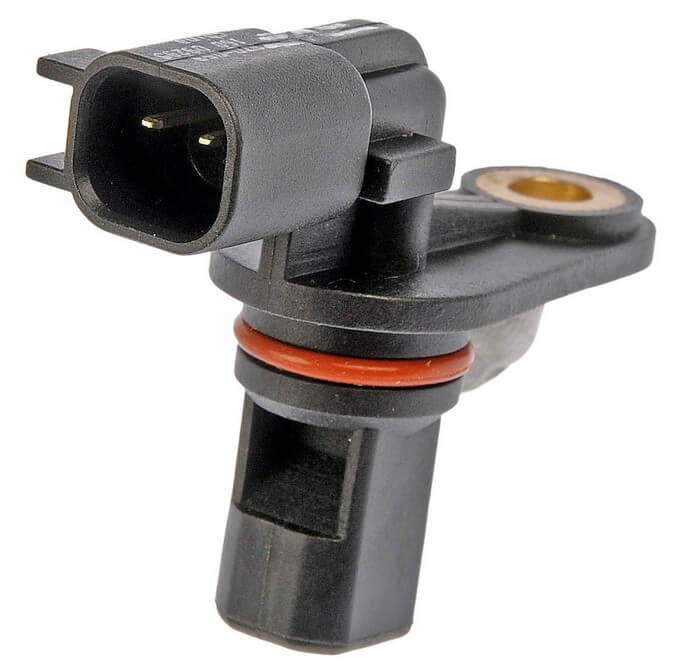 The ABS monitors wheel rotation, even when you’re not braking. If the ABS system detects a missing, intermittent, irregular, or out-of-spec signal from a wheel speed sensor, it will set a trouble code and turn the ABS light on. Here are the most common causes of an ABS light.
The most common causes of a wheel speed sensor-related trouble codes
• Bad wheel speed sensor— The sensor has stopped reporting data to the ABS module
• Metallic debris on the face of the wheel speed sensor— Passive-style wheel speed sensors have a magnet installed at the tip of the sensor. The magnet can pick up metallic debris, and that debris can cause faulty readings. Clean the sensor face with a clean cloth and clear the code to see if that was the cause of the problem
• Cracked “tone” ring on axle shaft or hub bearing— The wheel speed sensor tracks wheel rotation by detecting the rotating teeth on a “tone” ring attached to the axle shaft or mounted inside the wheel bearing. If the tone ring develops a crack, that can cause a false reading that sets a trouble code.
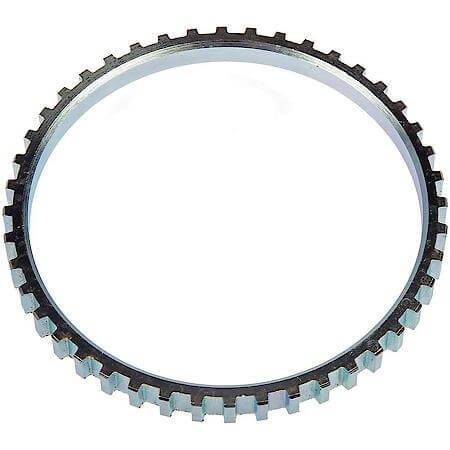
Check for rust or debris on the tone ring that could interfere with the signal
• Metallic debris on the magnetic ring on the hub bearing— Some vehicles use a multi-pole magnet in place of a toothed tone ring. The magnet can pick up debris, causing a faulty reading. Cleaning the magnet can sometimes remove the trouble code.
• Fault in the wiring harness or connector to a particular wheel speed sensor— Check for wiring harness damage between the ABS controller and the wheel speed sensor.
Other possible causes of an ABS code on car
• Faulty ABS controller— The ABS controller contains a circuit board and solenoid coils that activate the individual solenoid valves. If a circuit board component fails or a solenoid coil burns out, the ABS light will come on, and an ABS code will be stored in the computer
Other less common problems are:
• ABS pump or hydraulic unit failure—The ABS pump provides additional brake fluid pressure during ABS activation, and valves in the hydraulic unit direct fluid pressure on and off the wheels. If the hydraulic unit or pump fails, replacement is required.
• Failure of the ABS controller module—The ABS module circuit board can fail, causing an ABS warning light to appear. The module must be replaced with new or rebuilt.
How to start your diagnosis of an ABS light
To diagnose an ABS light on, you first have to scan the vehicle for the trouble code. The scan will test which wheel speed sensor or component sets the code. It’s up to you to test that entire circuit to determine whether the root problem is the wiring harness or connector to that sensor, debris on the sensor face, improper spacing between the sensor and the tone ring, a cracked tone ring, or a bad sensor. But it all starts with the trouble code.
Once you have the trouble code, refer to a shop manual for the step-by-step diagnostic procedure. It varies by year, make, and model.
Can I turn the ABS light off?
You can clear the code with a scan tool. But it’ll turn on again if you haven’t fixed the underlying problem.
What if the ABS and TRAC lights are on?
It’s normal for both lights to come on since the traction control and stability control systems get their data from the ABS. If the ABS sets a code, it disables the ABS, electronic stability control and traction control systems.
©, 2016 Rick Muscoplat
Posted on by Rick Muscoplat