
AC Isn’t Blowing Cold Air? Here’s What to Check
Learn what to check when your car’s AC isn’t blowing cold air
Your car’s AC is a closed system. But many metal-to-rubber hose connections are sealed with special O-rings and gaskets. Over time, those O-rings and gaskets can fail and allow refrigerant to leak out. When your system is low on refrigerant, it can’t cool. Here’s what to check when your car’s AC isn’t blowing cold air.
1) The AC isn’t blowing cold air because the system is low on refrigerant
The lubricating oil in a car’s AC system is carried through 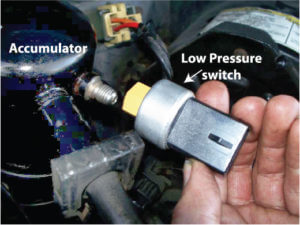 the system with the refrigerant. When the refrigerant charge is low, there’s no oil circulation. If the compressor were to run while the system is low, it would self-destruct. To prevent that, all car AC systems have a low-pressure cut-off switch.
If your system is low on refrigerant, the low-pressure cut-off switch will prevent the compressor clutch from engaging.
2) The system has the right amount of refrigerant, but the compressor doesn’t run due to a bad clutch
An AC compressor clutch consists of a clutch coil that magnetizes the compressor pulley which then pulls in the clutch disc. The clutch coil must receive battery voltage from the clutch relay and it must receive good ground.
If the system is fully charged and the clutch isn’t working, check for battery voltage and ground at the clutch coil connector. If you don’t see battery voltage, check the fuse and the compressor clutch relay. For more tips on how to diagnose a compressor clutch not engaging, see this post
3) The orifice tube or expansion valve is faulty
The orifice tube and expansion valve meter liquid refrigerant
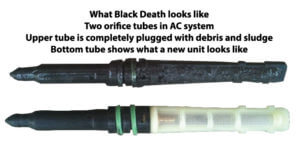
New and clogged AC orifice tube. Clogged tube shows evidence of “Black Death.”
into the evaporator where the refrigerant boils and removes heat from your car’s interior air.
If the orifice tube/screen is clogged with debris, it’ll stop the flow of liquid refrigerant. If your car is equipped with an expansion valve, and the valve isn’t working properly, it can’t properly meter the flow of liquid refrigerant.
What causes an orifice tube or expansion valve to fail?
• Air/Moisture in the system. When your car’s AC 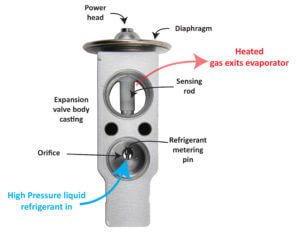 system leaks refrigerant out, it’s also letting outside air in, and that air contains moisture. The moisture mixes with the remaining refrigerant and oil, causing acid formation and sludge (mix water with oil and you get sludge—try it in your kitchen blender and you’ll see). When that acid and sludge get into the orifice tube and expansion valve, it stops the flow of refrigerant OR the liquid freezes, and that stops the flow.
• Debris in the system—When a compressor fails, it can spread metallic debris throughout the system. In older vehicles, shops could flush the condenser and evaporator coil to remove those particles. However the condenser and evaporator coils in late-model cars are built with much smaller passages that trap debris, eliminating the possibility for flushing. Once that debris breaks loose, it clogs the orifice tube and expansion valve.
©, 2020 Rick Muscoplat
Posted on by Rick Muscoplat