
Car Radiator Repair: Tips and Techniques
Car radiator repair — How to
The radiator is responsible for removing heat from the engine coolant and preventing overheating. A damaged radiator can lead to a loss of coolant that can cause significant engine problems if not addressed promptly. While some radiator issues require professional intervention, some minor problems can be fixed with a do-it-yourself (DIY) approach, saving you time and money. This article provides on how to repair a car radiator, including the tools you’ll need, common issues you might encounter, and step-by-step instructions to get your vehicle back on the road.
Three Common Radiator Problems
Leaks— A radiator can develop a leak in the core, the tank seals, or the tanks.
Clogs— A radiator can become clogged due to corrosion debris clogging the small tubes or from the use of stop leak additives. Either way, the clog prevents proper coolant flow, resulting in engine overheating.Impact Damage—Stone kicked up from the road can bend the tube fins, reducing flow, cutting the fins, or cracking the tanks, resulting in a leak.
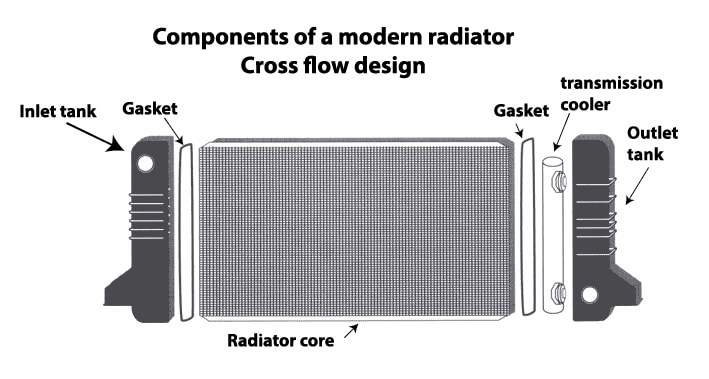
These are the components in a modern aluminum radiator
Inlet and Outlet Tanks— Made from glass-reinforced nylon plastic. The tanks are very resilient when new but can become brittle as they age and are exposed to decades of heat.
Tank gaskets— The tank gaskets seal the tanks to the radiator core. They can shrink and leak due to age and heat
Radiator core— Made with welded aluminum tubes
Radiator fins— The zig-zag pieces fitted between the radiator tubes that help dissipate heat
Transmission cooler— A cylindrical cooler fitted inside a radiator tank removes heat from the transmission fluid.
Most common car radiator repairs
Leaking tank gaskets
There is no way to DIY fix a leaking gasket. RTV will not last, neither will epoxy. The only fix is a new radiator.
How to fix a leaking radiator tank
Some companies sell a tank repair kit with sandpaper, fiberglass fabric, and heat-resistant epoxy. The success rate depends on whether the leak is due to a puncture, crack, or severely degraded plastic. The repair kits work best on small pinhole leaks but are less effective on cracks because cracks tend to spread even after being patched.

VersaChem Tank And Radiator Repair Kit – 90214. The kit includes sandpaper, fiberglass cloth, epoxy, and an application brush.
The longevity of these repairs depend on how well you prepare the surface and the condition of the plastic. If the plastic is crazed the repair won’t last very long and the radiator must be replaced eventually.
Don’t even think of just applying epoxy to the crack or hole. It won’t last. The repair must be a patch.
Drain the radiator.
• Scuff the surface using sandpaper
• Clean the sanded surface using a solvent cleaner to remove grease and sandpaper residue.
• Mix the epoxy and apply the epoxy resin to the fiberglass cloth per the instructions in the kit and apply to the tank.
• Allow time for the epoxy to cure before refilling.
• Start the engine, let it idle, and then take it for a short test drive to make sure the patch holds. If it does, keep a gallon of coolant in the trunk in case it fails.
How to fix a leak in a car radiator neck
A broken radiator overflow neck is a common problem. 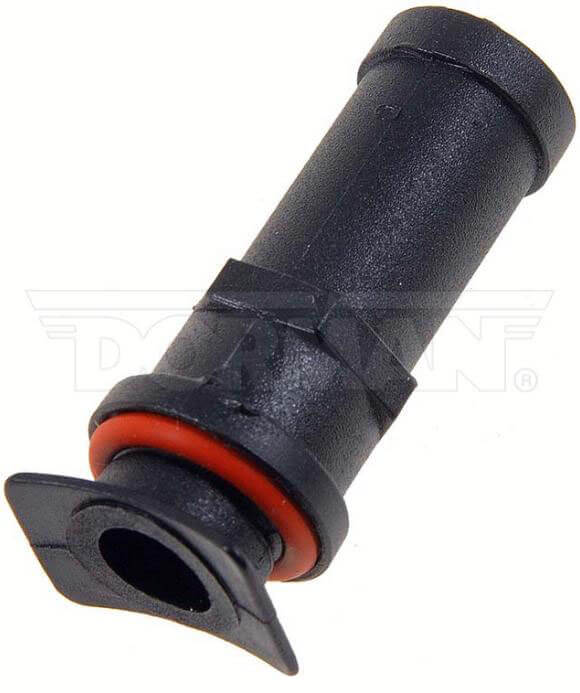 Don’t try to glue it back on. There’s an inexpensive fix. Buy a Dorman overflow repair kit.
How to fix a leak in a car radiator core tube
In the old days, when the radiator core was made from copper, you could have the leak resoldered. But you can’t do that with aluminum radiator cores. If you have a pinhole leak, try a radiator stop-leak product designed for aluminum cores. Follow the directions, and don’t add too much. More is NOT better.
If the stop-leak product doesn’t fix the leak, you’ll need a new radiator
Fix a leaking car radiator drain (petcock)
DIYers make the mistake of trying to drain their radiators by removing the plastic radiator drain. Due to its age, it often breaks as you remove it. Don’t bother trying to fix it. It’ll never hold.
Instead, purchase a replacement petcock. But a replacement at any auto parts store.
©, 2022 Rick Muscoplat
Posted on by Rick Muscoplat