
Common Turbo Symptoms: Signs Your Turbocharger Is Failing
Common Turbo Symptoms Explained
Quick Summary
A turbocharger can dramatically increase engine power and fuel efficiency, but when it starts to fail, the symptoms are usually impossible to ignore. The most common turbo symptoms include:
• Loss of power
• Poor acceleration
• Excessive exhaust smoke
• Unusual whining noises
• Increased oil consumption
• Overheating
• Low boost pressure.
The good news is that catching the signs of a bad turbocharger early can often prevent catastrophic engine damage and save thousands in repair costs. In this guide, I’ll explain exactly what to look for, why these symptoms occur, and what you should do if you suspect your turbocharger is failing.
Common Turbo Symptoms Every Driver Should Know
Over the years, I’ve diagnosed hundreds of turbocharger failures, and I’ve learned one important lesson: turbos almost always give warning signs before they fail completely.
Unfortunately, many drivers ignore those symptoms until the vehicle loses power or begins smoking heavily. By then, the damage is often much worse.
If you’re wondering how to tell if a turbo is bad, here are the symptoms to watch for.
#1 Loss of Power Is One of the Most Common Turbo Symptoms
The most obvious symptom of a failing turbocharger is a noticeable loss of power.
Turbochargers force additional air into the engine. That extra air allows the engine control module to add more fuel, producing significantly more horsepower and torque.
When the turbo stops producing boost, your engine loses that extra airflow.
The result is:
• Sluggish acceleration
• Poor passing power
• Reduced towing performance
• Lower fuel economy
• Delayed throttle response
Many drivers describe the feeling as though the engine suddenly became much smaller. This is a classic bad turbo symptom while driving and often the first sign that something is wrong.
#2 Turbo Not Boosting Symptoms
One of the easiest ways to identify a turbo problem is to monitor boost pressure. If your vehicle has a factory or aftermarket boost gauge, you may notice:
• Lower-than-normal boost readings
• Slow boost buildup
• Inconsistent boost levels
• No boost under acceleration
These turbo not boosting symptoms often point to:
• Worn turbo bearings
• Damaged compressor blades
• Wastegate problems
• Turbo actuator failure
• Boost leaks in hoses or intercooler connections
Even a small boost leak can mimic turbo failure, so proper diagnosis is essential before replacing the turbocharger.
#3 Whining, Whistling, or Siren Noises
Healthy turbochargers make a faint whistle that’s usually barely noticeable. A failing turbo often becomes much louder.
Common sounds include:
• High-pitched whining
• Siren-like noises
• Excessive whistling
• Grinding sounds
• Metallic scraping
These noises usually indicate:
• Bearing wear
• Shaft play
• Compressor wheel damage
• Turbine wheel contact with the housing
When I hear a turbo making a siren-like noise, I consider it a serious warning sign. In many cases, complete turbo failure isn’t far behind.
#4 Excessive Exhaust Smoke
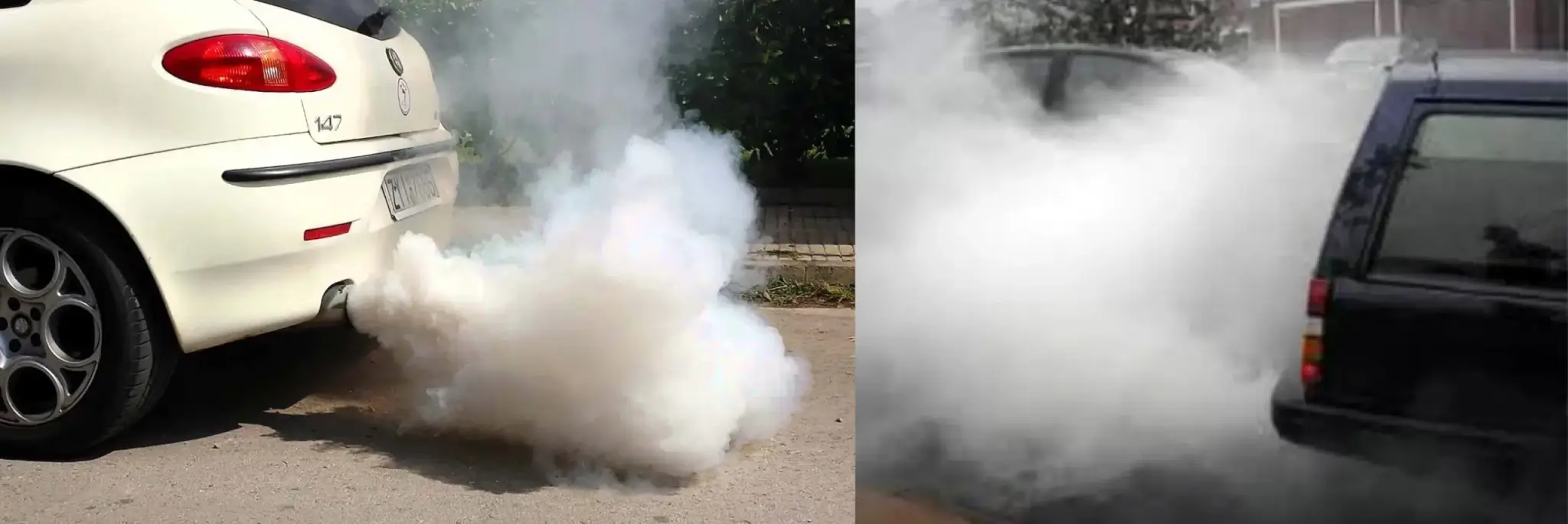
When a turbo coolant seal fails, engine coolant enters the combustion chamber, creating clouds of white/grey smoke
Excessive exhaust smoke is one of the most recognizable signs of a bad turbocharger. Turbochargers rely on engine oil for lubrication and cooling. Internal seals keep that oil contained within the turbo housing. When those seals fail, oil leaks into either the intake or exhaust system.
The smoke color can provide clues:
• Blue Smoke — Usually indicates engine oil entering the exhaust stream.
• Gray Smoke — Can indicate oil contamination or incomplete combustion.
• White Smoke — This indicates that coolant seals in the turbo have failed, allowing coolant to enter combustion chambers or the exhaust system.
If smoke appears during acceleration and disappears at idle, a failing turbo is often the culprit.
#5 Increased Oil Consumption
Many drivers notice they’re adding oil more frequently without seeing any external leaks. A worn turbocharger can consume surprising amounts of oil.
Watch for:
• Low oil level warnings
• Frequent oil top-offs
• Oil residue in intercooler pipes
• Oily intake tubing
If oil is disappearing but you can’t find a leak, the turbo should be inspected.
#6 Engine Overheating
A failing turbocharger can increase engine operating temperatures.
This happens because:
• Exhaust gases aren’t flowing efficiently
• Airflow into the engine decreases
• The engine works harder to produce power
Common symptoms include:
• Higher coolant temperatures
• Cooling fans are running constantly
• Reduced performance during hot weather
• Temperature gauge fluctuations
Ignoring overheating can quickly turn a turbo problem into an engine replacement.
#7 Check Engine Light and Turbo Trouble Codes
Modern vehicles closely monitor turbocharger performance.
A failing turbo may trigger:
• Check Engine Light
• Reduced power mode
• Limp mode operation
Common turbo-related codes include:
• P0299 Underboost
• P0234 Overboost
• P2563 Turbocharger Position Sensor
• P2263 Turbocharger Performance
If the check engine light appears along with power loss, the turbo system should be inspected immediately.
For more information on how turbos work, see this post
Can You Drive With a Bad Turbo?
I generally advise against it. If the turbo bearings fail completely, metal fragments can enter:
• The intake system
• The intercooler
• The engine cylinders
At that point, what started as a turbo replacement can quickly become a complete engine rebuild.
If the turbo is making unusual noises, smoking heavily, or producing little to no boost, towing the vehicle is often the safest and least expensive option.
What Causes Turbochargers to Fail?
The most common cause of turbo failure is poor maintenance. Turbochargers operate at:
• Temperatures exceeding 1,500°F
• Shaft speeds exceeding 150,000 RPM
That’s an incredibly harsh environment.
Common causes include:
• Infrequent Oil Changes
• Dirty oil damages turbo bearings quickly.
• Oil Starvation
• Low oil pressure can destroy a turbo within minutes.
• Contaminated Oil
• Sludge and debris restrict lubrication.
• Foreign Object Damage
• Broken air filter components or engine debris can damage compressor blades.
• Aggressive Driving
• Repeated high-boost operation increases stress on internal components.
How to Extend Turbocharger Life
To maximize turbo life, I recommend:
• Change oil on schedule
• Use manufacturer-approved oil
• Replace dirty air filters promptly
• Fix boost leaks immediately
• Allow the engine to warm up before hard acceleration
• Let the engine idle briefly after heavy towing or spirited driving
These simple habits can add years to turbocharger life.
Replacement turbos are expensive! So it pays to follow these guidelines to prevent failure. See this article on Turbocharger Replacement Cost: What You Need to Know
Final Thoughts
When it comes to common turbo symptoms, loss of power, excessive smoke, unusual noises, oil consumption, and low boost pressure are the warning signs I see most often.
The key is catching the problem early.
If you’re experiencing any of these bad turbo symptoms while driving, don’t ignore them. The sooner you diagnose the issue, the better your chances of avoiding major engine damage and expensive repairs.
Knowing how to tell if a turbo is bad can mean the difference between a relatively simple turbo replacement and a complete engine overhaul.
©, 2018 Rick Muscoplat
Posted on by Rick Muscoplat