
Does Auto Start-Stop Damage Your Engine or Starter?
Is the Start-Stop Bad for Your Engine?
Quick Answer
If you’re wondering whether start-stop increases engine wear, you’re asking the right question—but the answer isn’t as simple as the old adage that “starting an engine causes the most wear.” While cold engine starts do cause the most engine wear, warm engine restarts don’t cause the same kind of wear.
Modern automatic start-stop systems are engineered specifically for repeated warm restarts. Manufacturers compensate for the extra starting cycles with more durable starter systems, sophisticated battery and power-management systems, and engine components designed to retain oil so there’s adequate lubrication for frequent warm restarts.
But that doesn’t mean shutting an engine off and restarting it is mechanically identical to leaving it running.
Here are the important takeaways:
• Automatic start-stop creates far more engine restart cycles than a conventional vehicle experiences.
• Those restarts generally occur with a warm engine and warm oil, making them very different from a cold morning start.
• The engine doesn’t instantly become completely “dry” every time start-stop shuts it off.
• Oil pressure does fall when the conventional engine-driven oil pump stops turning, but residual oil remains on and within engine components.
• Bearings experience changing lubrication conditions as the engine stops and restarts, which engineers must account for.
• Start-stop starters are substantially different from conventional starter motors and are designed for dramatically more cycles.
• AGM and EFB batteries are commonly used because start-stop places much greater demands on the electrical system.
• A properly functioning start-stop system can inhibit engine shutdown when operating conditions aren’t appropriate for a reliable restart.
• Start-stop may add certain wear considerations, but saying it automatically “destroys engines” or “starves the engine of oil” oversimplifies what’s actually happening.
• Battery replacement cost may be a more noticeable ownership consequence than premature starter failure.
So, is auto start-stop bad for your engine?
In a vehicle engineered for it and maintained correctly, I wouldn’t disable start-stop solely because I expect the starter or engine to fail prematurely. But there are legitimate mechanical questions worth understanding—especially about bearing lubrication and the huge increase in restart cycles.
Let’s separate engineering reality from internet mythology.
Is the Start-Stop Feature Bad for Your Engine?
I’ll admit something right up front.
I don’t particularly like automatic start-stop.
When I pull up to a traffic light, feel the engine shut down, release the brake, and immediately feel it restart, my mechanical instincts notice every single cycle.
And I know I’m not alone.
For anyone who grew up working on cars, the whole process seems counterintuitive. For decades, we’ve been told that engine startup creates wear and repeated starting wears out starters.
So naturally, drivers ask:
How can restarting my engine dozens of times a day possibly be good for it?
That’s a reasonable question.
But there’s a major flaw in comparing automatic start-stop operation with what happens when you walk out to your car on a freezing morning and turn the key.
They’re completely different operating conditions.
Does Start-Stop Increase Engine Wear?
Let’s tackle the biggest question first.
From a purely mechanical standpoint, stopping and restarting an engine creates operating transitions that don’t occur when an engine runs continuously.
However, that doesn’t automatically mean a modern start-stop engine suffers unacceptable or dramatically accelerated wear.
The important distinction is cold starts versus warm restarts.
When automatic start-stop shuts your engine down at a traffic light, the engine was running seconds earlier.
That means:
• The engine is already warm.
• Engine oil is already distributed throughout the engine.
• Oil viscosity is appropriate for operating temperature.
• Lubricated surfaces retain an oil film.
• Fuel vaporization is easy in a warm gasoline engine.
• The battery has recently been charging.
• The restart normally happens quickly.
Compare that with starting an engine after it has been sitting overnight in subzero weather.
The oil is cold and substantially more viscous. The battery is cold. Engine components have cooled and contracted. The starter has to overcome considerably more resistance.
That’s a much tougher start.
So when someone tells me, “Start-stop starts the engine 30 times a day, so that’s the same as 30 cold starts,” I don’t agree.
It isn’t.
Does Auto Start-Stop Cause Oil Starvation?
This is probably the most misunderstood argument surrounding automatic start-stop systems.
You’ll sometimes hear this explanation:
“When the engine shuts off, the oil pump stops. Therefore, all the oil drains away, and every restart happens dry.”
That’s an oversimplification.
Yes, on an engine using a conventional mechanically driven oil pump, oil pressure falls when the engine stops because the pump is no longer turning.
But zero pump pressure isn’t the same thing as every lubricated surface instantly becoming dry.
Oil remains throughout the engine.
Oil films remain on bearing and journal surfaces. Oil remains in galleries and passages to varying degrees depending on engine design. Oil remains on valvetrain components, cylinder walls, timing components, and other surfaces.
During a normal start-stop event, the engine may remain off for only seconds or minutes.
That is very different from an engine sitting overnight.
What Happens to Engine Oil Pressure During Start-Stop?
Here’s where the discussion gets more interesting.
An engine’s crankshaft bearings normally operate under hydrodynamic lubrication once the crankshaft is rotating sufficiently and the oil film is established.
In simplified terms, the rotating journal draws oil into the bearing clearance and creates an oil wedge that separates the surfaces.
When the engine stops rotating, those dynamic conditions change.
Then the engine has to transition back into normal hydrodynamic operation during the restart.
Does that mean the bearing is “dry”?
No.
Does it mean the lubrication conditions during stopping and starting are identical to those at 2,000 RPM with established oil flow?
Also no.
And that’s an important distinction.
Does Start-Stop Cause Bearing Wear?
This is the part of the debate I think deserves more nuance. The crankshaft doesn’t float forever on a magical cushion of pressurized oil after the engine stops.
As rotational speed disappears, the hydrodynamic oil-film conditions change. When the engine restarts, the lubrication regime transitions again as crankshaft speed and oil circulation are reestablished.
Engine designers know that.
Modern engines designed for start-stop operation have to account for these repeated cycles through bearing design, materials, surface treatments, lubrication strategy, oil specifications, and engine-control logic.
Some designs incorporate bearing materials and surface technologies intended to tolerate the repeated start-stop environment.
So I wouldn’t tell you that additional restart cycles create literally zero additional wear opportunity.
But I also wouldn’t jump from that observation to:
“Start-stop causes oil starvation and destroys crankshaft bearings.”
Those are two very different claims.
Is Start-Stop Wear the Same as Cold-Start Engine Wear?
No—and this may be the single most important point in this article.
People often hear that “most engine wear happens during startup” and assume every startup is equally damaging.
It isn’t.
Consider what’s happening during an automatic restart at a red light.
• The oil was circulating moments ago.
• The oil is warm.
• The engine itself is warm.
• The lubricated components retain oil.
• The battery is charged enough for the vehicle’s computer to permit another restart.
• The engine management system knows the operating temperature and can control the restart accordingly.
• A cold start after sitting all night is a completely different situation.
• So start-stop engine wear shouldn’t automatically be equated with repeated cold-start wear.
Does Auto Start-Stop Wear Out the Starter?
This is the concern I hear more than almost any other:
“My starter was designed to start the engine. How can it possibly survive starting it 20, 30, or 50 times every day?”
If manufacturers simply installed an old-fashioned conventional starter and started cycling it hundreds of thousands of times, I’d share that concern.
That’s not how properly engineered start-stop systems work.
Starter systems intended for automatic start-stop duty are engineered around dramatically higher cycle counts.
A conventional starter might experience tens of thousands of starts during its expected service life.
A start-stop starter can be expected to deal with hundreds of thousands of restart events.
That requires some serious engineering changes.
Why Start-Stop Starter Motors Last Longer Than You’d Expect
1. Start-Stop Starters Can Use Planetary Gear Reduction — One of the clever design changes involves starter speed. A major source of starter brush wear isn’t necessarily the cranking event itself. High-speed operation and coast-down can contribute to brush and commutator wear.
Start-stop starter designs can use planetary gear reduction to manage motor speed while producing the torque required to crank the engine.
Reducing unnecessary starter speed and controlling its operation helps manage wear over hundreds of thousands of cycles.
2. The Brushes and Commutator Are Built for Repeated Cycling
Traditional starter motors commonly use carbon brushes riding against the commutator. Every time that motor operates, you’ve got mechanical contact and electrical current. Eventually, wear happens.
Start-stop starters can use more durable brush materials and improved commutator designs specifically intended for high-cycle operation.
This isn’t simply a manufacturer saying:
“Let’s hope the old starter survives 10 times as many starts.”
The component itself is redesigned for the duty cycle.
3. Bearings Can Be Upgraded for Start-Stop Duty
Traditional electric motors often use sintered
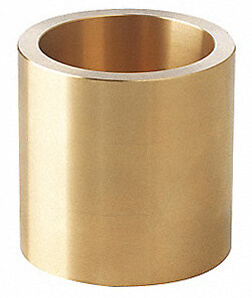
Sintered Bronze Bearing
bronze sleeve bearings because they’re inexpensive, compact, self-lubricating, and perfectly adequate for many applications. But frequent start-stop cycling presents a different challenge.
Start-stop starter designs may use heavier-duty bearing arrangements, including sealed ball or roller bearings, depending on the application.
These can provide:
• Better shaft alignment
• Lower friction
• Improved durability
• Better load handling
• Greater tolerance of frequent cycling

Sealed roller bearing
Again, the starter is being designed around the job it actually has to perform.
Start-Stop Solenoids and Electrical Systems Are Different Too
The starter solenoid is another area where repeated cycling matters.
In a conventional starter, the solenoid can perform both mechanical and electrical work: moving the pinion gear into engagement and switching substantial electrical current.

Notice the beefed-up solenoid on this DENSO TS Starter Motor For Start/stop applications
Some start-stop designs separate those functions differently, reducing electrical stress on the engagement mechanism.
The exact architecture varies by manufacturer, so I wouldn’t assume every start-stop vehicle uses the same starter design.
That’s an important qualification.
There is no single universal “start-stop starter.”
Some vehicles use enhanced conventional-style starters.
Others use different motor-generator arrangements.
Hybrid systems can be completely different again.
Start/stop Systems Employ Better Current Management
A low cranking voltage can quickly burn out a starter motor. When battery voltage drops below 9.6 volts during cranking, the starter motor draws more current (amperage) to produce the same amount of torque. The increased amperage increases resistance in the windings, creating excessive heat that damages the armature winding insulation. High current also causes slower, inconsistent rotation, resulting in arcing between the brushes and the commutator. Arcing pits the commutator surface and shortens brush life.
That can’t happen in a vehicle equipped with start/stop technology because the power management system won’t allow shutdown if there’s any potential for low cranking voltage during a restart.
Hot Restarts Are Much Easier Than Cold Starts
This is another reason start-stop starters don’t necessarily die after a few years despite the huge number of cycles.
A warm engine is easier to restart.
Think about what the starter is dealing with:
During a cold start:
• Engine oil is more viscous.
• Internal drag is higher.
• Battery performance may be reduced by low temperature.
• Fuel preparation can be more demanding.
• The engine may require more cranking before combustion begins.
During a typical start-stop restart:
• The oil is warm.
• Internal friction is lower.
• The engine was running moments earlier.
• The battery has recently been charging.
• Fuel and engine-management conditions are favorable.
• Restart duration can be very short.
So 30 warm restarts aren’t equivalent to 30 freezing-cold morning starts.
That’s a critical piece of the starter-life equation.
Advanced Battery Support Is Also Critical
You can’t talk about start/stop starter motor life without mentioning the battery. Start-stop systems don’t work well with traditional flooded lead-acid batteries. Instead, they use AGM (Absorbent Glass Mat) or EFB (Enhanced Flooded Battery) types that can handle rapid voltage drops and recharge quickly.
Without that electrical support, even the most durable starter motor would struggle. If your start-stop system stops working suddenly, a weak battery is often the first suspect, not the starter.
Does Start-Stop Kill the Battery?
If there’s one component I pay particularly close attention to on a start-stop vehicle, it’s the battery.
Automatic start-stop places much greater cycling demands on the battery than traditional operation.
That’s why start-stop vehicles commonly use batteries designed for repeated cycling, such as:
• AGM — Absorbent Glass Mat
• EFB — Enhanced Flooded Battery
These batteries are designed to tolerate cycling demands that would be much harder on a basic conventional flooded battery.
The vehicle’s battery-management system also plays an important role.
Why Does My Start-Stop System Sometimes Not Work?
Drivers sometimes assume a start-stop malfunction means the starter has failed.
Often, it doesn’t.
The vehicle monitors operating conditions and can decide not to shut the engine down.
Depending on the vehicle, start-stop operation may be inhibited because of factors such as battery state of charge, battery temperature, engine temperature, electrical demand, climate-control requirements, or other operating conditions.
That’s intentional.
If the system doesn’t believe it can support the shutdown/restart cycle appropriately, it can keep the engine running.
A weak or aging battery is therefore one of the things worth checking when start-stop suddenly stops operating normally.
Can a Weak Battery Damage a Start-Stop Starter?
Low voltage and high starter current aren’t a good combination for any type of starting system.
A starter motor needs substantial electrical power. If voltage drops excessively, starter performance suffers and heat can increase.
Modern start-stop power-management systems monitor battery condition and avoid automatic shutdowns when reliable restart conditions aren’t available.
That protects more than convenience.
You don’t want the engine automatically shutting down at a traffic light when the battery doesn’t have enough reserve to restart it.
Why Are Start-Stop Batteries So Expensive?
Here’s one criticism of start-stop technology that owners tend to notice immediately.
• AGM and EFB batteries can cost considerably more than conventional batteries.
And the economic calculation isn’t just:
How much gasoline did start-stop save?
You also have to consider the ownership cost of the equipment supporting the system.
If a more expensive battery needs replacement, some of the fuel-cost savings from reduced idling can be offset by higher maintenance costs.
That doesn’t make start-stop technology useless.
It simply means fuel savings and total ownership cost aren’t necessarily the same thing.
Does Disabling Start-Stop Make Your Engine Last Longer?
I wouldn’t promise that turning start-stop off will materially extend engine life.
Disabling the feature obviously reduces the number of automatic restart cycles.
But that doesn’t prove those eliminated cycles would otherwise have caused a premature engine failure.
If your vehicle was engineered for start-stop operation, its lubrication strategy, starter system, battery management, bearings, engine controls, and other components were designed with those cycles in mind.
Could reducing cycles theoretically reduce some cycling-related wear?
Sure.
Is there enough information to tell an individual owner that pressing the disable button every morning will add 50,000 miles to the engine’s life?
No.
That would be speculation.
Should I Turn Off Auto Start-Stop?
This comes down partly to preference.
If you dislike the delay, vibration, sensation, or repeated cycling, I understand why you turn it off.
I often find the repeated shutdown/restart cycle annoying myself.
But that’s different from saying:
“I disable start-stop because otherwise it will destroy my starter and crankshaft.”
I don’t think the engineering supports making that blanket statement.
If I owned a start-stop vehicle, I’d be more concerned about using the correct oil specification, maintaining the proper battery, and addressing lubrication or electrical problems promptly than obsessively counting every warm restart.
Is Start-Stop Bad for Turbocharged Engines?
Turbocharged engines raise another reasonable question because turbocharger bearings depend on lubrication and operate under severe heat.
But modern turbocharged engines and their control strategies are designed around the vehicle’s intended operating system, including factory-installed automatic start-stop where equipped.
The engine computer also doesn’t blindly shut the engine down under every conceivable operating condition.
That’s an important theme throughout this discussion:
Start-stop isn’t simply a timer connected to the ignition switch.
It’s part of the vehicle’s engine and power-management strategy.
Does Start-Stop Save Enough Fuel to Be Worth It?
The entire reason start-stop exists is straightforward.
An idling engine consumes fuel while the vehicle isn’t moving.
If the engine is shut down during appropriate periods of stationary operation, fuel that would have been consumed during that idle period isn’t burned.
The actual benefit varies tremendously with driving conditions.
If most of your driving is uninterrupted highway travel, the system has relatively few opportunities to shut the engine down.
If you spend your commute sitting at long traffic lights and in stop-and-go urban traffic, the opportunity is much greater.
So no single fuel-savings percentage accurately describes every driver’s experience.
What Actually Wears Out on a Start-Stop Vehicle?
If you’re worried about long-term ownership, I would divide the potential wear concerns into three categories.
Starter System
More cycles unquestionably occur, but start-stop starter systems are engineered around those additional cycles.
Engine Bearings
Repeated stopping and restarting creates additional transitions between stationary and running lubrication conditions. That’s worth acknowledging, but it isn’t the same as repeatedly starting a dry, stone-cold engine.
Battery
The battery experiences significantly greater cycling demands, which is precisely why start-stop vehicles require battery technology and power-management strategies appropriate to the application.
For many owners, battery replacement cost may be the most visible start-stop-related maintenance expense.
What Oil Should You Use in a Start-Stop Engine?
This is one area where I don’t recommend improvising.
Use the oil viscosity and specification the vehicle manufacturer requires.
Modern engines use increasingly sophisticated oil formulations, bearing materials, variable valve timing systems, turbochargers, timing-chain systems, variable-displacement oil pumps, and tight internal clearances.
Oil viscosity isn’t simply a question of:
“Thicker oil protects better.”
Flow characteristics, temperature performance, oil pressure, friction, bearing design, additive chemistry, and emissions-system compatibility all matter.
If you’re concerned about start-stop wear, following the manufacturer’s specified oil requirements and service interval makes far more sense than arbitrarily pouring thicker oil into the engine.
Does Start-Stop Cause Low Oil Pressure?
Here’s another distinction worth making.
When an engine with a conventional mechanically driven oil pump stops rotating, the pump stops producing normal operating oil pressure.
That’s expected.
It isn’t the same as an engine suffering a lubrication-system failure while running.
When the engine restarts, the oil pump resumes operation as the engine rotates.
So describing every start-stop shutdown as an “oil-pressure failure” is misleading.
The important engineering question is how the engine manages the lubrication transition during repeated stopping and restarting.
Are All Start-Stop Systems the Same?
Definitely not.
This matters because online arguments often treat every automatic start-stop system as one universal design.
It isn’t.
Depending on the manufacturer and vehicle, restarting may involve:
• An enhanced starter motor
• A specialized high-cycle starter
• A belt-driven starter-generator
• An integrated starter-generator
• Hybrid motor-generator technology
• Other electrified drivetrain strategies
So when somebody says, “Start-stop starters always work this way,” be cautious.
The underlying concept may be similar, but the hardware can differ significantly.
Is Auto Start-Stop Bad for High-Mileage Engines?
A high-mileage engine deserves a slightly different discussion.
If an engine already has:
• Low oil pressure
• Excessive bearing clearance
• Heavy sludge
• Significant oil consumption
• A weak battery
• Slow cranking
• Existing mechanical noise
then I’m much more interested in fixing those problems than debating start-stop in theory.
Start-stop isn’t a cure for an unhealthy engine, and a marginal lubrication or electrical system deserves diagnosis regardless of whether automatic stop-start is enabled.
So, Does Start-Stop Increase Engine Wear or Not?
Here’s where I land after looking at the issue mechanically.
Start-stop undeniably increases the number of engine starts.
That statement is simple arithmetic.
But the conclusion that sometimes follows—therefore, start-stop causes enormous engine wear and rapidly destroys starters—doesn’t automatically follow.
Those additional starts are mostly warm restarts occurring under very different conditions from a cold start.
• The starter system is designed for far more cycles.
• The battery and charging system are designed around repeated cycling.
• The engine management system decides when automatic shutdown is appropriate.
• And the engine itself is designed knowing that start-stop operation will occur throughout its service life.
• Does that mean there is absolutely zero additional mechanical wear associated with stopping and restarting?
I wouldn’t make that claim either.
• Repeated transitions in crankshaft speed and bearing lubrication are real. • Engineers have to design around them.
The more accurate answer to “does start-stop increase engine wear?” is therefore:
It dramatically increases the number of warm restart cycles, but modern start-stop engines and starter systems are specifically engineered around those cycles.
A warm automatic restart isn’t mechanically equivalent to repeatedly cold-starting an engine, and normal start-stop operation should not be described simply as repeated oil starvation.
Frequently Asked Questions About Auto Start-Stop
Does start-stop wear out your engine?
Automatic start-stop creates more restart cycles, but engines equipped with the technology are designed around frequent warm restarts. Those restarts shouldn’t be confused with repeated cold starts after the engine has sat for hours.
Does start-stop increase engine wear?
It increases the number of stop/restart transitions the engine experiences. However, the engine is normally warm and lubricated during these events, and manufacturers design start-stop-equipped engines to accommodate repeated restarting.
Does start-stop cause oil starvation?
Not in the ordinary sense of an engine suffering an oil-supply failure while running. Normal operating oil pressure falls when a mechanically driven pump stops turning, but lubricating oil doesn’t instantly disappear from every bearing and engine component.
Does auto start-stop wear out the starter?
Start-stop systems dramatically increase starter cycles, so applicable starter systems are engineered for much higher cycling durability than traditional designs. Starter architecture varies by vehicle.
Is start-stop bad for crankshaft bearings?
Repeated starts require bearings to transition between stationary and rotating lubrication conditions. Manufacturers account for this in start-stop engine design. That doesn’t mean bearing wear is impossible, but neither does it establish that normal start-stop operation inevitably causes premature bearing failure.
Should I disable start-stop to save my starter?
Turning it off reduces starter cycles, but start-stop starter systems are designed specifically for frequent cycling. I wouldn’t assume you need to disable the system just to prevent starter failure.
Does start-stop ruin your battery?
It places much greater cycling demands on the battery, which is why start-stop vehicles commonly use AGM or EFB battery technology and battery-management systems.
Why doesn’t auto start-stop always activate?
The vehicle may inhibit automatic shutdown when battery condition, temperature, electrical demand, climate-control requirements, or other operating conditions make stopping the engine undesirable.
Is start-stop worse in cold weather?
Cold temperatures increase battery and engine-starting demands. The vehicle’s control system can account for operating conditions when deciding whether to activate start-stop.
Does turning off auto start-stop save your engine?
It reduces the number of automatic restart cycles, but that doesn’t prove disabling start-stop will measurably increase engine lifespan.
Now, the caveats
1) The information in this article pertains to starter motors that engage the flywheel ring gear. Some start/stop systems, especially in hybrids, use an alternator/generator belt configuration. The jury is still out on the longevity of those designs.
2) Engine designers are currently using oil-retaining crankshaft bearings to reduce wear on restarts. While sounding good in theory, there’s some lingering doubt about long-term wear on crank bearings due to lower oil film strength, especially with the low-viscosity oils.
3) I don’t use the start/stop feature in my vehicle. It’s not because I’m worried about starter life or bearing wear. It’s because I hate the annoying start/stop cycle.
4) There’s some evidence to show that the expensive AGM and EFB batteries aren’t lasting as long as initially predicted. In that case, a portion of the fuel savings will be lost due to more frequent and more expensive battery replacements.
©, 2025 Rick Muscoplat
Posted on by Rick Muscoplat