
Does Premium Gas Last Longer Than Regular Gas?
Does Premium Gas Have a Longer Shelf Life?
Quick Summary
Many drivers believe premium gasoline stays fresh longer than regular gasoline, but that’s a myth. Premium and regular gasoline have essentially the same shelf life because fuel stability depends on storage conditions, ethanol content, and oxidation, not octane rating. If you want gasoline to last longer in your vehicle’s fuel tank or a gas can, proper storage and a quality fuel stabilizer matter far more than paying extra for premium fuel.
Does Premium Gas Last Longer?
I’ve been asked this question countless times over the years: Does premium gas last longer than regular gasoline in your fuel tank or a gas can?
The short answer is no.
Many people assume that because premium gasoline costs more and has a higher octane rating, it must also have a longer shelf life. In reality, octane and fuel longevity have almost nothing in common. Whether you buy 87, 89, or 93 octane gasoline, it begins aging at about the same rate.
What Determines How Long Gasoline Lasts?
The biggest enemies of gasoline are:
• Oxygen, which causes oxidation
• Heat, which speeds chemical breakdown
• Moisture from humid air
• Ethanol, which absorbs water from the atmosphere
Under normal conditions and when stored in a steel gas can, gasoline begins to lose volatility within 30 to 45 days. After several months, oxidation forms gums and varnish that can clog carburetors, fuel injectors, and fuel filters.
That’s why the answer to ” Does premium gas have a longer shelf life is still no. Premium fuel contains the same basic hydrocarbons as regular gasoline. Its higher octane rating only makes it more resistant to engine knock—it doesn’t make it more resistant to aging.
Does Premium Gas Last Longer in Your Fuel Tank?
No.
A sealed fuel tank slows gasoline degradation by limiting exposure to oxygen and moisture. Even so, premium gasoline won’t stay fresh any longer than regular gasoline.
If your vehicle will sit unused for several months:
• Fill the tank to reduce air space.
Those simple steps do far more to preserve gasoline than buying premium fuel.
Does Premium Gas Last Longer in a Gas Can?
The same rules apply.
Whether it’s premium or regular, gasoline stored in a portable container ages at essentially the same rate.
To maximize storage life:
• Store gasoline in an approved airtight steel container. Plastic gas cans lose the most volatile compound through permeation.
• Keep it in a cool, dry location away from direct sunlight.
• Use a fuel stabilizer if you plan to store it longer than a month.
• Whenever possible, use ethanol-free gasoline for seasonal equipment.
One point that’s often overlooked is the container itself. Metal fuel cans reduce fuel vapor loss better than plastic cans because gasoline vapors slowly permeate through many plastic containers.
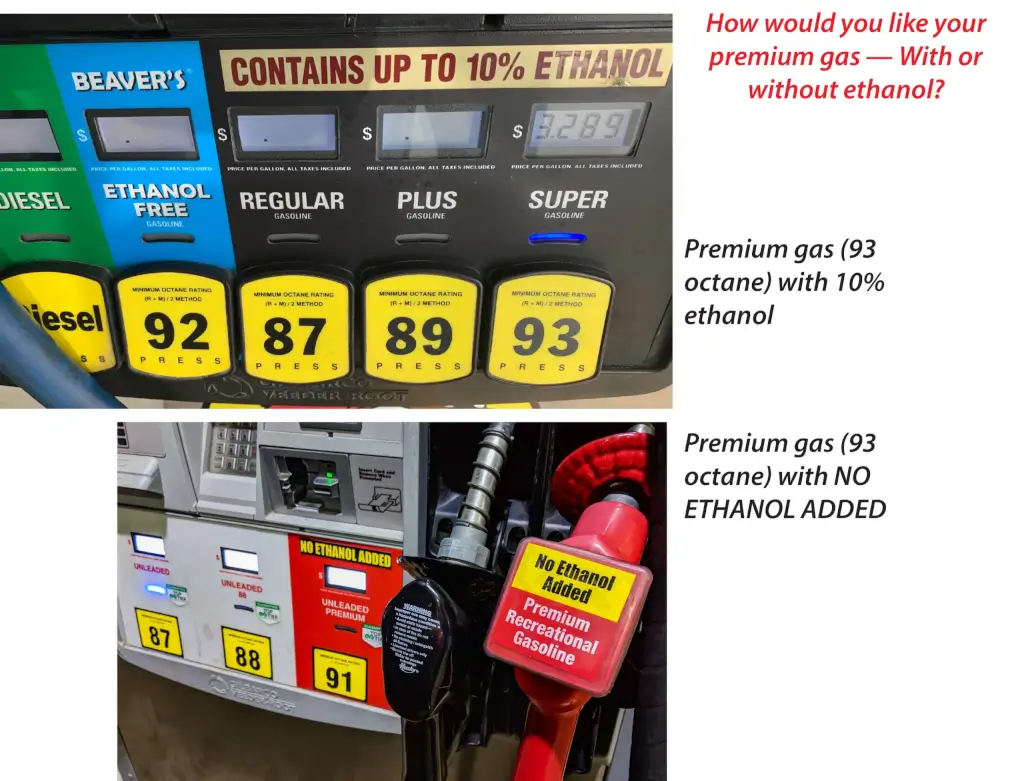
Not all premium gas is ethanol-free
Detergent Levels — Does Premium Gas Have More Detergent?
Another common misconception is that higher octane gas is automatically “cleaner.” So let’s tackle the question: Does premium gas have more detergent than regular gas? The answer: not usually.
All gasoline sold in the U.S. must meet the EPA minimum detergent requirement, regardless of octane. That means the same station’s 87, 89, and 93 octane fuels typically have the same detergent package. So, premium gas does not have more detergent than regular.
Some brands—especially TOP TIER brands—add extra detergents to all their fuel grades, not just their premium grades. Others add a slight premium as a marketing distinction. But this varies by brand, not by the octane rating itself. So you can’t extrapolate the detergent content of one brand’s premium gas to conclude that all premium gas has higher detergent content.
Storage Myths — Does Premium Gas Make Small Engines Run Better?
Another misunderstanding is that premium gas keeps small engines cleaner or helps them run longer in storage. Again, this goes back to the misconception that premium lasts longer. Ethanol content and oxidation rate determine fuel stability—not octane.
This means premium fuel will gum up a carburetor just as quickly as regular if left sitting.
What actually helps:
• Non-ethanol gas
• Quality fuel stabilizer
• Keeping tanks full to reduce air exposure
• Storing your gas in a metal container to avoid the permeation that occurs in plastic gas cans.
Octane has nothing to do with how long fuel remains fresh.
Final Word — What You Should Actually Do
Here’s the practical takeaway:
• Does premium gas last longer? — No. Same shelf life as regular.
• Does premium gas have more detergent? — Not automatically. Depends on the brand.
• Does premium fuel improve mileage? — Only in engines specifically designed for it.
If your car recommends 87 octane, stick with it. You’ll get the same detergents, the same MPG, and the same storage life—without paying extra.
© 2012 Rick Muscoplat
Posted on by Rick Muscoplat