
Engine Oil Pan Failures: Replace or Repair It?
Engine Oil Pan Failures: What Causes Them and When to Replace the Oil Pan
Quick Summary
Over the years, oil pan technology has evolved from simple stamped-steel pans to lightweight aluminum and molded-composite designs that improve weight, strength, and packaging. Despite being simple components, oil pans fail due to rust, stripped drain-plug threads, road damage, or sealing issues. In many cases, you can repair minor issues, but severe corrosion, cracks, or stripped threads usually mean it’s time to replace oil pan components entirely. Proper diagnosis is important because oil pan damage can sometimes indicate deeper undercarriage damage or oil pickup issues.
Article
Understanding the Engine Oil Pan
As someone who has worked on engines for decades, I always describe the engine oil pan as the foundation of the lubrication system. It’s essentially a metal or composite reservoir mounted to the bottom of the engine block that stores motor oil after it circulates through the engine.
Many technicians also call the oil pan an oil sump because it’s the lowest point in the lubrication system where oil collects before being pumped again.
Traditionally, oil pans were made from stamped steel. Today, however, manufacturers increasingly use aluminum or composite plastic designs to reduce weight and improve packaging flexibility.
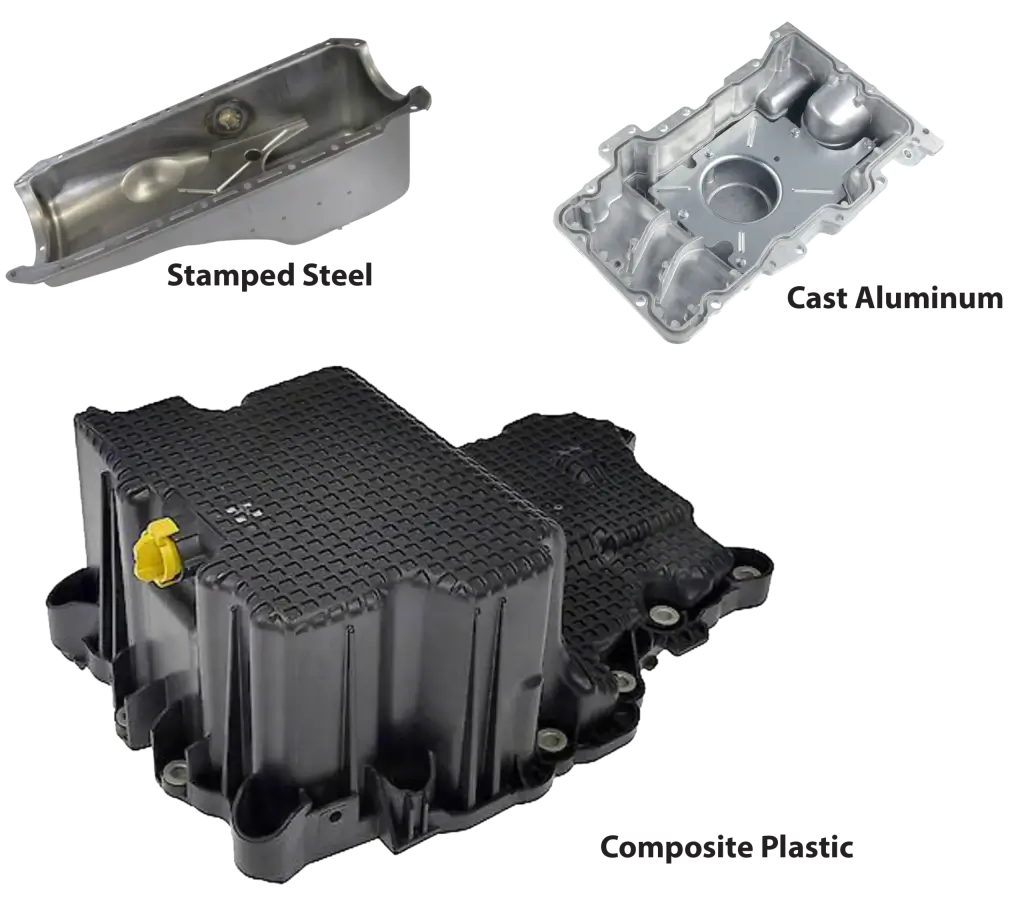
Engine oil pans have changed, from stamped steel to cast aluminum to composite plastic.
How Oil Pan Technology Has Changed
Oil pan design has evolved more in the last 20 years than most people realize. While the function hasn’t changed, the materials and engineering have improved considerably.
Steel Oil Pans — For decades, stamped steel pans were the standard. They’re strong, relatively cheap, and easy to manufacture. However, they have one major weakness: corrosion. Because the engine oil pan sits low under the vehicle, it constantly gets blasted with road salt, water, and debris.
Aluminum Oil Pans — Many modern engines now use cast aluminum oil pans. These offer several advantages:
• Better rigidity
• Improved heat dissipation using integrated cooling fins
• Lower weight
Aluminum pans also allow engineers to integrate structural bracing and mounting points for transmissions or subframes.
They do have one major downside, however: overtightening the drain plug can easily damage the soft aluminum threads.
Composite or Plastic Oil Pans — Some modern engines now use molded composite pans. These are surprisingly strong and extremely lightweight. Plastic pans also allow manufacturers to mold complex shapes, integrate oil baffles, and reduce manufacturing costs.
They don’t cool oil as well as aluminum or steel, however, and they have another flaw; they don’t work well with metal drain plugs. Ford’s plastic drain plug eliminates that problem. Nissan, on the other hand, has made the problem much worse by molding a metal threaded insert into the plastic engine oil pan that pulls right out of the pan if the tech or DIYer overtightens the bolt.
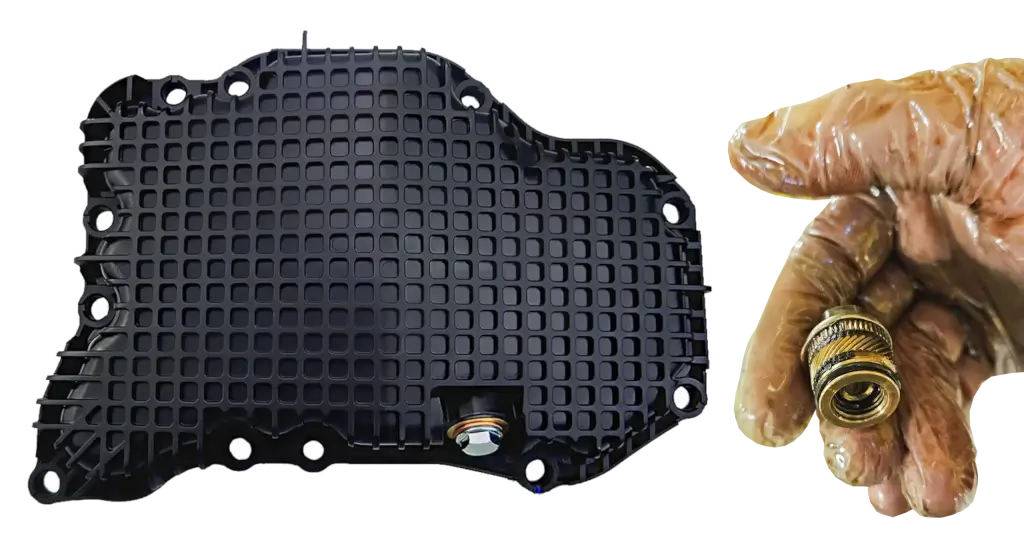
Overtighten the drain plug on a Nissan plastic engine oil pan and it’ll rip the insert right out of the pan
The Most Common Oil Pan Problems
Despite their simplicity, several things commonly go wrong with an engine oil pan.
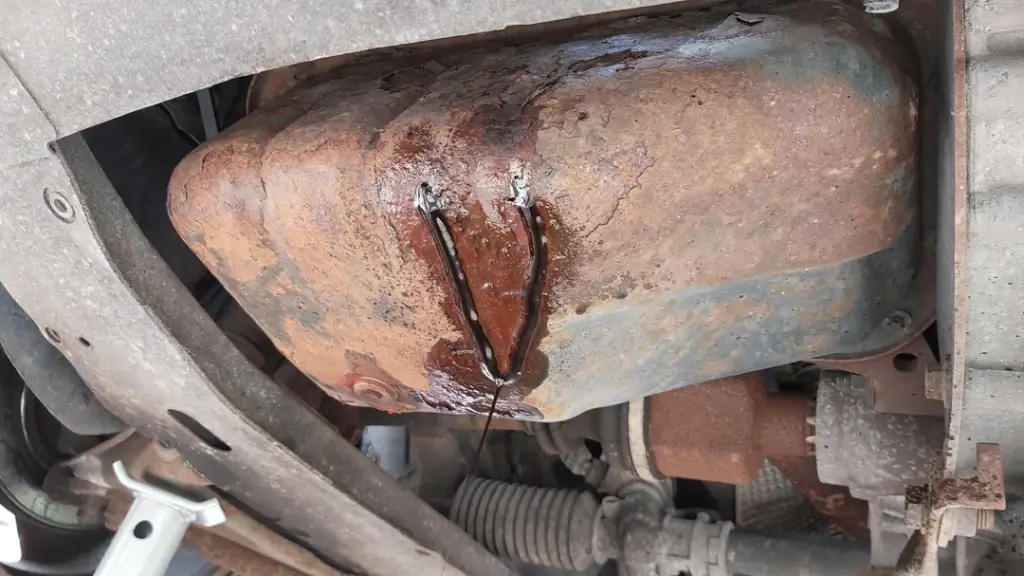
1. Rust and Corrosion — In northern climates, corrosion is one of the biggest reasons to replace oil pan assemblies. Even though oil coats the inside of the pan, the exterior is constantly exposed to salt and slush during winter driving. Over many years, this can eventually rust through the metal, resulting in oil leaks. Once rust perforates the pan, oil leaks develop, and the pan must be replaced.
2. Stripped Drain Plug Threads — This is one of the most common failures I see in the shop. The oil drain plug threads into a threaded bung in the oil pan. Because oil changes are frequent—and often done by DIYers or inexperienced techs—the threads can easily be damaged or overtightened. When this happens, you may be able to repair the threads with:
• Thread inserts (Helicoil or Time-Sert)
• Oversized drain plugs
However, if the damage is severe, you’ll have to replace oil pan components completely.
3. Road Debris Damage — Oil pans sit low under the vehicle, making them vulnerable to impacts.
• Common causes include:
• Running over road debris
• Bottoming out on curbs
• Ice chunks or rocks
A punctured engine oil pan will leak oil immediately. A dented pan can be even worse, because it may contact the spinning crankshaft or damage the oil pickup tube.
4. Oil Pan Gasket Leaks — Another common issue is oil leaking between the pan and the engine block.
Modern engines use either:
• Molded rubber gaskets
• RTV silicone sealant
• Integrated structural gaskets
Over time, heat cycles cause these seals to harden or crack, leading to leaks.
How to Diagnose Oil Pan Problems
Here’s what I look for:
• Visible oil leaks
• Oil dripping from the bottom of the engine is often the first clue.
• Oil accumulation
If the pan is covered in oil residue, clean it and monitor for fresh leaks.
• Drain plug damage
• Inspect the drain plug and threads.
• Physical damage
• Look for dents, rust holes, or impact marks.
Oil Pan Repairs That Often Work
• Drain plug thread repair inserts for stripped drain plugs
• Small gasket leaks with resealing
• Minor dents (if clearance is still safe)
However, these repairs only work if the pan itself is structurally sound.
Repairs That Rarely Last
If the pan has:
• Heavy corrosion
• Cracks
• Punctures
• Severe denting
The correct repair is almost always to replace oil pan assemblies.
How Difficult Is Oil Pan Replacement?
Many people assume oil pan replacement is easy, but that depends on the vehicle. Some engines allow easy access once the oil is drained and the bolts are removed. However, many modern vehicles require the removal of other components, such as:
• Front crossmembers
• Engine mounts
• Exhaust pipes
• Front drive axles
In some cases, the engine must be slightly lifted to remove the engine oil pan.
Pro Tip: Replace Related Parts During the Repair
Whenever I replace oil pan assemblies, I also recommend replacing several related components at the same time:
• Oil pan gasket
• Drain plug and washer
• Engine oil
• Oil filter
Since the oil is already drained, this is the perfect time for a complete oil service.
Final Thoughts
Most oil pan failures occur because of corrosion, stripped drain plug threads, gasket leaks, or road damage. Minor issues can sometimes be repaired, but severe rust, cracks, or stripped threads usually mean it’s time to replace oil pan components.
If you notice oil leaking from the bottom of the engine, don’t ignore it. A damaged engine oil pan can quickly lead to catastrophic engine damage if the oil supply is lost.
©, 2026 Rick Muscoplat
Posted on by Rick Muscoplat