
How Long a Starter Lasts: The Factors That Affect Starter Life
The Truth About Starter Lifespan: Debunking Mileage Myths
Many vehicle owners never worry about their starter until the first time it doesn’t work. They don’t understand that how you maintain your vehicle and how you operate your starter directly affect how long a starter lasts. Since a starter motor replacement can cost between $450 and $1,100, it pays to understand the factors that affect how long a starter lasts and avoid the conditions that reduce starter life. In this article, I’ll go over those factors and explain what things you can do to extend the life of your starter.
Understanding the Average Lifespan of a Starter Motor
If you look online, you’ll see that most sites list mileage numbers of 100,000 to 150,000 miles. However, those numbers are misleading because starter life has far more to do with the number of start cycles than the miles you drive. Automotive engineers design a typical non-start-stop starter to deliver approximately 50,000 start cycles. The actual lifespan of a starter motor can vary significantly based on the factors below.
The factors that affect how long a starter lasts
1) Trying to start your car with a weak battery or corroded battery terminals dramatically reduces the life of your starter
A starter motor requires around 12.4 to 12.6 volts to operate at optimal efficiency.
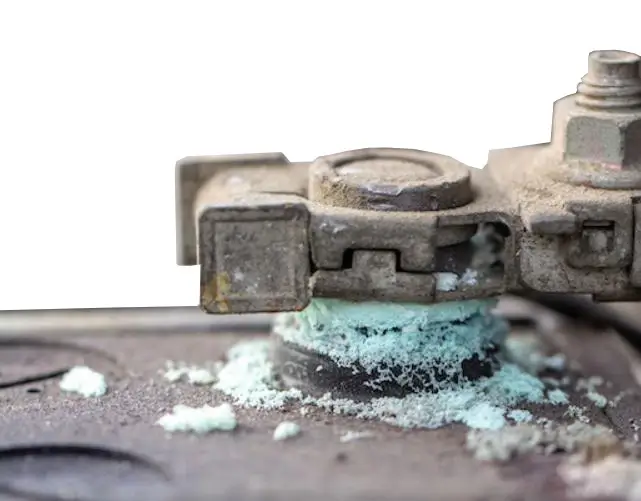
Corroded battery terminals reduce cranking voltage, causing a rise in cranking amps that overheat the starter windings and shorten stater life.
As battery voltage falls below 12.2 volts, the starter’s amperage draw rises dramatically, overheating the armature windings and causing permanent damage and early failure.
In addition to a weak battery, corroded battery terminals also significantly reduce starter life. Corroded battery terminals cause a significant voltage drop during cranking, raising the amperage draw and damaging the starter windings.
2) Long cranking times and frequent start attempts reduce starter life
Typical starter motors are designed to crank your engine for less than 5 seconds per cycle, with at least a 30-second cool-off period between attempts. If your engine isn’t in good condition, and you crank it for longer than 5 seconds at a time, you’ll shorten its life. The longer cranking times overheat the windings, brushes, and bushings.
In addition to crank duration, the number of start attempts directly affects starter life. The majority of the starter motor brush wear doesn’t occur during cranking. Instead, it occurs as the starter motor spins down. Ninety percent (90%) of the carbon brush wear in a traditional starter occurs during coast down after the starter is turned off. So, multiple repeat starting attempts cause significant starter wear, dramatically reducing how long a starter lasts.
3) Cold starts cause more starter wear than hot re-starts
Extreme temperatures, whether hot or cold, can affect the longevity of a starter. Cold weather is particularly harsh on starter motors, as the engine requires more effort to turn over in freezing temperatures. In hot climates, the high temperature in the engine bay can lead to overheating of the starter, shortening its life.
What you can do to increase the life of your starter
• Maintain the Battery and Charging System: Ensure your car’s battery is always in good condition. A weak battery forces the starter to work harder, which can wear it out prematurely.
• Maintain the battery terminals: Clean corrosion off the battery terminals and posts to reduce voltage drop due to corrosion.
• Limit Short Trips: Avoid excessive short trips where the engine cannot warm up fully. This reduces the duration of each additional start.
• Service Your Vehicle Regularly: Regular vehicle maintenance, including spark plugs and fuel system checks, will promote faster starts that reduce starter wear.
©, 2024 Rick Muscoplat
Posted on by Rick Muscoplat