
How Long Struts Last and When to Replace Them
How Worn Struts Affect Your Ride and Braking Distance
Quick Summary:
Struts last between 80,000 and 120,000 miles, depending on road conditions in your area. Rough roads, gravel, and potholes greatly reduce their life.
Article
Unlike a failed alternator or water pump, struts degrade gradually. The signs sneak up—longer stopping distances, more body roll in turns, and uneven tire wear. Recognizing those symptoms early is key to avoiding bigger suspension problems later.
How They Work and Why They Wear Out
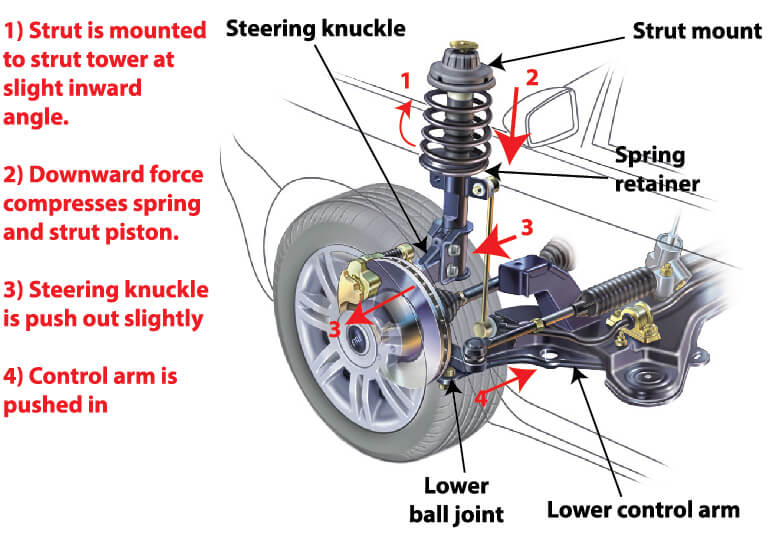
Struts aren’t just shock absorbers—they’re structural suspension components that also support the vehicle’s weight. Inside, fluid and valves control spring rebound and compression. When they wear out, that internal damping weakens.
As the fluid or gas charge deteriorates, your tires start spending more time bouncing and less time gripping the road. That loss of traction directly impacts your braking distance and steering stability. Worn struts can increase stopping distance by as much as 11.7% in panic braking, according to testing by the Royal Automotive Club.
The Real-World Signs of Worn Struts
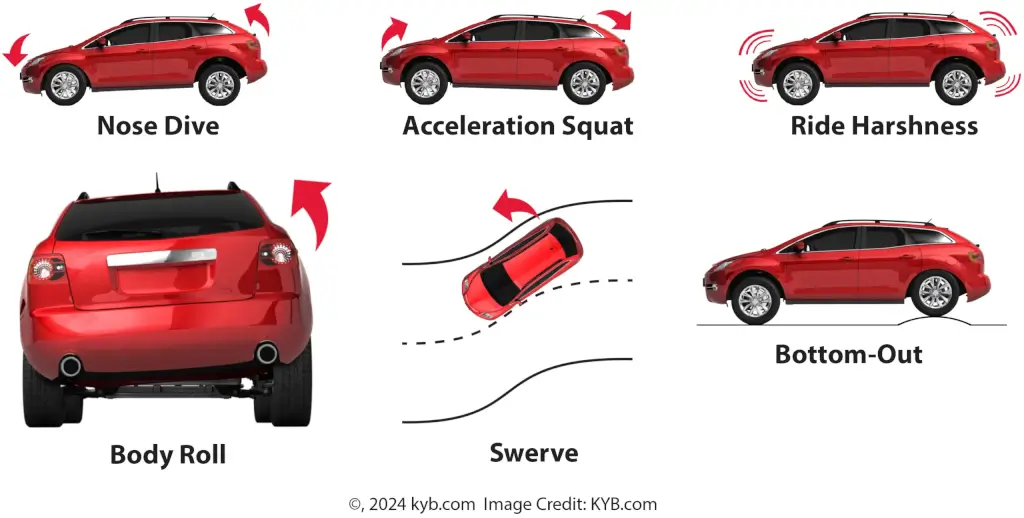
As they wear out, you’ll notice these 6 undesirable vehicle-control issues. Thanks to KYB.COM for these images.
• Nose Dive During Braking— If your front end dives sharply under braking, the struts can no longer manage weight transfer effectively.
• Excessive Body Roll in Turns— Feeling like the car leans too much when cornering? The struts can’t keep the suspension balanced, which affects stability.
• Harsh or Bouncy Ride— You shouldn’t feel every bump in the road. If you do, the damping inside the struts has faded.
• Uneven Tire Wear or Cupping— Look for scalloped tire tread. It’s one of the most reliable indicators that the struts can’t control tire movement.
How Worn Struts Affect Stopping Distance
One overlooked consequence of worn struts is an increase in stopping distance. As they degrade, the tires spend less time in contact with the road, especially during hard braking. Studies show worn struts can increase braking distance by 11.7% during a panic stop. That extra few feet could mean the difference between avoiding a collision and not. 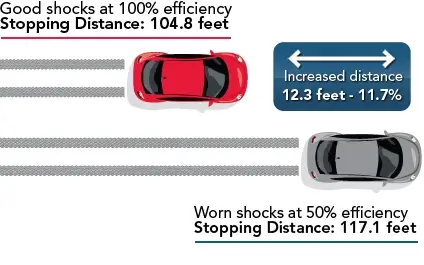
Test source RAC (Royal Automotive Club) Test No.996
Worn Struts Also Wear Out Other Suspension Components
Worn struts allow excessive movement in the suspension, which puts additional stress on your springs, control arms, bushings, and ball joints. Over time, this accelerates wear across your entire suspension system. More suspension movement = premature wear; it’s not a complicated concept.
Worn Struts and Shocks Also Damage Your Tires
When a tire moves up and down too much, it creates a repetitive, rhythmic motion that leads to an evenly spaced wear pattern. Unlike the uneven wear caused by tire balance issues, this pattern forms more quickly due to the frequent, uncontrolled movements that worn shocks or struts fail to dampen. Over time, this issue leads to noticeable tire noise, reduced traction, and eventually, significant tire damage.
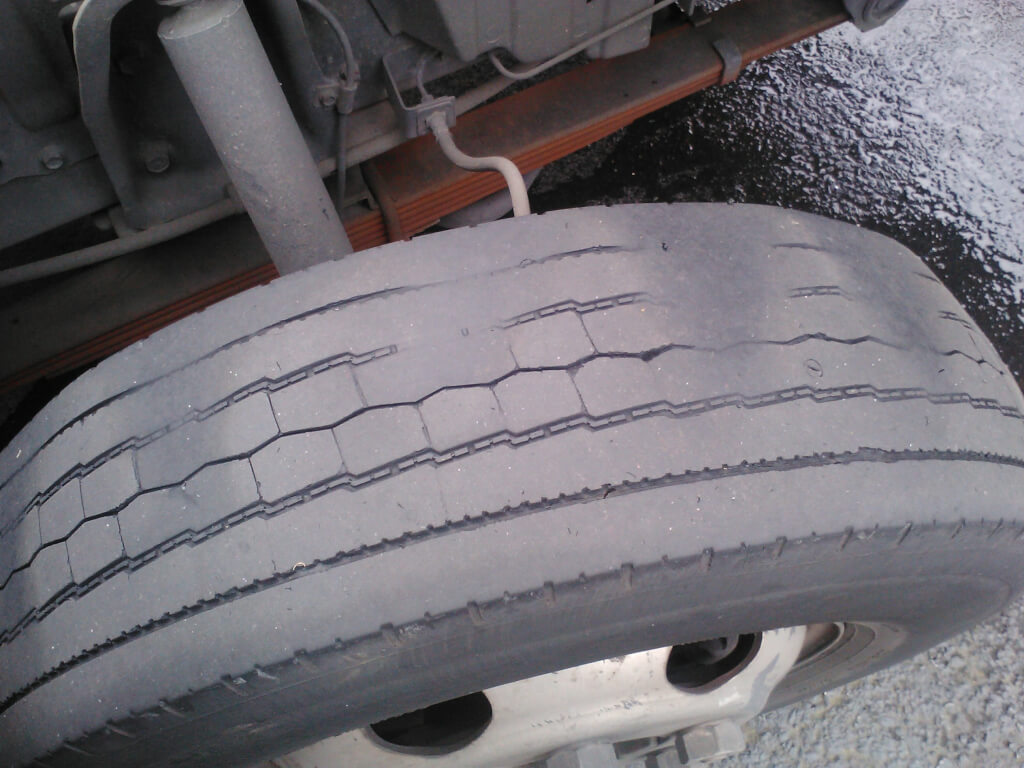
This image shows what tire cupping looks like. Tread is worn off every time a bouncing tire hits the road. The loss of tread weight causes a rhythmic bounce, causing repeat patterns of cupping around the tire.
Weeping vs. Leaking: What’s Normal and What’s Not
Many people panic when they see oil on their struts. Let me clear something up:
A light weep is normal—it’s just a trace of oil that seeps from the piston shaft as it moves.
A leak, on the other hand, appears as if the strut exterior is coated in fresh, wet oil. That’s a failed seal, and the strut is no longer doing its job.
Sadly, I’ve seen dishonest shops sell strut replacements for normal weeping. Don’t fall for that. A true leak will be obvious and consistent.
How much is strut replacement? See this post
Here are the physical signs of a bad shock unit
1) Visible signs of oil leakage between the 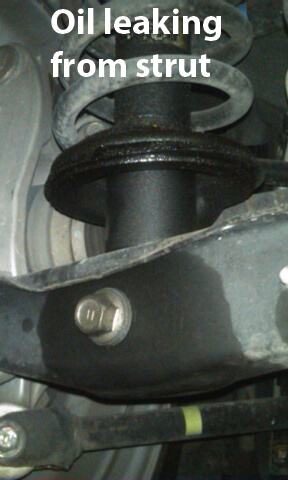 chrome piston and the body.
2) Cracked or disintegrated rubber bushings where they attach to the vehicle.
3) Advanced rusting on the shock/strut cylinder, or pitting on the chrome piston.
Most people think you can bounce on a strut and determine its condition by counting how many times it rebounds. That’s NOT a legitimate test. Many worn struts will pass that test. See this post to learn how to test a strut.
Why Cheap Struts Are a Bad Investment
Struts are a critical safety component, not a budget item. I’ve tested low-cost, no-name brands that cost 40% less than KYB or Monroe, and they perform horribly—stiff, noisy, and short-lived.
Good struts restore factory ride height, rebound control, and comfort. Cheap ones simply can’t handle the damping curve your vehicle needs.
If you want quality, stick with Monroe, KYB, or Gabriel. They cost more up front but save you from premature failure and dangerous handling down the road.
Pro Tips for Strut Replacement
• Always replace struts in pairs (both fronts or both rears).
• Inspect the springs and mounts—if your vehicle bottoms out, the springs may be weak.
• Use a torque wrench when installing. Over-torquing can damage strut mounts.
• Check alignment after installation. New struts change suspension geometry.
• If your car uses air or electronic struts, you don’t have to buy from the dealer—try reputable suppliers like Strutmasters, Suncore Industries, or RockAuto.
Final Thoughts – How to Get the Most from Your Struts
In my professional experience, replacing worn struts before they fail keeps your car safe, stable, and predictable. Always buy quality parts, follow torque specs, and check alignment afterward.
© 2012 Rick Muscoplat
Posted on by Rick Muscoplat