
How often should you change your oil
How often should you change your oil: An owner’s guide
When to change oil in your car or truck isn’t as complicated as you think. In fact, it’s all right there in your owner’s manual maintenance guide. Those aren’t just lofty suggestions; the car makers really mean what they say. Forget about the advice you get from self-proclaimed Internet “experts.” There’s no universal answer to oil change intervals.
When to change oil is dependent on the year, make, model, engine, and your particular driving habits.
When to change oil comes up more often these days because more owners are switching over to synthetic oil, and most new cars require synthetic oil. Many self-proclaimed experts (numbskulls) spout off that you can easily go 7,000- 10,000 miles between changes with synthetic oil. Well, I’ve got news for you; it doesn’t matter what they think. It’s what’s in the carmaker’s maintenance schedule that counts. Oil change intervals are based on many factors. The rate at which oil and its additives are used up depends the year, make, and which engine you have as well as HOW you drive as well as how far you drive. So, anyone who gives you a flat mileage change interval with first asking how you drive is someone who really doesn’t understand oil.
Factors that determine when to change oil
Engine design determines when to change oil
1) Which engine do you have? What year? Every engine has different operating characteristics. Engines with turbos are MUCH harder on oil than
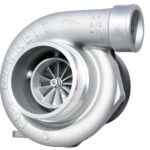
A turbo charger runs hot and can degrade oil faster. If you have a turbo, don’t go beyond the car maker’s oil change recommendations
normally aspirated engines. Engines with variable valve timing (VVT) alter camshaft timing by pulsing oil pressure to a cam phaser. When you pulse oil, it tends to foam, so the oil’s anti-foaming additives must be up to the job. They deplete faster in an engine with VVT than in an engine with fixed valve timing. So you have to change oil more often.
The type of fuel injection determines when to change oil
Many late-model cars and trucks have gasoline direct injection. Gasoline direct injection works by injecting gas directly into the combustion chamber at extremely high pressures –like 2,000-psi. These vehicles use two separate fuel pumps. The fuel pump in the tank
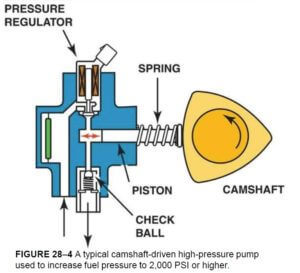
High-pressure fuel pump and camshaft lobe wear
pumps fuel to the high-pressure fuel pump driven by a triangular camshaft lobe. The engine oil must have incredible anti-shear properties and must be changed on schedule. If you exceed the car maker’s recommendations on when to change oil, you can cause major engine damage, requiring a new camshaft and high-pressure fuel pump. We’re talking about damage in the thousands here.
Shops are seeing a huge increase in camshaft replacements due to owners exceeding the car maker’s oil change recommendations. Once again, who do you trust for reliable information on when to change your oil—online numbskulls or the car maker’s maintenance guide?
In addition, GDI engines create more soot. That soot goes into the crankcase where it mixes with moisture, stressing the oil’s dispersant and anti-corrosion additives to create sludge.
Then there’s the issue of timing chains. Once again, shops are seeing a huge increase in the number of stretched timing chains due to delayed oil changes. Again, this is engine-specific. Timing chain wear and stretch can happen in as little as 15,000 miles. That means you can be looking at am $800 (minimum) repair bill simply by going several thousand miles past the recommended interval.
How you drive determines when to change the oil
Engines are designed to run on a very lean mixture to save gas. But engines won’t start with a lean mixture. So, the computer provides a rich air/fuel mixture to start the engine. However, all engines (even brand-new ones) leak a small portion of the air/fuel and exhaust through the piston ring gaps and into the crankcase. That’s called “blowby.” The raw gasoline in cold start blowby gasses enter the crankcase and dilute the engine oil, thinning it out and reducing its lubrication effectiveness. As the engine warms up and the air/fuel mixture leans out, the blowby contains less raw gas.
If you drive long enough the engine heat heats up the raw gas
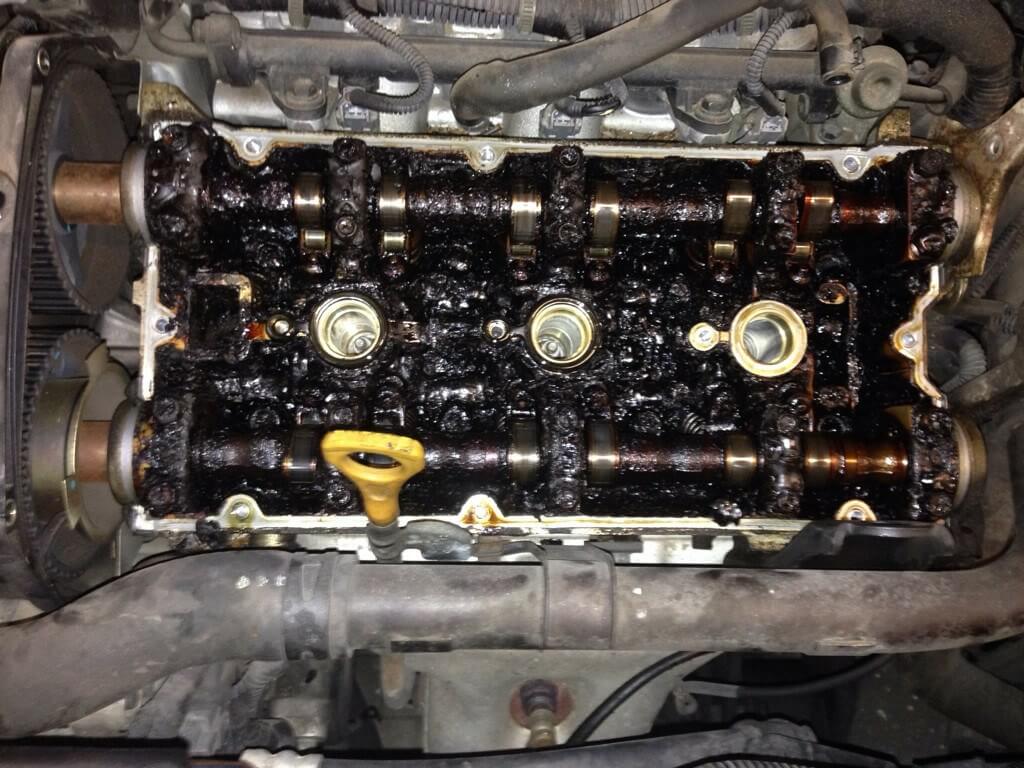
Example of sludge buildup in neglected engine. (PHOTO reddit.com/r/Justrolledintotheshop/)
and moisture and it evaporates, gets sucked out by the PCV valve and burned in the engine. However, if you start a cold engine and drive it a short distance, the engine never gets hot enough to evaporate the gas and water and that’s what forms corrosion and sludge.
Aside from raw fuel, blowby gases also contain exhaust byproducts like soot and water. In fact, for every 100 gallons of gasoline, you produce 90-120 gallons of water, 3-10 gallons of unburned gasoline, .5 to 3-lbs. of soot and carbon, 0.25-1-lb. of varnish, and 1-4-lbs. of sulfuric and nitric acid. Most of it goes out the tailpipe, but some of it flows into the crankcase.
Motor oil contains additives to deal with soot, water, acids, and sludge. For example, all modern motor oil contains:
• Anti-corrosive additives to prevent corrosion from water
• Dispersants to keep particles in suspension so they can reach the filter and be retained by the filter media.
• Detergents to clean deposits
Frequent cold starts deplete motor oil additives faster.
A “cold” engine is any engine that hasn’t been run for more than 3 hours. It doesn’t mean -30F. So, if you go to work and park your car all day and it’s 97° in the shade, it’s COLD when you start it to go home. That’s because engine operating temperature is usually 195° to 205°. So if you live in Arizona, don’t kid yourself into thinking your engine is only cold on morning startups.
Cold starts also eat up anti-wear additives
Most engine wear occurs at startup before oil pressure

Cold starts reduce oil life
has a chance to build and form a buffer layer between metal parts. Oil film and pressure keeps metal components apart. So the engine is slightly oil-starved on cold startups and that’s where the oil’s anti-wear additives come into play. They melt out of suspension and deposit on hot areas created by friction. So frequent cold starts deplete anti-wear additives faster.
City driving depletes viscosity index improvers (VII) and anti-oxidants
Multi-viscosity oil contains a thickening agent call

Stop and go city driving reduces oil life
viscosity index improver (VII). VII is a polymeric molecule that expands as it heats to “thicken” the oil and increase its viscosity. But this polymeric molecule isn’t oil, so it doesn’t lubricate. It’s a filler to thicken. When the engine is under hard acceleration, hauling heavy loads, or when you put the pedal to the metal, you create tremendous pressure on the oil film like the crankshaft and bearings or the camshaft and lifter. That pressure can shear the polymeric molecule, literally cutting it in half. As you damage the VII, you literally reduce the oil’s ability to thicken when hot. That’s why many car makers classify stop and go city driving as severe service. In addition, hot summer city driving reduces the engine’s ability to cool the oil. That results in thermal oil breakdown, causing excessive oxidation which degrades the oil. In other words, city driving depletes VII and anti-oxidant additives faster.
Short trips deplete up anti-corrosive additives
The extra fuel that’s dumped into the crankcase at cold start really needs to get burned off. Driving for longer than 20 minutes can do that. But if you just start the engine cold and run to the grocery store, the oil never gets hot enough to evaporate out the gas and water. So it sits in the oil and puts the anti-corrosive additives under stress. And that extra gas and water is what causes sludge to build up.
So what does all this mean?
By its very nature, synthetic oil has little (or no) wax (depending on whether it’s made from true Group III or Group IV base oil), so it has less pour point depressant additive. The molecules in synthetic oil are far more uniform, so you get less thermal breakdown, whereas the smaller molecules burn away under high heat and stress. And, to run longer between oil change intervals, it also contains a higher percentage of anti-corrosive, anti-wear, and dispersant additives. But, at best, the additives only account for 25-30% of the oil’s volume. So the question remains: can you extend the oil change intervals for your vehicle beyond the manufacturer’s recommendations? That’s a qualified maybe.
What is severe service?
Your owner’s manual will list separate oil change interval

Towing a trailer reduces oil life.
recommendations for Normal and Severe. Normal service is considered as “ideal” conditions. While you may consider your driving habits normal, it pays to read the fine print. These driving conditions are EXCEPTIONS to Normal driving include:
Frequent short trips (less than 10 miles, especially during cold weather)
Stop-and-go city traffic driving
Driving in dusty conditions, on gravel roads, etc.
Driving at sustained highway speeds during hot weather
Towing use
Diesel or turbocharged engine
The oil life monitoring system determines when to change oil
To get a better feel for oil life and to reduce owner operating costs, many manufacturers now include an oil life monitoring system. The original “oil change” indicators were simply based on mileage. But the newer systems actually track the number of cold starts, engine load, time driven, ambient temps and engine temperatures. Based on the manufacturer’s algorithm and your driving habits, the oil change light may come on at 4,000 miles of stop-and-go city driving or 7 to 10,000 miles of highway driving.
The oil level determines when to change the oil
Oil life monitoring systems aren’t smart enough to track two important items. First, unless you own a luxury car with an oil level sensor, the oil life monitoring systems don’t track oil level. Secondly, they don’t know what oil you installed. With engines running longer between oil changes, the driving public has become complacent about checking oil levels. That’s a HUGE mistake. In fact, shops are reporting an increase in engine failures due to sludge and wear due to running the engine while it’s low on oil.
Some engine sumps hold only 4-quarts. During a 7,000-mile oil change interval, you’re likely to burn ½ to 1-quart of oil. If you don’t routinely check your
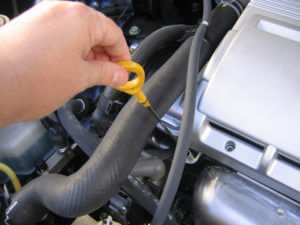
Find the dip stick on your engine and pull it straight out.
oil level, you’re probably running the engine with less than a full fill. Running low on oil puts added stress on the remaining oil. So, the remaining anti-oxidants, acid neutralizers, detergents, and dispersants are used up MUCH faster due to the added stress. Unfortunately, the oil life monitoring system doesn’t KNOW you’re low on oil. It assumes that you’re a conscientious owner and check your oil levels regularly.
Most owners think the oil light will come on when their low on oil. Not true. Some luxury cars have an oil level sensor, but most vehicles just have an oil PRESSURE sensor. So the oil light only comes on when you’ve lost oil pressure. By that point you’ve been running low on oil for a long time (unless the loss of pressure is due to a leak). So don’t even think of extending your oil changes if you never check your oil levels.
Next, the oil life monitoring system assumes you’ve used the correct oil. GM, for example, requires DEXOS oil in late model vehicles. The oil life monitor depends on you follow the car makers recommendations so it know exactly how much of each additive is in the oil. If you install a non-recommended oil, all bets are off as far as following the oil life monitor.
Is the oil life monitor accurate?
Well, it’s an algorithm and it’s only as good as the engineer that wrote it. At least one major car maker has been forced to go back and reprogram their customer’s cars to reduce the oil change intervals because the algorithm has proved itself wrong in real world use.
In conclusion:
Shops are seeing a huge increase in engine damage due to customer’s extending their oil change intervals beyond car makers’ recommendations. If you drive under severe conditions (as defined by the car maker, not your buddy), but use longer oil change intervals based on normal driving, you WILL cause premature wear on the timing chain, camshaft, crankshaft, bearings, lifters, etc. The cost to repair those items range from $1,000 to as much as $5,000.
If you follow Internet advice to extend oil change intervals beyond the manufacturers’ recommendations and damage your engine, you have no recourse against those who gave you the bad advice.
Bottom line:
Oil changes are cheaper than new engines. Change it according to the manufacturers’ recommendations, not some Internet idiot’s advice
© 2012 Rick Muscoplat
Posted on by Rick Muscoplat