
How to choose the best oil filter for your engine
How Oil Filter Efficiency Affects Engine Life
Quick Summary
When shopping for an oil filter, the key factors to consider are: oil filter efficiency, micron ratings, nominal versus absolute filtration, and dirt-holding capacity. Micron size is important because most engine wear is caused by particles in the 5–20 micron range. A high oil filter efficiency at 10 microns can dramatically reduce wear compared to a typical 40-micron economy filter. However, micron numbers alone don’t tell the whole story. You must understand whether the rating is nominal or absolute, how Beta ratios define true performance, and how dirt holding capacity affects service life. In short, filtration quality is one of the most important — and most misunderstood — factors in engine durability.
Article
Understanding Oil Filter Efficiency: What Really Protects Your Engine
After decades of tearing down engines and analyzing wear patterns, I can tell you this with certainty: contamination control is everything. Engine oil does not wear out bearings — abrasive particles do. And the single most important factor in controlling those particles is oil filter efficiency.
Unfortunately, oil filter marketing often clouds the real numbers. If you want to make an informed decision, you need to understand what those numbers actually mean.
Micron Size: Where the Damage Happens — A micron is one-millionth of a meter. For reference:
• Human hair ≈ 70–75 microns
• Visible particles ≈ 40 microns
• Engine oil film clearance ≈ 5–15 microns
Most bearing and ring clearances fall right in the 5–15 micron range. That means particles of similar size can wedge between surfaces, disrupting the oil film.
Research has consistently shown that particles between 5 and 20 microns cause the most destructive wear. That’s why oil filter efficiency at 10 microns is dramatically more important than efficiency at 40 microns.
An economy filter might be 95% efficient at 40 microns — which sounds impressive, but it offers very little protection at 10 microns. A premium filter, on the other hand, may deliver high oil filter efficiency at 10 microns, significantly reducing wear.
When evaluating filtration, always ask: “Efficient at what size?”
Nominal vs Absolute: The Marketing Trap
Many filters advertise a micron rating without clarifying whether it is nominal or absolute. The difference is critical. A filter that lists a NOMINAL rating must also have an EFFICIENCY rating for the rating to mean anything. For example, a filter can list a 30-micron nominal rating with a 20% efficiency. That means it filters out 20% of particles that are 30 microns or larger. In other words, it’s not a very efficient filter because it allows 80% of 30-micron particles to pass through.
However, a filter with a 30-micron ABSOLUTE rating will filter out 100% of all particles 30-microns and larger.
Nominal Rating — A nominal rating typically means the filter captures a percentage of particles at a stated size — often around 50% efficiency. There is no strict industry standard for the term. One manufacturer’s nominal 20-micron filter may perform very differently from another’s. Nominal ratings often inflate perceived oil filter efficiency.
Absolute Rating — An absolute rating usually means the filter captures 98% or more of particles at the specified size. This is a much stricter definition and gives you a far better understanding of true performance.
Professional filtration engineers rely on Beta ratios rather than vague terminology.
Beta Ratio — The Beta ratio comes from multipass testing standards such as SAE J1858 and ISO 4548. It compares the number of particles upstream of the filter to those downstream at a specific micron size.
For example:
• Beta 2 = 50% efficient
• Beta 20 = 95% efficient
• Beta 75 = 98.7% efficient
• Beta 200 = 99.5% efficient
When discussing oil filter efficiency, the Beta ratio is the most meaningful metric available.
A filter rated Beta 75 at 10 microns provides 98.7% oil filter efficiency at 10 microns. That is serious protection — and far superior to a nominal 40-micron claim.
Unfortunately, most consumer packaging does not publish full Beta data, which makes comparing filters difficult.
Why Small Particle Efficiency Matters More Than Big Particle Removal
It’s easy to filter large debris. Even basic cellulose media can effectively remove 40-micron particles. The challenge is maintaining high oil filter efficiency in the 5–15 micron range without excessively restricting flow.
The smaller the particle, the greater the population per milliliter of oil. In fact, the overwhelming majority of particles suspended in engine oil are under 25 microns.
If your filter does not maintain strong oil filter efficiency at 10 microns, the engine will continue circulating millions of abrasive particles every minute. That’s how wear accumulates.
Dirt Holding Capacity Ratings: Efficiency Isn’t Enough
Efficiency tells you how well a filter captures particles. Dirt holding capacity tells you how long it can continue doing so. Some filter manufacturers post their filter’s particulate holding capacity in grams. Every filter has a finite capacity to store contaminants. Because, as debris accumulates:
• The pressure differential increases
• Flow resistance rises
• The bypass valve may open, and once the bypass valve opens, filtration stops. Oil flows around the media.
An excellent oil filter with poor dirt-holding capacity may protect well initially, but enter bypass mode prematurely.
Dirt holding capacity becomes especially critical in:
• Extended oil drain intervals
• Dusty environments
• High-mileage engines
• Towing and heavy loads
High-capacity synthetic media typically offers both strong oil filter efficiency and improved contaminant storage.
Media Type and Its Effect on Efficiency
Filtration media directly influence both oil filter efficiency and dirt holding capacity.
Cellulose Media — Traditional and cost-effective. Adequate for short intervals, but with less consistent pore size. Efficiency at smaller micron levels is often limited.
Synthetic (Glass Fiber) Media — Uniform pore structure, better small-particle capture, and higher dirt holding capacity. Premium filters use synthetic or blended media to maximize oil filter efficiency.
Blended Media — A balance of cost and performance. Many mid-tier filters use a cellulose/synthetic blend.
In my professional experience, synthetic media provides more stable, predictable oil filter efficiency throughout the service interval.
Pressure-Flow Balance: The Engineering Trade-Off
Some worry that finer filtration restricts oil flow. Modern filter design solves this through:
• Increased media surface area (more pleats)
• Advanced fiber technology
• Proper bypass calibration
A well-designed filter can achieve high oil filter efficiency without starving the engine. Problems usually arise from cold starts combined with high RPM — not from normal operation.
Does the filter’s overall can size matter?
Does a larger filter do a better job than a smaller filter?
Not a bit. If you think a larger filter traps more contaminants, think again. If you really want to know how to buy an oil filter, know this: oil filter size has nothing to do with its efficiency. In fact, oil filter size, the number of pleats, and the construction of the filter end caps have absolutely nothing to do with filter efficiency. Neither does the filter brand (more on that later). If you see an oil filter comparison study that compares filters by the overall size or number of pleats, it’s a bogus study.
Forty years ago, filter manufacturers had about three types of filter paper for use in oil filters. Today, they can choose from over 80 different types of filter media, from cellulose to synthetic glass to non-woven polypropylene fabrics. So, a filter made with these newer materials can be more efficient, smaller, and have fewer pleats than a conventional filter made with older filter media.
How to choose an oil filter—it’s all about mileage ratings
So, what information can you use to buy an oil filter? The filter company’s filter life rating. If you own a late-model vehicle, chances are you’re using an extended oil change interval schedule. If your owner’s manual recommends changing oil at 7,500 or 10,000 miles, you must install a filter that’s rated for that interval. If you install an economy filter that’s rated for 3,000 miles but go the full 10,000 miles, trust me, your filter will quit working way before you change your oil.
Premium-quality oil filters are made with top-quality materials, such as silicone backflow valves instead of nitrile, multiple layers of different filter media, backing screens to prevent pleat collapse, and reliable bypass valves.
Final Expert Advice
If your goal is maximum engine life, prioritize:
• High oil filter efficiency at 10 microns
• Published Beta ratio data
• Synthetic or blended media
• High dirt-holding capacity combined with high efficiency at 10 microns.
• Proper bypass and anti-drainback valve design
If forced to choose between premium oil and premium filtration, I will choose filtration every time. Clean oil reduces friction, minimizes abrasive wear, and extends component life. But engines wear down far more from contamination than from oil breakdown.
Understand the numbers. Ignore the marketing. Focus on measurable oil filter efficiency and capacity — and your engine will reward you for it.
Does the oil filter brand count?
Brand means very little. Each oil filter manufacturer produces economy, OEM, and premium-quality oil filters. They make them under their own brand name and also private-label their oil filters for other companies and auto parts stores. Plus, oil filter manufacturers are bought and sold like a Monopoly game.
Here’s an example. If you search the Internet, you’ll find horrible reviews on Fram oil filters. If you check the sources of that information, you’ll discover that most of that information about Fram is unscientific, biased, and outright false.
Fram was owned by Allied Signal, which then bought Bendix and Honeywell. Honeywell’s consumer products division made Fram, Autolite spark plugs, Bendix brakes, and Prestone. In 2011, Honeywell sold Fram, Autolite, and Prestone to The Rank Group, a privately held company in New Zealand. The Rank Group subsequently bought Champion Labs, maker of air and oil filters, Airtex fuel pumps, and Autolite spark plugs.
Today, Fram is owned by First Brands Group.
First Brands owns Anco, Trico wiper blades, Airtex fuel pumps, Carter fuel products, Cardone rebuilders, Centric brake products, Raybestos brake products, Hopkins trailer accessories, DrawTite, Carlson brake products, Autolite spark plugs, StrongArm lifts, Reese trailer accessories, Wesbar, Westfalia, Tekonsha, Fulton, and Bargman.
Now let’s look at other oil filter brands, such as Purolator, Wix, and Bosch.
• German company MANN+HUMMEL owns the Wix, Filtron, and Purolator brands
• The Hastings and Baldwin filter brands are owned by Carcor, which was purchased by Parker Hannifin Corporation Filtration Group on Feb 28, 17.
So, the majority of all oil filters worldwide are made by just four companies:
First Brands, MANN+HUMMEL, Kuefner-filter, and Parker Hannifin Corporation Filtration Group
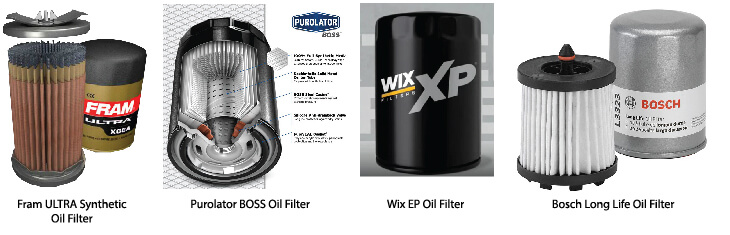
Four major oil filter brands
©, 2017 Rick Muscoplat
Posted on by Rick Muscoplat