
How to Diagnose and Fix VCT Problems
Variable Cam Timing Failures in Ford Engines and How to Fix Them
Quick Summary
1) Check the engine oil level and condition first. Dirty or low oil is the most common cause of Ford VCT problems.
2) Scan for diagnostic trouble codes, including misfire codes that may actually be caused by variable cam timing issues.
3) Use a scan tool to monitor camshaft timing data (PIDs) to see if commanded timing matches actual timing.
4) Check oil pressure with a mechanical gauge, because Ford VCT systems rely on proper oil pressure to control cam phasers.
5) Inspect for oil restrictions or sludge in the VCT solenoids and oil passages.
6) Test the VCT solenoids and inspect the cam phasers for mechanical failure.
When I diagnose a Ford engine with rough idle, misfires, or strange engine noise, I always consider variable cam timing early in the process because Ford VCT problems often mimic ignition or fuel system issues.
Article
Step-by-Step Guide to Diagnosing Variable Cam Timing
I’ve diagnosed many drivability complaints that ultimately traced back to Ford VCT, and what makes these problems tricky is that variable cam timing failures rarely present themselves in an obvious way. The symptoms can easily look like misfires, ignition problems, or even mechanical engine damage. Understanding how Ford VCT works—and how to diagnose it correctly—is essential if you want to fix the vehicle right the first time.
How Variable Cam Timing Works in Ford Engines
Older engines used fixed camshaft timing. Once the timing chain or belt was installed, the camshaft position never changed. That meant the engine had to compromise between power, fuel economy, and emissions. The purpose of variable cam timing is to change valve timing while the engine is running. Ford VCT eliminates that compromise by allowing the powertrain control module (PCM) to adjust camshaft timing dynamically.
The PCM monitors signals from the camshaft position sensor and the crankshaft position sensor, constantly comparing their relationship. Using that information, the PCM commands a VCT solenoid to route engine oil pressure into a cam phaser mounted on the camshaft.
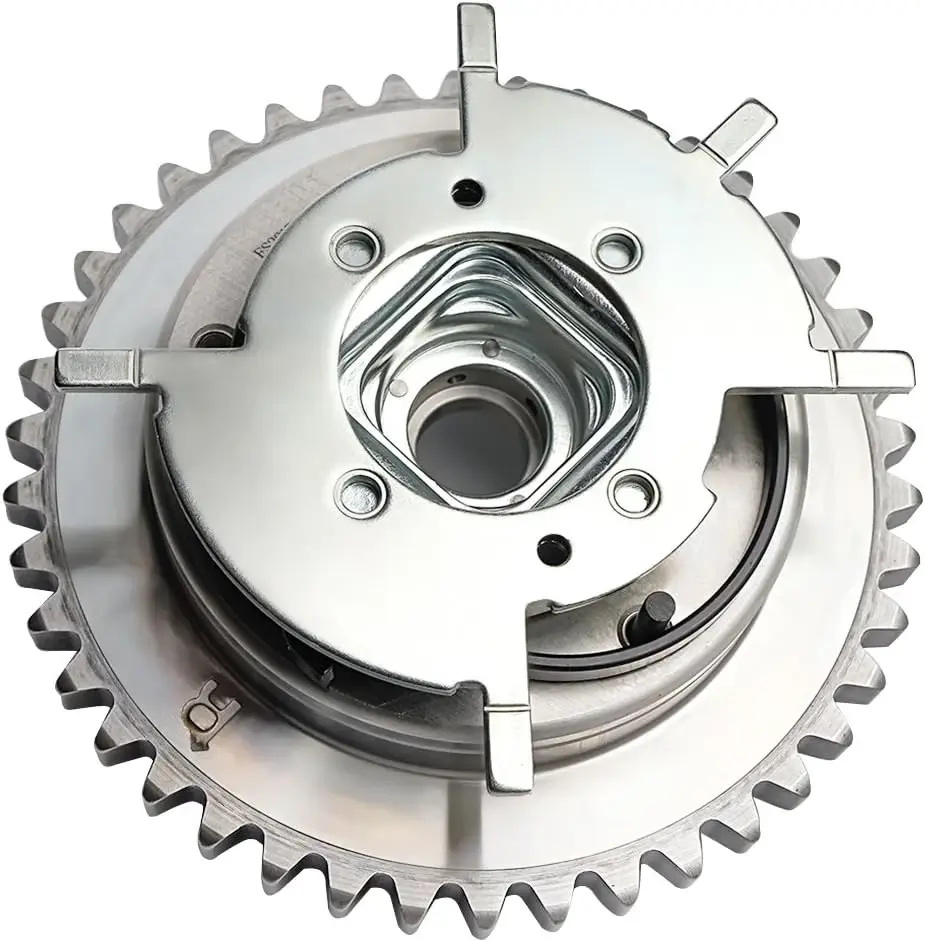
Typical cam phaser
The cam phaser rotates the camshaft slightly forward or backward, which changes valve timing.
Why Diagnosing Ford VCT Problems Is Difficult
One reason DIYers and even technicians struggle with Ford VCT problems is that the symptoms overlap with other systems. I’ve seen vehicles come into the shop with:
• Rough idle
• Misfire codes
• Engine noise
• Poor acceleration
• Check engine lights
In many cases, those symptoms lead you to replace spark plugs, ignition coils, or fuel injectors when the real culprit is variable cam timing. The problem is that Ford VCT relies on three different systems working together:
• Electrical control
• Hydraulic oil pressure
• Mechanical cam phaser components
If any of these systems fail, the variable cam timing system may behave incorrectly.
The First Step: Check Engine Oil
Whenever I suspect a Ford VCT issue, the very first thing I check is engine oil. This might seem basic, but variable cam timing systems depend on clean oil flowing through small passages inside the engine. If the oil level is low or the oil is dirty, sludged, or of the wrong viscosity, it can clog the VCT solenoid or restrict oil flow to the cam phaser. That alone can cause the Ford VCT system to respond slowly or fail entirely.
Checking the oil level and condition is always the first diagnostic step when investigating variable cam timing concerns.
Scan Tool Diagnosis of Variable Cam Timing
After verifying oil condition, the next step is to check for diagnostic trouble codes. Even if there are no codes specifically related to Ford VCT, the PCM may store misfire codes or camshaft position codes that point toward variable cam timing issues.
Using a professional scan tool, I monitor camshaft timing parameters while the engine runs checking the following data points:
• Commanded camshaft timing
• Actual camshaft timing
• VCT solenoid duty cycle
Under normal conditions, these values should stay close to each other. If the difference between commanded and actual cam timing exceeds about five degrees for an extended period, it usually indicates a Ford VCT malfunction.
Checking Oil Pressure for VCT Problems
Another critical diagnostic step is verifying oil pressure. Because variable cam timing relies on oil pressure to move the cam phaser, low oil pressure can prevent Ford VCT from functioning correctly. I always check oil pressure with a mechanical gauge installed at the oil pressure sensor port. The dashboard oil pressure gauge cannot provide accurate readings for diagnosis. At normal operating temperature, most Ford engines should maintain at least 15 PSI at idle.
If oil pressure drops too low, the camshaft may oscillate, causing drivability problems or engine noise that appears to be related to variable cam timing.
Checking for Oil Restrictions and Sludge
Another common cause of Ford VCT issues is restricted oil flow. Sludge, debris, or deteriorating oil filter media can clog the small oil passages that feed the VCT solenoids and cam phasers.
When diagnosing variable cam timing, I always inspect the oil filter and cut it open if necessary. Metallic debris or sludge in the filter can reveal internal engine problems that affect Ford VCT operation. I also inspect the VCT solenoids and oil passages in the cylinder head for debris or contamination.
Testing VCT Solenoids and Cam Phasers
If oil pressure and oil flow look good, the next step is testing the VCT solenoids. A quick bench test involves applying fused battery power to the solenoid and momentarily grounding it. If the solenoid works correctly, you should hear an audible click. When the solenoid actuates, you may also notice a change in engine idle quality. If the solenoid works properly but variable cam timing problems persist, the next likely culprit is the cam phaser itself.
A worn or damaged cam phaser can cause:
• Cold start rattle
• Poor idle quality
• Engine noise while driving
• Incorrect camshaft timing
At that point, replacement of the cam phaser is usually required.
Why Maintenance Prevents Most VCT Problems
Most Ford VCT failures are preventable with regular oil changes, performed with the correct viscosity oil. Fresh oil keeps the system operating at full efficiency.
Because Ford VCT relies on clean oil flowing through extremely small passages, neglecting oil maintenance almost guarantees future problems.
©, 2026 Rick Muscoplat
Posted on by Rick Muscoplat