
How to Remove Hard Water Spots on Car Paint: A Guide
Say Goodbye to Hard Water Spots on Car Paint with These Tips
Hard water spots on car paint are a common nuisance for car owners. These spots, caused by the high mineral content in water, can leave unsightly marks on your vehicle’s surface. If left untreated, they can become etched into the paint, making them much harder to remove. Fortunately, with the right techniques and products, you can effectively remove hard water spots from your car’s paint and restore its shine.
Understanding Hard Water Spots
Hard water contains a high concentration of minerals, primarily calcium and magnesium. When water evaporates from your car’s surface, these minerals are left behind, forming white, chalky spots. Initially, these spots are superficial and can be wiped away easily. However, if you leave the spots, humidity in the air will cause the spots to etch into your paint.
Tools and Materials You’ll Need To Remove Hard Water Spots From Car Paint
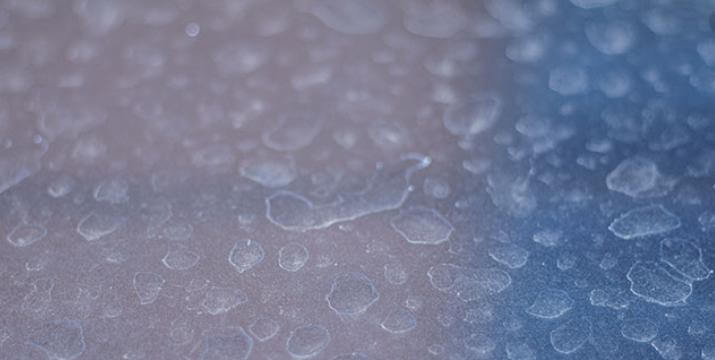
Remove hard water spots on car paint as quickly as possible. The longer they sit, the harder it is to remove them
Microfiber Towels: Soft and non-abrasive microfiber towels are ideal for cleaning car paint without causing scratches.
Water Spot Remover or Vinegar: Specially formulated water spot removers are available in the market. Alternatively, white vinegar is an effective household solution for mild water spots.
Wax or Paint Sealant: To protect the paint and prevent future water spots.
Bucket, Water, and Car Wash Soap: For a thorough wash before and after spot removal.
Step-by-Step Guide to Removing Hard Water Spots On Car Pain
1. Initial Wash and Inspection— Start by washing your car thoroughly using a car wash soap and water. This step removes surface dirt and contaminants that could scratch the paint during the water spot removal process. After washing, dry the car with a microfiber towel and inspect the paint to identify the areas affected by hard water spots.
2. Try Vinegar or a Water Spot Remover— For mild to moderate water spots, a 50:50 mixture of white vinegar and distilled water is an effective solution. The acidity of vinegar helps dissolve the mineral deposits, making them easier to wipe away.
Here’s how to use it:
Mix equal parts white vinegar and distilled water in a spray bottle.
Spray the solution directly onto the water spots.
Let it sit for a few minutes to break down the minerals.
Gently wipe the area with a microfiber towel.
Rinse with clean water and dry the area to prevent any vinegar residue.
If you have a commercial water spot remover, follow the instructions on the product label. These products are specifically designed to tackle hard water spots and may offer quicker results.
3. Use a Clay Bar to Remove Stubborn Hard Water Spots On Car Paint— If the vinegar or water spot remover doesn’t completely eliminate the spots, the next step is to use a clay bar. A clay bar is highly effective at removing contaminants that are bonded to the paint surface.
• Apply a detailing spray or clay lubricant to the affected area. This provides a slick surface for the clay bar, reducing the risk of scratches.
• Gently rub the clay bar over the spots in a back-and-forth motion. You’ll feel the clay picking up the contaminants.
• Continue working until the surface feels smooth, indicating the removal of water spots.
• Wipe the area with a clean microfiber towel to remove any residue.
the harder it is to remove
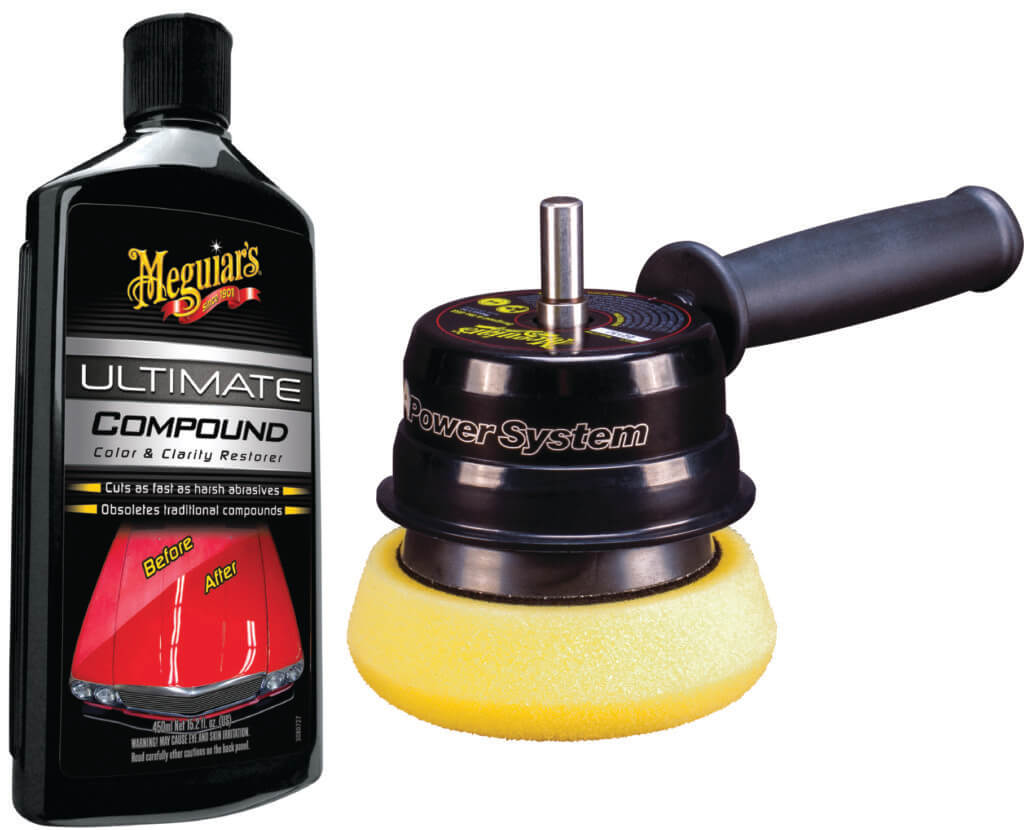
4. Polish or Compound for Severe Etching— If the water spots have etched into the paint, more aggressive measures may be necessary. A polish or rubbing compound can help restore the paint’s finish by removing a thin layer of clear coat where the spots are etched.
• Apply a small amount of polish or rubbing compound to a soft foam applicator pad or a microfiber towel.
• Work the product into the affected area in circular motions, applying light to moderate pressure.
• Buff the area until the spots are no longer visible.
• Wipe off any excess product with a clean microfiber towel.
For extensive etching, you might consider using a machine polisher, but this requires experience to avoid damaging the paint.
5. Final Wash and Protection— After successfully removing the water spots, it’s important to protect your car’s paint to prevent future occurrences. Give your car another wash to remove any leftover residue from the cleaning products.
Once the car is clean and dry, apply a quality wax or paint sealant. These products create a protective barrier on the paint, making it more resistant to water spots and other contaminants. Follow the manufacturer’s instructions for application and curing time.
My recommendation for a commercial hard water spot remover
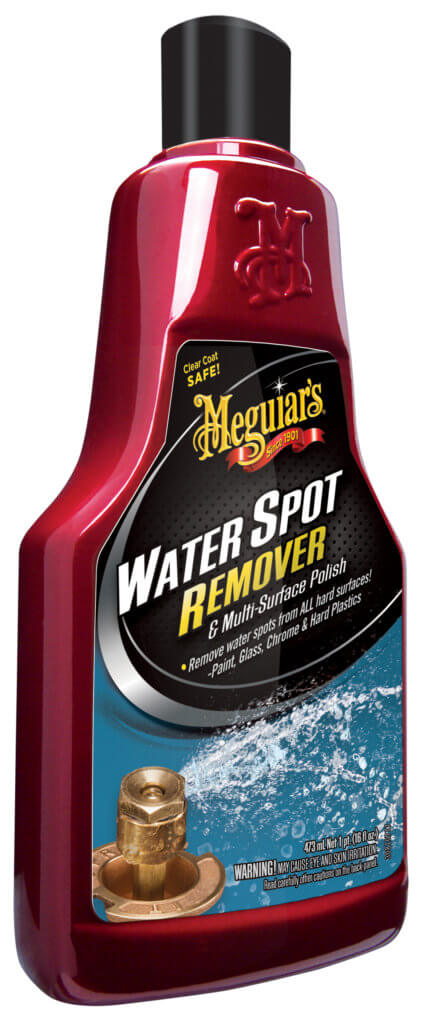
Mequiar’s Water Spot Remover
Meguiar’s Water Spot Remover isn’t a polishing compound. The components shown below are designed to remove any remaining deposits in the paint. Meguiar’s removes hard water stains on car paint, glass, hard plastic, and chrome. Meguiar’s does not recommend using this product on matte or satin finishes.
Meguiar’s Water Spot Remover contains:
Water as a Diluent
Mineral Oil for a lubricant
Alumina as an Absorbent
Light Aromatic Hydrocarbons as a Solvent
C11-13 Synthetic Isoparaffin as a Solvent
Glycerin as a Humectant
Triethanolamine as a Buffer
Plant Oil as a Conditioner
Polysorbate 80 as an Emulsifier
Diethylhexyl Adipate as a Fragrance Component
Magnesium Nitrate as a Preservative
Methylchloroisothiazolinone as aPreservative
Linalool as a Fragrance Component
Methylisothiazolinone as a Preservative
©, 2020 Rick Muscoplat