
Idle Fluctuates Up and Down? Common Causes
7 Most Common Issues That Cause Idle Fluctuation at Idle
Quick Summary
Engines need a precise balance of fuel and air at idle. If airflow isn’t measured correctly, fuel delivery isn’t stable, or exhaust readings are distorted, the engine computer constantly overcorrects—and that’s when the idle fluctuates up and down. The most common causes include:
• Vacuum leaks
• A dirty idle air control valve
• Carbon-packed throttle body
• Failing or dirty MAF sensor
• Exhaust leaks
• EGR valve malfunctions
• Fuel-pressure problems. Fix the air and fuel supply first…and the rough idle usually disappears.
Article
When your idle fluctuates, it doesn’t always mean expensive repairs. In fact, most of the time it’s a simple airflow or fuel-delivery issue — and the car is just trying to maintain a stable idle while something is fighting against it.
Let me walk you through the top causes I see in my shop and how I personally diagnose them.
Vacuum Leaks: My #1 Most Common Fix
One of the most common causes of RPM fluctuation at idle is a vacuum leak. Your engine measures the amount of air coming into the engine using the MAF sensor, the MAP sensor, or both. Based on those readings, it computes the correct air/fuel mixtures. However, if you have a vacuum leak, your engine is pulling in unmetered air, or phantom air. That unmetered air causes the oxygen sensors to see a lean condition in the exhaust. The ECM responds to the lean condition by adding fuel, which, in turn, raises the idle speed. The ECM then sees that the idle RPM is too high and cuts fuel. Rinse and repeat, and youwill end up with a fluctuating idle speed.
How to check for a vacuum leak:
• Check for disconnected vacuum hoses or cracked ends on the hoses.
•Listen for a hissing sound under the hood
•If you have a check engine light with a P0101, that’s often caused by a vacuum leak
•Poor acceleration or stumble on acceleration
• Spray short bursts of throttle body cleaner around the edges of the intake manifold to see if RPM increases. If it does, that can indicate a vacuum leak in the intake manifold gasket
2. A Dirty or Malfunctioning Idle Air Control Valve (IACV) Can Also Cause RPM Fluctuations
The idle air control valve is what provides air to the engine at idle when
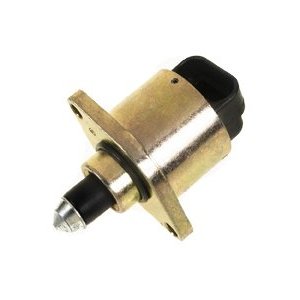
Idle Air Control Valve (GM style)
the throttle plate is fully closed. The IACV adjusts the amount of air that bypasses the throttle plate to maintain a consistent idle. If it’s dirty or failing, it can cause erratic idling.
What a dirty or bad IACV does
• RPM fluctuates at idle speed (in some cases unpredictably)
• Stalling when coming to a stop
• CEL illuminated with an IAC-related code
Solution: Clean the IAC valve using a throttle body cleaner. If cleaning
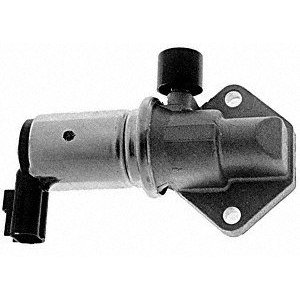
Ford Style IAC
doesn’t work, the valve may need to be replaced. Make sure to reset the ECU afterward to clear any learned behaviors tied to the faulty valve.
3) Carbon buildup in the bore of an electronic throttle body can cause a fluctuating idle
Unlike older systems that rely on an idle air control valve (IACV), an electronic throttle body uses a motor to adjust the throttle plate and regulate airflow. The plate’s movement is based on its factory calibration, but when carbon builds up inside the throttle bore, it restricts airflow even when the plate opens. This forces the engine control module (ECM) to constantly compensate by adding or subtracting fuel, resulting in a fluctuating idle.
How to check for carbon buildup in an electronic throttle body
• Remove the air intake duct
• Using a flashlight, rotate the throttle plate to inspect for carbon buildup. Be careful not to get your finger caught between the throttle plate and the bore — the throttle plate spring is very strong and can cut your finger.
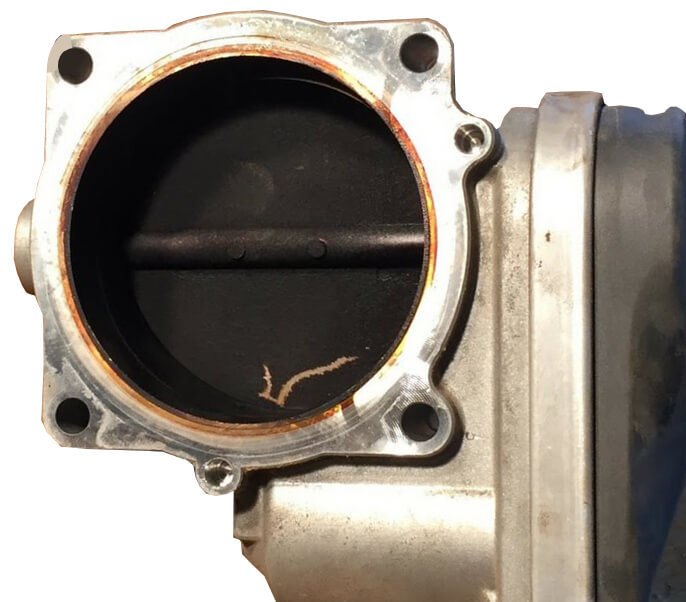
Carbon buildup in an electronic throttle body
For more information on how to clean an electronic throttle body, see this article
4. A Faulty Mass Air Flow (MAF) Sensor Can Cause RPM Fluctuations
The MAF sensor measures the density of air entering the engine so the ECM can calculate the correct amount of fuel to inject. When the MAF sensor is dirty or failing, it sends incorrect data, causing the ECU to adjust, leading to idle fluctuations continuously.
What to look for:
• RPM fluctuation at idle
• Hesitation during acceleration
• Poor fuel economy
• CEL illuminated
Solution: Carefully clean the MAF sensor with a specific MAF cleaner. Be cautious not to damage the delicate wires inside. If cleaning doesn’t resolve the issue, replacement may be necessary. For a step-by-step MAF sensor cleaning guide, see this article.
5. Exhaust Leaks
The ECM relies on upstream oxygen sensors to verify its air/fuel calculations. An exhaust leak can cause RPM fluctuations by allowing unmetered air to reach the oxygen sensor. An exhaust leak can cause fluctuations, as well as a P0171 and even a P0420. Check for an exhaust leak with a shop vac and a bottle of soapy water. For a step-by-step guide, see this article.
6. Issues with the EGR Valve
The exhaust gas recirculation (EGR) valve

The carbon on the left EGR valve can allow exhaust gasses into the engine at idle.
It is designed to reduce emissions by recirculating a portion of the exhaust back into the intake manifold. Exhaust gases can cause the engine to run rough and stall at idle. To prevent that, the EGR valve should be fully closed at idle. However, carbon buildup on the EGR pintle or seat can allow a small amount of exhaust to flow into the engine at idle, causing a rough idle. The ECM will try to compensate by adding air or fuel. That, in turn, can cause RPM fluctuation. If you’ve checked all the possibilities listed above and still have idle fluctuation, check for carbon buildup in the EGR valve.
Solution: Clean the EGR valve and passages using throttle body cleaner. If cleaning doesn’t resolve the issue, the valve may need to be replaced.
7. Fuel Delivery Problems
An inconsistent fuel pressure and volume supply can also lead to idle issues. This might be caused by a clogged fuel filter, a failing fuel pump, or dirty fuel injectors.
What to look for:
• Difficulty starting
• Loss of power, especially under load
• CEL illuminated with fuel-related codes
Solution: Start by replacing the fuel filter. Use a quality fuel injector cleaner or have the injectors professionally cleaned. If the problem persists, test the fuel pump for proper pressure and volume.
For more information on idle air control valves, read this post
© 2012 Rick Muscoplat
Posted on by Rick Muscoplat