
Idle Fluctuates Up and Down? Here’s Why
What Causes Idle to Surge?
Quick Summary
If your idle fluctuates up and down, don’t assume the engine needs major repairs. In my experience, most cases of engine idle surging are caused by problems with airflow, fuel delivery, or engine management sensors. Vacuum leaks, carbon buildup, dirty sensors, and fuel pressure issues all cause the engine computer to continually adjust the air/fuel mixture, resulting in an unstable idle. Fortunately, many of these problems can be diagnosed and repaired with basic tools.
Modern engines are designed to maintain a steady idle. The engine control module (ECM) constantly adjusts fuel delivery and airflow to keep the engine running smoothly. When one of the inputs is inaccurate or unmetered air enters the engine, the computer overcorrects, then corrects again. That repeating cycle is what causes your idle to fluctuate up and down.
Here are the seven most common causes of fluctuating idle that I see.
• Vacuum leaks
• A dirty idle air control valve
• Carbon-packed throttle body
• Failing or dirty MAF sensor
• Exhaust leaks
• EGR valve malfunctions
• Fuel-pressure problems. Fix the air and fuel supply first…and the rough idle usually disappears.
1. Vacuum Leaks Are the Number One Cause
If I had to bet on one cause of engine idle surging, I’d start with a vacuum leak.
The MAF or MAP sensor measures incoming air so the ECM can calculate fuel delivery. When cracked hoses, leaking intake gaskets, or a failed PCV hose allow extra air into the engine, that air isn’t measured. The oxygen sensors detect a lean mixture, so the ECM adds fuel. Engine speed rises, the ECM cuts fuel, RPM drops, and the cycle repeats.
Signs of a vacuum leak
• High or unstable idle
• Hissing sound under the hood
• Lean trouble codes such as P0171 or P0101
• Hesitation during acceleration
• Rough idle after startup
A visual inspection, listening for leaks, or carefully using throttle body cleaner around suspected gasket areas can often pinpoint the problem.
How to check for a vacuum leak:
• Check for disconnected vacuum hoses or cracked ends on the hoses.
•Listen for a hissing sound under the hood
•If you have a check engine light with a P0101, that’s often caused by a vacuum leak
•Poor acceleration or stumble on acceleration
• Spray short bursts of throttle body cleaner around the edges of the intake manifold to see if RPM increases. If it does, that can indicate a vacuum leak in the intake manifold gasket
2. A Dirty Idle Air Control Valve (IAC) Causes Idle Hunting
Many older engines use an Idle Air Control (IAC) valve instead of an electronic throttle body.
The IAC meters bypass air whenever the throttle plate is closed. Carbon deposits can cause the valve to stick, causing the idle speed to constantly change.
Typical symptoms include:
• Idle speed goes up and down
• Engine stalls when stopping
• Hard starting
• Idle-related trouble codes
In many cases, removing and cleaning the valve restores proper operation. If not, replacement is usually straightforward.
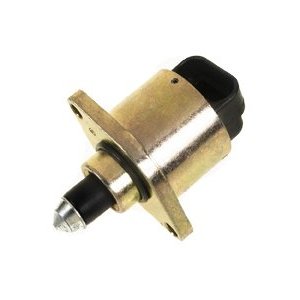
Idle Air Control Valve (GM style)
What a dirty or bad IACV does
• RPM fluctuates at idle speed (in some cases unpredictably)
• Stalling when coming to a stop
• CEL illuminated with an IAC-related code
Solution: Clean the IAC valve using a throttle body cleaner. If cleaning
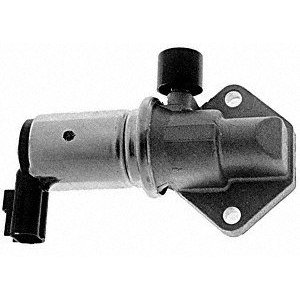
Ford Style IAC
doesn’t work, the valve may need to be replaced. Make sure to reset the ECU afterward to clear any learned behaviors tied to the faulty valve.
3. Carbon Buildup Inside the Electronic Throttle Body
Many newer vehicles no longer use an IAC valve. Instead, the ECM controls idle speed by slightly opening the electronic throttle plate.
Over time, carbon accumulates around the throttle bore and plate. Even a small amount restricts airflow enough for the computer to continually compensate, resulting in an unstable engine idle.
How to fix fluctuating idle caused by carbon
Remove the air intake duct.
Inspect the throttle plate with a flashlight.
Clean the bore and throttle plate using throttle body cleaner.
Perform the manufacturer’s throttle relearn procedure if required.
I’ve seen countless vehicles cured with nothing more than a thorough throttle body cleaning
How to check for carbon buildup in an electronic throttle body
• Remove the air intake duct
• Using a flashlight, rotate the throttle plate to inspect for carbon buildup. Be careful not to get your finger caught between the throttle plate and the bore — the throttle plate spring is very strong and can cut your finger.
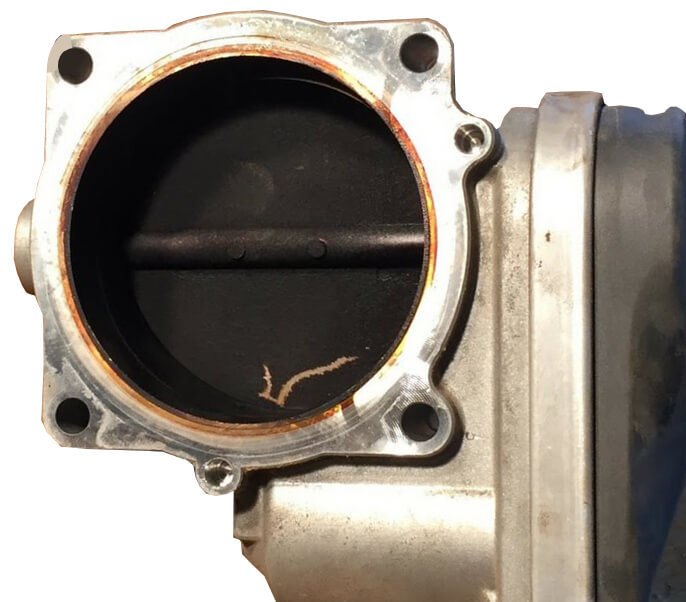
Carbon buildup in an electronic throttle body
For more information on how to clean an electronic throttle body, see this article
4. Dirty or Failing Mass Airflow (MAF) Sensor
The MAF sensor tells the ECM exactly how much air enters the engine. Dirt, oil contamination, or sensor failure causes inaccurate readings.
When that happens, fuel delivery varies constantly, causing idle fluctuations.
Common symptoms include:
• Rough idle
• Poor acceleration
• Reduced fuel economy
• Check Engine Light
• Engine hesitation
Always use dedicated MAF sensor cleaner. Never touch the sensing wires because they’re extremely fragile.
Solution: Carefully clean the MAF sensor with a specific MAF cleaner. Be cautious not to damage the delicate wires inside. If cleaning doesn’t resolve the issue, replacement may be necessary. For a step-by-step MAF sensor cleaning guide, see this article.
5. Exhaust Leaks Ahead of the Oxygen Sensor
Many people overlook this one.
A small exhaust leak upstream of the oxygen sensor allows fresh air into the exhaust stream. The oxygen sensor falsely reports a lean mixture, causing the ECM to unnecessarily enrich the mixture.
That constant correction often produces idle surging and may also trigger P0171 or P0420 trouble codes.
Listen for ticking noises during cold starts or inspect for soot around exhaust connections. For a step-by-step guide, see this article.
6. A Sticking EGR Valve
The Exhaust Gas Recirculation (EGR) valve should remain completely closed during idle. Carbon deposits can prevent it from sealing, allowing exhaust gas into the intake when it shouldn’t. That dilutes the air/fuel mixture, creating a rough idle that the ECM continually tries to correct.
If the EGR valve is dirty, cleaning the pintle and passages often restores normal idle quality. should remain completely closed during idle.

The carbon on the left EGR valve can allow exhaust gases into the engine at idle.
Solution: Clean the EGR valve and passages using throttle body cleaner. If cleaning doesn’t resolve the issue, the valve may need to be replaced.
7. Fuel Delivery Problems
When everything on the air side checks out, I move to fuel delivery.
Low fuel pressure, clogged injectors, restricted fuel filters, or a weak fuel pump can all create an unstable idle.
Watch for these symptoms:
• Hard starting
• Loss of power
• Hesitation
• Lean fuel trim readings
• Fuel-related diagnostic codes
A fuel pressure gauge quickly tells you whether the pump and regulator are supplying the proper pressure.
For more information on idle air control valves, read this post
Other Possible Causes
Although less common, I’ve also diagnosed fluctuating idle caused by:
• Dirty PCV valve
• Intake manifold gasket leaks
• Faulty engine coolant temperature sensor
• Vacuum brake booster leak
• Bad throttle position sensor
• Ignition misfires from worn spark plugs or coils
• Low engine compression
These problems usually produce additional symptoms besides idle fluctuations.
Final Thoughts
When your idle fluctuates up and down, the engine computer is usually reacting to incorrect airflow or fuel information—not causing the problem. I always diagnose the air side first because vacuum leaks, throttle body carbon buildup, dirty MAF sensors, and idle air control valve issues account for the majority of repairs.
By following a logical diagnostic process instead of replacing random parts, you can usually find the problem quickly and restore a smooth, steady idle.
© 2012 Rick Muscoplat
Posted on by Rick Muscoplat