
Is a Fuel Induction Service Necessary or Just a Scam?
Is a Fuel Induction Service Necessary? The Truth About Whether It’s Worth It or Just a Scam
Quick Summary
All car dealers and many repair shops recommend fuel induction service as routine maintenance, but in most cases, it’s unnecessary. Modern fuel systems are designed to stay clean, and most automakers do not include fuel induction cleaning in their maintenance schedules. However, certain engines—especially some gasoline direct injection (GDI) engines—can develop carbon deposits that may justify an induction cleaning service. The key is understanding when a fuel induction service provides real benefits and when it’s simply an unnecessary upsell.
Key Takeaways:
• Most vehicles do not need routine fuel induction services.
• Many manufacturers consider routine induction cleaning unnecessary.
• GDI engine carbon buildup can sometimes require intake valve cleaning.
• Fuel injector cleaning is rarely needed on modern vehicles.
• Some induction services are legitimate; others are little more than profit generators.
• Diagnosis should always come before recommending a fuel induction service.
Is a Fuel Induction Service Necessary?
As a former ASE Master Technician and automotive editor, I’ve seen fuel induction services sold to customers more times than I can count. In many cases, the vehicle was running perfectly fine and showed no symptoms whatsoever. Yet the customer was told they “needed” a fuel induction service to prevent future problems.
So let’s answer the question directly:
Is a fuel induction service necessary?
For most vehicles, the answer is no.
That doesn’t mean fuel induction cleaning is always a scam. It simply means that it should be performed only when there is a diagnosed problem that the service can actually fix.
The truth lies somewhere between “everyone needs it” and “it’s always a scam.”
What Is a Fuel Induction Service?
The term “fuel induction service” is often used loosely by repair shops. Depending on the shop, it may include one or more of the following:
• Throttle body cleaning
• Intake valve carbon cleaning
• Intake manifold cleaning
• Fuel system cleaner added to the gas tank
• Engine induction cleaning using specialized solvents
• Fuel injector cleaning
Some shops use systems from companies such as BG Products, while others use cleaners from manufacturers like CRC or OEM-approved chemicals. The exact procedures vary, which is one reason consumers become confused.
Why Fuel Induction Services Became Popular
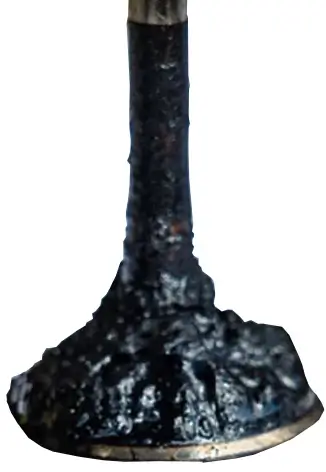
This is the kind of intake valve carbon buildup that can cause performance problems like hard starting and misfires
The rise of gasoline direct injection completely changed the carbon buildup issue. In older port-fuel-injection engines, the injectors spray fuel onto the backsides of the intake valves. The detergents in the gasoline constantly washed away deposits.
However, in modern GDI engines, the injectors spray fuel directly into the combustion chamber, bypassing the intake valves, meaning the intake valves never receive that cleaning action.
As a result, some engines experience:
• Direct injection carbon buildup
• Intake valve carbon cleaning requirements
• Reduced airflow
• Rough idle conditions
• Misfires
• Reduced performance
This is particularly common in some European vehicles.
Which Engines Are Most Likely to Need Carbon Deposit Removal?
Not all GDI engines are equally affected. In my experience and based on industry data, carbon buildup tends to be most severe in:
• BMW
• Audi
• Volkswagen
• Mini
• Certain Mercedes-Benz engines
Meanwhile, many modern vehicles have significantly fewer carbon buildup issues because manufacturers have redesigned injection strategies and PCV systems. These engines combine direct and port injection specifically to combat carbon buildup in GDI engines. If your engine has both direct and port injection, intake valve deposits are usually far less severe.
• GM engines
• Ford EcoBoost engines
• Toyota D-4S dual-injection systems
Two additional reasons carbon buildup on intake valves has become a new problem
• Lean burn misfires — To maximize fuel economy, carmakers command much leaner air/fuel mixtures that teeter on the edge between maximum fuel efficiency and misfire. The lean mixtures burn hotter, wearing out spark plugs faster than most owners think. A wider spark plug gap means a shorter, cooler spark, and on a lean-burning engine, that can cause misfires.
When the cylinder misfires, the intake and exhaust valves come in contact with unburned fuel. The exhaust valve is hot enough to burn off the fuel, but the intake valve isn’t, so deposits accumulate on the valve neck.
• Variable valve timing and valve overlap – Most late-model engines employ variable valve timing mechanisms to shorten the valve overlap time, but they can’t eliminate it completely. During valve overlap, a small amount of combustion byproducts and exhaust gas stays in the chamber and comes in contact with the backside of the intake valve, causing deposits.
Fuel Induction Service Benefits: When It Actually Helps
There are situations where engine induction cleaning provides real benefits. I’ve personally seen vehicles regain noticeable performance after severe carbon buildup was removed.
Potential fuel induction service benefits include:
• Improved Airflow
• Heavy carbon deposits can restrict airflow around intake valves.
• Removing deposits restores breathing efficiency.
• Better Idle Quality
Carbon accumulation can contribute to:
• Rough idle
• Stumbling
• Cold-start hesitation
Cleaning may improve drivability.
• Restored Power
When airflow restrictions are severe, power output suffers.
• Carbon removal can restore lost horsepower.
• Improved Fuel Economy
• Excessive deposits may contribute to reduced efficiency.
Removing them can sometimes improve fuel efficiency, which carbon deposits have negatively affected.
The Symptoms that Mean You Should Get a Fuel Induction Service
Before agreeing to any service, ask whether your vehicle is showing actual symptoms.
Common signs you need fuel induction service include:
• Rough idle
• Hesitation during acceleration
• Reduced fuel economy
• Loss of power
• Misfire trouble codes
• Cold-start misfires
• Poor throttle response
• Engine shaking at idle
If your vehicle runs perfectly, there may be no reason to perform the service.
Is Fuel Induction Service a Scam?
This is where things get controversial. When performed to correct a verified carbon buildup problem on a GDI engine, fuel induction cleaning is absolutely legitimate. However, when it’s sold as routine maintenance on every vehicle regardless of condition, many technicians refer to it as a “wallet flush.”
The reason is simple:
• Most automakers do not recommend routine induction cleaning intervals.
• Many manufacturers have even issued service guidance discouraging routine injector cleaning unless a specific problem exists.
The service itself is not a scam. Selling it to everyone is.
Fuel Induction Cleaning Cost
The average fuel induction cleaning cost ranges between:
• $100–$200 for basic induction cleaning
• $200–$400 for professional intake valve cleaning
• $500–$1,500+ for walnut blasting procedures
• $1,500–$3,000 if severe buildup requires cylinder head removal
Prices vary widely depending on the cleaning method and engine design.
How Often Should You Get a Fuel Induction Service?
There is no universal fuel induction service interval. Most manufacturers provide no recommended interval at all. For vehicles prone to carbon buildup, some technicians suggest inspection around:
50,000 miles
60,000 miles
75,000 miles
For fuel induction service high-mileage vehicles (100,000+ miles), an inspection may be worthwhile if symptoms develop.
The better question is: “Does my engine currently show symptoms of carbon buildup?”
DIY Options for Intake Valve Carbon Cleaning
If the buildup is mild, some DIY products can help.
Popular options include:
CRC GDI Intake Cleaner — The CRC GDI Intake Cleaner is specifically designed to remove intake valve deposits in direct injection engines. If you follow the directions, this is a very inexpensive way to clean your intake valves. Watch this video:
GM Top Engine Cleaner — This professional-grade cleaner is widely used by dealerships. Watch this GM/AC Delco Video
Subaru Intake Valve Cleaning Kit
This Subaru intake valve cleaning kit is available from any Subaru dealer. It works very well. Watch Mr. Subaru perform the procedure
BG Products Induction Service — Many professional shops use BG Products induction service equipment and chemicals for intake cleaning.
Always follow manufacturer instructions carefully and avoid outdated “vacuum hose” cleaning methods that can damage catalytic converters.
What are the symptoms of carbon buildup?
• Lower power due to decreased airflow past the buildup on the intake valves.
• Lower MPG due to lower airflow efficiency
• Poor acceleration power.
How to clean your intake valves yourself.
Once the buildup reaches a point that affects engine performance, a fuel induction or decarbonization service is required. In severe cases, the cylinder head must be removed, and manual cleaning is required.
DIYers can perform this service themselves. In conventional parlance, DIYers often refer to this procedure as Seafoaming their engine. The typical Seafoam procedure involves pouring Seafoam directly into the vacuum line to the vacuum brake booster. Because Seafoam contains combustible solvents, car makers NO LONGER recommend it, as it allows unmetered air into the engine.
The instant you disconnect a vacuum line, you introduce unmetered air into the engine. The PCM/ECM immediately responds to the unmetered air by boosting fuel trim, resulting is excessive dumping of unburned fuel and Seafoam combustible solvents directly into the catalytic converter. That excess fuel can result in cat converter temperatures exceeding 2,000°F, causing catastrophic converter meltdown.
The GM and CRC cleaners should be injected into the air intake duct past the MAF sensor in short bursts, with a lag time between bursts, with the engine running at 2,000 RPM. After you empty the container, turn off the engine at let it heat soak for at least one hour. Heat soaking is VERY important to the success of the cleaning. After an hour, drive the vehicle at highway speeds for at least ten minutes, and drive the vehicle every day for approximately six more days.
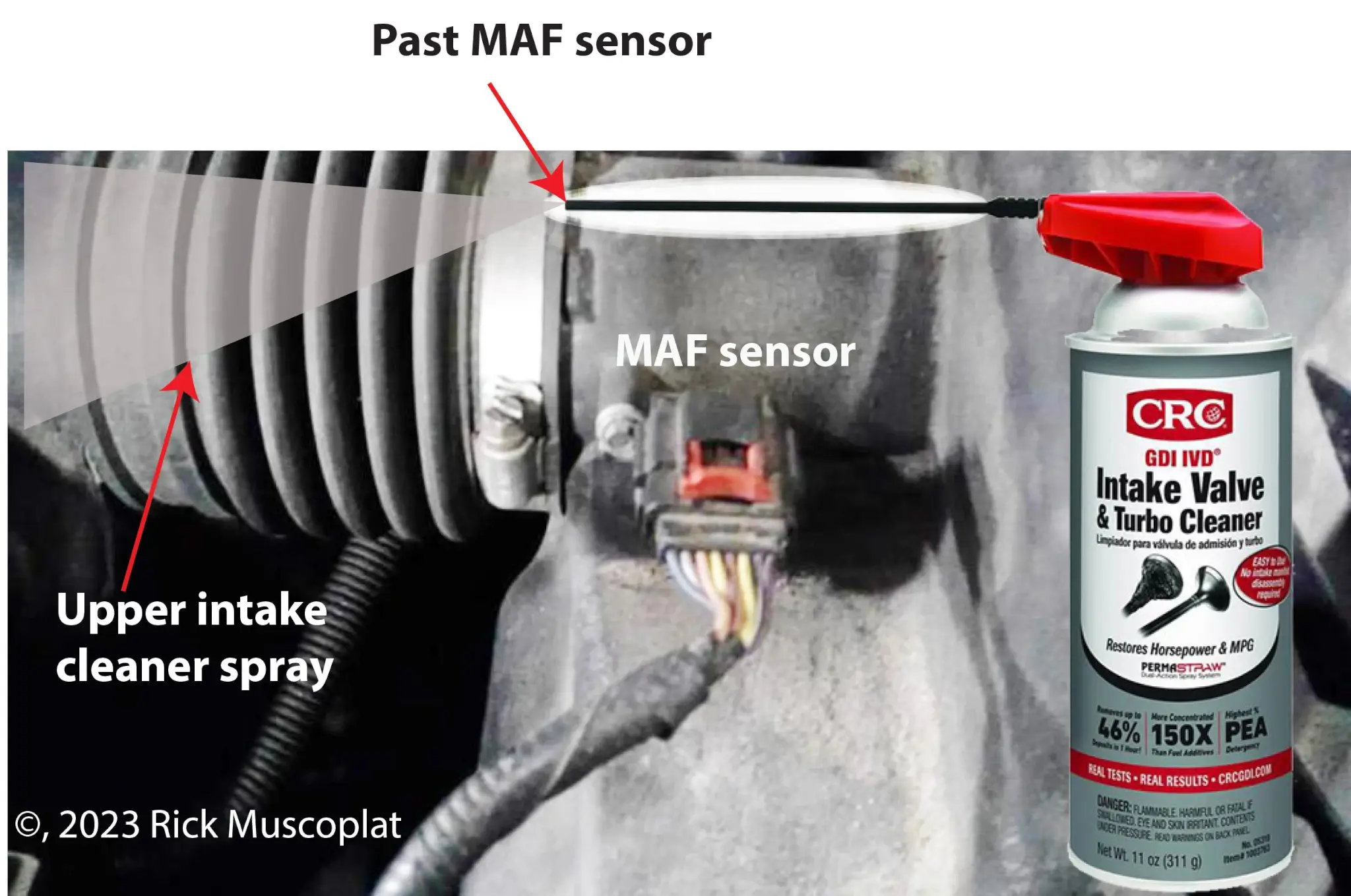
Notice how the straw is spraying the cleaner past the MAF sensor sensing element. This does two things: it prevents the spray from getting on the MAF sensor and giving the computer the wrong mass airflow readings, and 2) it prevents the computer from getting unmetered air.
My Recommendation
When customers ask me whether they should approve a fuel induction service, I always ask one question:
What problem are we trying to solve?
If the answer is:
• Rough idle
Misfires
• Carbon-related performance problems
• Verified intake valve deposits
Then, induction cleaning may be worthwhile.
But if the answer is:
• “The shop recommends it every 30,000 miles”
• “It’s routine maintenance”
• “It couldn’t hurt”
Then I’d be skeptical.
A properly diagnosed engine problem should always take precedence over a cleaning service recommendation.
The bottom line: fuel induction cleaning is a repair procedure—not a maintenance procedure. Use it when your engine needs it, not when a service advisor wants to sell it.
See this post for more information on fuel induction cleaning.
See this post for more information on fuel injector cleaning
©, 2018 Rick Muscoplat
Posted on by Rick Muscoplat