
The Real Cost to Replace a Bumper in 2026
Repair vs Replace a Bumper: Key Differences
Quick Summary
Repairing a damaged bumper isn’t like repairing a dent. All modern bumper covers are made from plastic, and repairing cracks, scuffs, and dents in plastic isn’t always cost-effective. In fact, in most cases, it costs more in labor to reshape, sand, and fill a damaged bumper than it costs to buy an aftermarket bumper cover and paint it.
Even if the damage can be sanded and repaired cheaply, there’s still the issue of painting the repair to match. If you’re having the work done at a body shop, the cost of painting will far exceed the cost to repair the minor damage. If the damage is severe, replacing it with a new bumper is a no-brainer.
Most owners are shocked when they see a body shop quote, because a typical quote for a bumper crack or scuff can run $900 to $1,400, depending on the availability of aftermarket parts.
Article
Repairing a Damaged Bumper: What’s Really Involved
When someone tells me they have a damaged bumper, my first question is always the same: “How hard was the hit?” That’s because modern bumper systems are far more than plastic covers. They are engineered impact systems designed to absorb energy, protect structural components, and house safety technology.
Understanding what’s actually involved in bumper repair — and when you need to replace a bumper — can save you money and prevent bigger problems down the road.
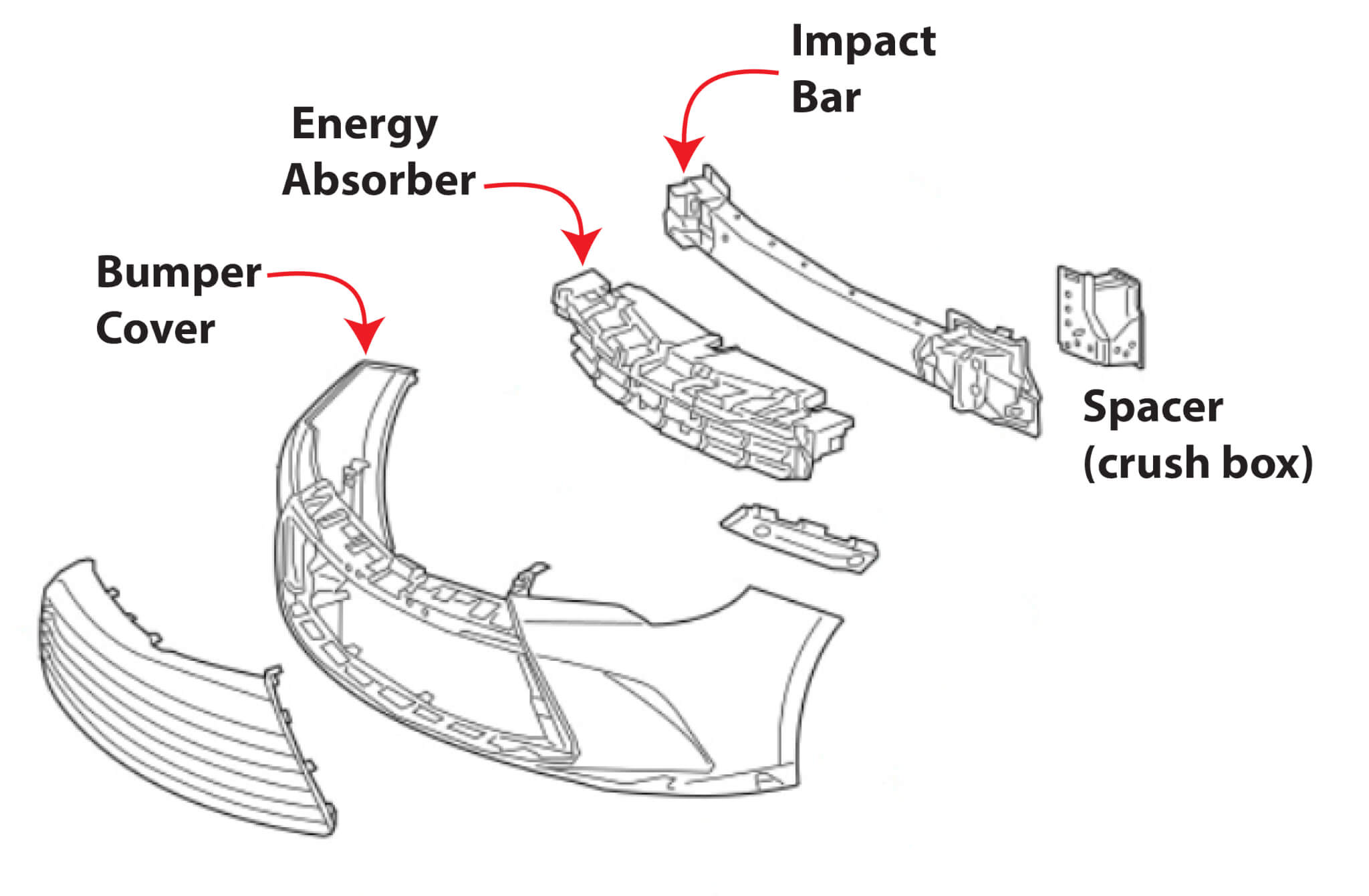
Consider that all these components may be damaged from a bumper impact
What Makes Up a Modern Bumper System?
Most people see only the painted outer shell. That visible part is called the bumper cover. Behind it sits a reinforcement bar (usually steel or aluminum), an energy absorber (foam or honeycomb structure), and mounting brackets.
On newer vehicles, the bumper assembly also houses:
• Parking sensors
• Radar modules for adaptive cruise control
• Blind spot detection components
• Airbag impact sensors
That means a damaged bumper can affect much more than appearance.
Repair vs. Replace a Bumper: How to Decide
Not every damaged bumper requires replacement. In many cases, scratches, minor dents, or small cracks in the plastic bumper cover can be repaired.
Body shops use plastic welding, filler materials, sanding, and refinishing techniques to restore the surface. If the plastic is intact and the mounting tabs are undamaged, repair is often the most cost-effective option.
However, if the bumper cover is torn, severely cracked, or distorted beyond reshaping, you’ll likely need to replace the bumper cover. Likewise, broken mounting tabs or warped reinforcement bars typically require replacement rather than repair.
The rule of thumb I use: If the integrity of the bumper’s structure is compromised, it’s safer to replace a bumper than attempt a patch repair.
What Else Might Be Damaged?
Here’s where many vehicle owners get surprised.
A damaged bumper often hides additional damage behind the cover. I’ve seen light parking lot impacts that cracked the foam absorber. I’ve also seen moderate rear-end collisions bend reinforcement bars without obvious exterior damage.
Common hidden damage includes:
• Cracked or compressed energy absorbers
• Bent bumper reinforcement bars
• Broken mounting brackets
• Damaged parking sensors
• Misaligned headlights or taillights
• Bent radiator supports (front impacts)
• Trunk latch or quarter panel misalignment (rear impacts)
If you plan to replace a bumper, the bumper cover removal process gives you the opportunity to inspect these components carefully.
What’s Involved in a Body Shop Repair?
When a vehicle comes into a body shop with a damaged bumper, technicians typically follow these steps:
• Remove the bumper cover.
• Inspect all underlying components.
• Determine if repair or replacement is appropriate.
• If repairable, plastic weld or fill damaged areas.
• Sand, prime, and repaint the bumper.
• Reinstall and recalibrate any sensors.
If you must replace a bumper, the shop orders a new bumper cover, transfers all trim and components, paints it to match the vehicle, and reinstalls it.
Modern paint matching involves blending techniques and, sometimes, adjacent-panel blending to ensure color consistency.
How Much Does It Cost?
Costs vary depending on severity and vehicle type.
Minor cosmetic repair on a damaged bumper typically runs between $800 and $1,000. If you need to replace a bumper cover and repaint it, expect $900 to $1,800.
If structural components or sensors are involved and you must replace a bumper assembly completely, total repair costs can reach $2,000 to $2,500 or more — especially on vehicles equipped with advanced driver assistance systems.
Sensor recalibration alone can add several hundred dollars to the bill.
Luxury vehicles and vehicles with radar-based cruise control systems are often at the higher end of the cost spectrum.
Can a DIYer Repair a Damaged Bumper?
The answer depends on the extent of the damage and your skill level. A confident DIYer can repair light scratches, minor gouges, and small cracks using:
• Plastic repair kits
• Sandpaper
• Primer and paint
DIY bumper repainting requires proper surface prep and blending to avoid an obvious mismatch. However, if the bumper cover is severely cracked or the mounting tabs are broken, it’s often better to replace the bumper rather than attempt a long-term, unreliable repair.
See this article on DIY bumper repair
I don’t recommend DIY repair if:
• The reinforcement bar is bent
• Sensors are damaged
• Structural alignment is affected
• The vehicle requires recalibration equipment
Sensor misalignment can cause safety system malfunction — and that’s not something you want to guess at.
Replace a Bumper: When It’s the Smarter Choice
Sometimes replacing is simply more efficient. If the labor hours to repair exceed the replacement cost, shops will recommend replacing the bumper. Insurance companies often follow this logic as well.
Additionally, plastic repairs can weaken structural integrity. If you plan to keep the vehicle long term, replacing the bumper assembly ensures proper impact protection in the future.
When safety systems are involved, replacing damaged components restores factory-level performance.
Final Thoughts
A damaged bumper may look like a minor inconvenience, but modern bumper systems are sophisticated impact structures. Whether you repair or replace a bumper depends on the severity of the damage, the vehicle’s structural integrity, and whether sensors are involved.
If the damage is cosmetic and shallow, repair is reasonable. If there’s structural distortion or compromised mounting points, it’s wiser to replace a bumper entirely.
The key is proper inspection. What you don’t see behind the bumper cover often matters more than what you do see on the surface.
replace a bumper, damaged bumper repair, bumper replacement cost, auto body repair tips, bumper cover repair, DIY bumper repair, collision repair guide, bumper reinforcement bar, parking sensor damage, car accident repair
Posted on by Rick Muscoplat