
Tire plug kits: Are they safe? Are they legal?
Are Tire Plug Kits a Reliable Solution for Punctures?
A tire puncture can feel like a significant setback, especially if you’re far from home or in a hurry. One of the most common and convenient solutions is using a tire plug. However, the question remains: are tire plug kits safe and reliable for repairing tire punctures? This article delves into the safety, effectiveness, and limitations of tire plugs to help you make an informed decision.
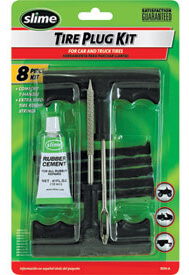 Tire plugs are considered a temporary fix, something to get you going until you can get a proper tire repair, which is a combination plug patch. So yes, they’re legal and safe as long as you follow up with a proper patch.
What is a tire plug?
Tire plugs are cylindrical pieces of rubber made of rubber or latex designed to fill punctures in a tire’s tread area. The plug is inserted into the puncture hole to create a seal that prevents air from escaping. This method of repair is quick and can often be done without removing the tire from the wheel. However, no tire plug can properly patch the tire’s liner, and that’s where the problem comes in.

This image shows why a plug alone is NEVER an acceptable repair. A patch alone is NOT an acceptable repair. A combo plug patch fills the puncture and seals the liner, keeping water out of the tire’s belts and keeping air in
Are tire plugs safe?
Yes, but only as a temporary repair. If used as a permanent repair, they are unsafe because they can allow air and water to seep past the plug and into the layers of the tire tread and belts, eventually causing the tread to separate. Tire plugs can also wear down over time, and air or water leaks can reoccur. Tire plugs, on their own, do not completely seal off the inner liner from air or water entering the tire.
Can tire plugs be used in all areas of the tire?
NO!, Tire plugs can only be used in the tread area of the tire. They can’t be used in the tire shoulders or the sidewall areas. See the offiical tire repair recommendations shown below.
Lots of people install a tire plug and never get a proper patch.
Those people are morons. It says right on the tire plug package that they’re intended for temporary use only. You’ll hear people say they’ve plugged their tires countless times and gotten away with it as a permanent repair. They’ve been lucky. People do lots of stupid things and get away with it. But others haven’t been so lucky. Watch this video to fully understand what goes on INSIDE the tire that you can’t see until you dismount the tire.
The damage to the tire liner can be deadly. If the liner has been ground down during the rapid tire deflation, it is unusable because it’s lost its sidewall strength and its ability to prevent oxygen migration. Oxygen and moisture degrades the rubber tread and corrodes the belts. The liner’s job is to prevent oxygen from reaching the belts and tread. A plug, without a patch, can’t stop that migration.
Deaths caused by tire plugs
According to law firm Carabin Shaw, in October 2011 a Florida jury awarded Gwen and Roy Chattelle $13.64 million from Tampa Auto Repair for improper tire repair. In July of that year, the Chattelle’s right rear tire was low on air and had been repaired with a string plug at Tampa Auto Repair. The tire was not dismounted and inspected as the Tire and Rubber Industry tire puncture recommendations recommended.
At the time of the crash, the tire experienced partial tread separation and a catastrophic loss of air pressure, causing the vehicle to lose control and roll over several times.
During the trial, forensic testing found rust corrosion on the steel belts/cords due to air and moisture penetrating past the string plug.
Tirereview.com highlights another jury award due to improper tire repair. In March 2011, San Diego County, California, jury awarded almost 14.5 million to the estate of Casey and Melanie Barber. The two were killed in a 2006 accident when the family’s Ford E350 van rolled over on Highway 98 near Page, AZ. The Barber’s vehicle had been repaired at a Mossy Ford in San Diego using only a patch. Forensic examination revealed a puncture 1/8″ in diameter, twice the tire industry-standard repairable area of 1/4″. In addition, the examination showed that the shop did not fill the hole with a plug of any kind. The hole was not properly reamed, and the tire liner was not abraded as recommended by the tire patch manufacturer. The void left in the tread and plies caused tread separation and complete tire failure, causing the accident.
Even the tire plug manufacturers say it’s not a proper tire fix
This is the exact wording from a package of Slime tire plug
“WARNING! This repair kit is only suitable for emergency tire repairs to enable vehicles to be driven to a service center where proper repairs can be made to the tire. Not intended for use for major tire damage. Radial ply passenger car tires may only be repaired in the tread area. No repairs are permitted on the bead, sidewall, or shoulder area of the tire. Extreme caution should be used while using tools to prevent injury. Eye protection should be worn while repairing tire.”
This is the exact wording from a package of Victor tire plugs:
“Notice: For the temporary repair of tubeless tire punctures.”
Drivers that plug their tires instead of doing a proper repair scoff at the idea that it’s somehow not the right way to do tire repair. They’re wrong, and you’ll see why as you read this post. To understand why fixing a flat tire with just a tire plug isn’t safe, you have to understand tire construction and what happens when the plies are punctured.
The most important concept in tire repair is that it’s the tire liner that keeps air in the tire, not the tread. Tire plugs don’t do a good job of patching the liner!
A tire plug doesn’t repair the tire’s inner liner
If you think you can fix a flat with tire plug because you’re tricking yourself into thinking that the plug seals the tire and prevents water 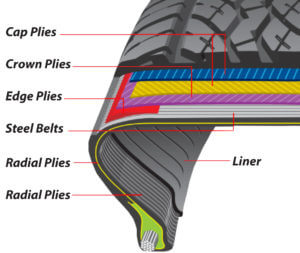 penetration into the belts. It doesn’t. Tire companies use many different types of rubber compounds. The latest tires with high mileage ratings contain many different polymers and silicone.
When you insert a tire plug, you’re adding a rubber compound that’s different than the type of rubber used for the tread, and it may be completely incompatible with the type of rubber used in the tire’s inner liner. In other words, no tire plug manufacturer can possibly claim their product is compatible with all tire compounds.
If the tire plug isn’t compatible with the inner liner, it won’t bond properly and that’s a big problem. Because as the tire rolls and flexes, the adhesive can allow moisture into the the belt area where it can degrade the belts. You’ll think you’ve done a permanent repair, but you won’t see the failure for months or years.
Also, you can’t possibly assess the internal puncture damage until you dismount the tire
You may think you have a small nail hole, but you really don’t know what kind of damage you’ve done to the inner liner unless you remove the tire from the wheel. A tire plug can’t possibly bond to the frayed edges if the inner line is frayed.
A tire puncture is like a bullet wound
The entry wound is much smaller than the exit wound. If you were an ER doctor you you slap a bandage on the entry wound and call it a day? Of course not. Well, that’s exactly what you’re doing when you plug a tire without checking out the exit hole.
“The only way to properly repair a tire is to demount it from the rim so it can be inspected on the inside, remove the damaged material, fill the void with rubber, and seal the inner liner with a repair unit.”—Tire Industry Association
A tire plug is a temporary repair and is not a proper flat tire fix
This isn’t an opinion. It’s fact. Here’s the official wording from the Tire and Rubber Manufacturers
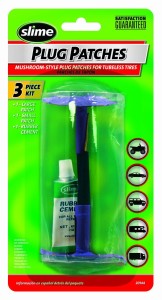
Combo tire plug and patch
Association and the National Highway Traffic and Safety Administration. You can argue that the Tire and Rubber Manufacturers Association is only interested in selling new tires. But how does recommending a patch and plug get them a new tire sale versus a proper patch? It doesn’t. The only people that could possibly profit by doing the tire repair correctly is the shop. In the grand scheme of things, shops don’t make a lot of money on tire repair. Get it? Nobody’s trying to screw you by recommending doing tire repair the right way!
Tire Plug position from the Tire and Rubber Manufacturers Association
“Repairs must be performed by removing the tire from the rim/wheel assembly to perform a complete inspection to assess all damage that may be present. Repairs are limited to the tread area only.
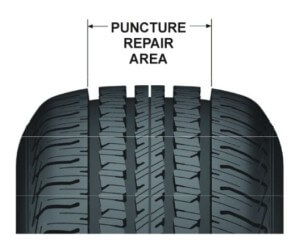
Repairable area (Tire and Rubber Manufacturers Association)
Puncture injury cannot be greater than 1/4-inch (6mm) in diameter; DO NOT make repairs where the injury damage extends into the shoulder/belt edge area OR where the injury extends at an angle into the shoulder area. If there is any question that the injury extends into the shoulder/belt edge area, then the tire must be taken out of service. Repairs cannot overlap. A rubber stem, or plug, must be applied to fill the puncture injury and a patch must be applied to seal the inner liner. A common repair unit is a one-piece combination unit with a stem and patch. Not all tires can be repaired. Specific repair limits should be based on recommendations or repair policy of the tire manufacturer and/or type of tire service.”
Tire Plug position from the National Highway Traffic and Safety Administration NHTSA
“The proper repair of a punctured tire requires a plug for the hole and a patch for the area inside the tire that surrounds the puncture hole. Punctures through the tread can be repaired if they are not too large, but punctures to the sidewall should not be repaired. Tires must be removed from the rim to be properly inspected before being plugged and patched.”
Tire Plug position from the Tire Industry Association
“A plug by itself or a patch by itself is not an acceptable repair because the plug does not permanently seal the inner liner and the patch does not fill the void left by the penetrating object, which allows water to enter the body of the tire and starting corroding the steel belts.”
Consider the legal issues in tire plug flat tire repair
When a tire fails because you’ve used just a tire plug to fix a flat tire, the tire failure usually won’t look like it was caused by the repair itself. Instead, the actual failure comes as a result of belt separation. If the tire failure causes an accident and you’re sued, you’ll be tempted to sue the tire manufacturer for belt failure. Good luck with that.
Law firms specialize in tire-related lawsuits and their experts can pinpoint the exact cause of the tire failure. Here’s some information from carabinshaw.com
“Another improper repair that anyone can identify is an on-the-wheel or “plug only” repair. They have the same number of supporters as the patch-only camp, but the consequences are much more severe. When the tire is not removed from the rim, the technician cannot inspect the inside of the tire. What appears to be a simple nail on the outside of the tread may cause extensive damage to the inside of the tire.
And when the technician gets lucky and manages to install the plug without creating another hole on the inner liner, the broken cables in the injury channel are still subjected to corrosion and instability because they are not trimmed back to solid rubber.
You will find universal agreement among the tire manufacturers, tire repair material manufacturers, tread rubber manufacturers, and industry organizations like the RMA and the Tire Industry Association (TIA). Everyone agrees that the tire must be removed from the rim so the injury can be inspected on the inside of the tire.”
Applying a combination patch and plug is the best way to fix flat tires
The general industry standard recommends a combination plug and inner liner patch to be considered a permanent repair.
Combo tire plug and patch
Remove the tire from the wheel and buff the inner liner to provide a clean sealing surface
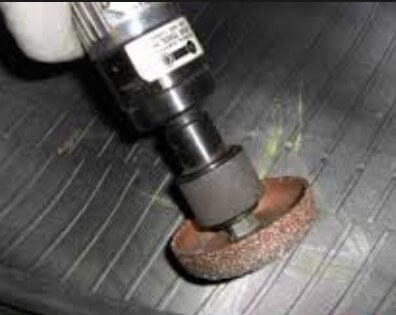
Then install a combination plug patch.
©, 2015 Rick Muscoplat
Posted on by Rick Muscoplat