
Transmission Slips: Causes, Symptoms, and Real Fixes
What Causes a Transmission to Slip
Quick Summary
When a transmission slips, it’s never “normal,” and it’s never something to ignore. A slipping transmission indicates the internal components aren’t transmitting power as intended. Sometimes the fix is simple—like correcting a fluid level or addressing a solenoid issue—but other times transmission slipping is the early warning sign of internal wear that can lead to a full rebuild. In this article, I’ll explain exactly why a transmission slips, what’s happening inside when it does, which fixes actually work, and which common “quick fixes” can make things worse.
Article
What It Feels Like When a Transmission Slips
After diagnosing thousands of drivability complaints, I can tell you that most drivers recognize transmission slipping in the same way: RPMs spike and the car hesitates before finally moving. Sometimes it happens only between certain gears. At other times, the transmission slips almost constantly after it warms up.
In more severe cases, the vehicle may shudder, surge, or feel like it’s repeatedly grabbing and releasing. I’ve also seen transmissions that slip so badly they won’t move in reverse at all. Those symptoms aren’t random. They’re the direct result of lost hydraulic pressure or worn friction components inside the transmission.
What’s Really Happening Inside When a Transmission Slips
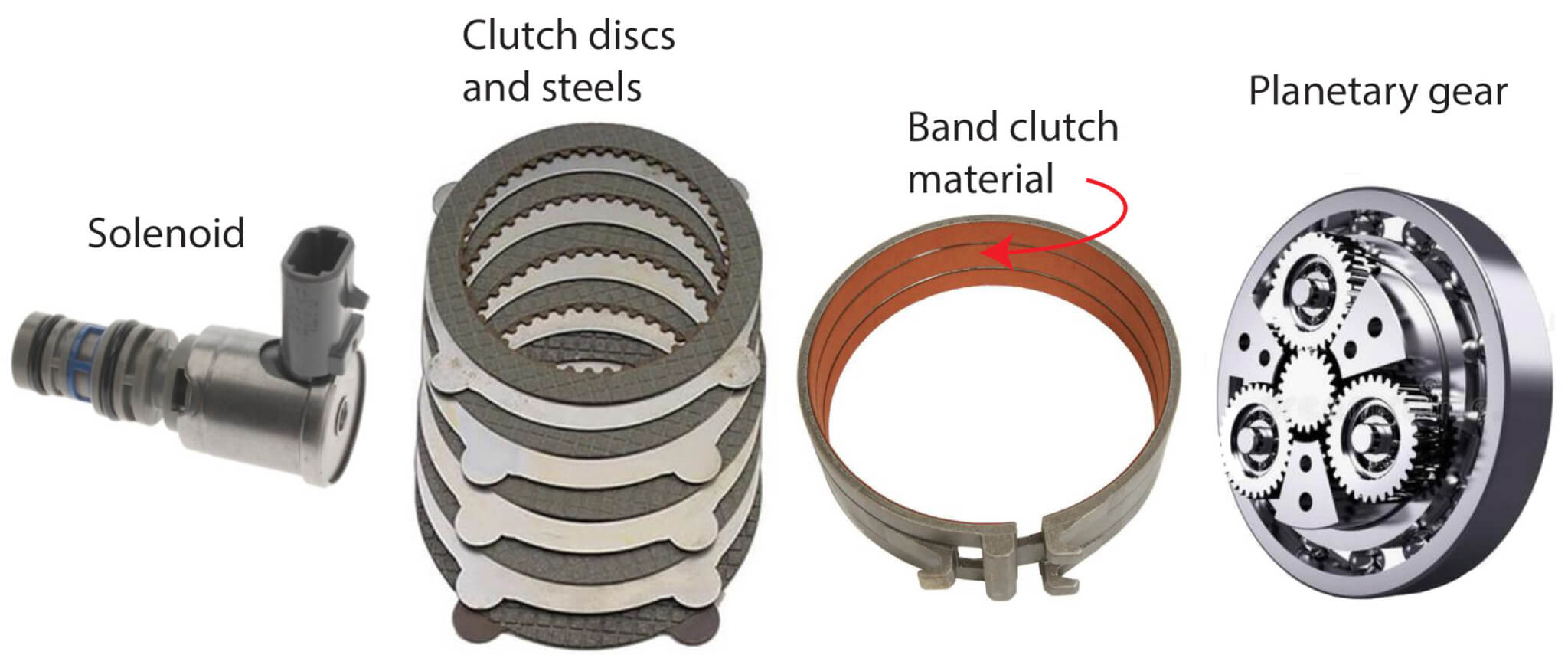
To understand why a transmission slips, you have to understand how an automatic transmission actually transfers power. Gear changes don’t happen because gears slide back and forth. Instead, hydraulic pressure applies clutch packs and bands that lock different planetary gearsets together.
Inside every clutch pack, friction discs and steel plates are stacked in a drum. When transmission fluid pressure pushes on a piston, those discs clamp tightly and rotate as a unit. If pressure is strong and the friction material is healthy, the clutch holds solidly. If pressure drops—or the friction material is worn—the clutch can’t stay locked, and the transmission slips.
That loss of holding power can come from several sources: worn clutch discs, leaking internal seals, weak pumps, failing solenoids, or fluid that can no longer maintain pressure. In manual transmissions, the concept is simpler, but the result is the same—when the clutch disc can’t grip the flywheel, transmission slipping occurs.
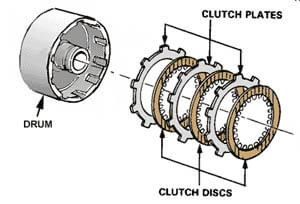
A transmission clutch pack includes a clutch drum, clutch friction discs, clutch plates (often called “steels:) and a piston and lip seal
When a transmission slips, one of these systems isn’t doing its job. You might have:
• Low fluid pressure, meaning there’s not enough hydraulic force to hold the gear
• Worn clutch plates that can’t maintain grip
• Leaking seals or gaskets, causing fluid to bleed off
• Faulty solenoids, which fail to direct pressure to the right parts
It’s a complex dance of fluid and friction, and if just one component is out of sync, the whole system can start slipping.
Common Symptoms of Transmission Slipping I See All The Tim
When customers describe problems to me, the patterns are remarkably consistent.
• Engine revs or chugs — You try to accelerate, and RPMs pick up, but you don’t feel a corresponding increase in speed, or the transmission “chugs” witha grip/release feel
• Slow, weak, or delayed acceleration— You feel a delay between the time you press the pedal and the time the transmission picks up speed
• Difficulty shifting gears or hard shifting— The transmission shifts later than usual or slams into the next gear
• Grinding, whining or other strange noises— Self explanatory
• Won’t go in reverse
• Burned or strange smells— A transmission slip is often caused by slipping clutch discs. When clutch discs slip, they can overheat, causing a burning smell• Check the engine light and a transmission-related trouble code.
Why Transmission Fluid Change Rarely Fixes Slipping
One of the most common questions I get is whether changing the transmission fluid will fix a slipping transmission problem. Here’s the hard truth: if the fluid is dark brown, smells burned, and the transmission already slips, a fluid change will not fix it.
In fact, I’ve seen fresh fluid finish off more neglected transmissions than I can count. Old fluid leaves varnish that may be helping worn seals retain pressure. New fluid dissolves that varnish, and suddenly the transmission loses even more pressure and slips worse. At that point, the damage was already done—the fluid change just revealed it faster.
The Real Causes Behind Transmission Slips
In my experience, most cases of transmission slip trace back to a handful of root causes. Low fluid levels are among the simplest and most dangerous. Even a small leak can allow air to enter the pump, reducing pressure and overheating the remaining fluid.
Solenoid failures are increasingly common in modern transmissions. These electronically controlled valves regulate where and when pressure is applied. When a solenoid sticks or fails electrically, pressure doesn’t reach the clutch pack in time, and the transmission slips.
Internal wear is another major culprit. Clutch discs wear thin, bands lose friction material, seals harden, and pumps lose efficiency. Torque converter problems can also cause slipping, especially under acceleration, because the converter can no longer transfer torque efficiently.
• Low, worn-out, or burned transmission fluid— If your transmission is low on fluid and you drive with low fluid, the internal friction of the clutches and gears can overheat the remaining fluid, causing it to “burn” and degrade. The degraded fluid can’t lubricate as well, causing clutch and gear wear, as well as seal degradation
• Solenoid problems— Modern transmissions use solenoids to pulse fluid pressure to operate valves and clutches. A failing solenoid can cause a loss of pressure, which then causes transmission slip
• Worn or broken transmission bands— Transmission bands have a coating of clutch material to grab and hold rotating parts. When the transmission fluid degrades, or a solenoid doesn’t apply the correct pressure, the band clutch material can slip, causing band damage.
• Clutch problems— Worn clutch discs and steel plates can cause transmission slipping issues
• Worn-out gears
• Torque converter issues
What About Transmission Additives?
If you’re driving an old vehicle nearing the end of its life and just need a few more months, additives can sometimes temporarily reduce transmission slipping. They work by inflating rubber seals, which can temporarily restore pressure.
But that improvement never lasts. Seal swelling accelerates seal failure; when it finally fails, the transmission usually fails completely. I never recommend additives as a long-term solution.
When Conditioners Make Sense—and When They Don’t
On older vehicles that are still shifting properly, conditioners such as Lubegard or ProLong can reduce friction and heat, potentially extending service life. For late-model vehicles that require specific synthetic fluids, these products usually provide no benefit and can even interfere with the additive package already in the fluid.
If you drive an older car and the transmission operates  well, you can extend its life by adding a transmission conditioner like Lubegard, ProLong, or Lucas Transmission Fluid Conditioner. If you drive a late-model car that uses synthetic fluid, you won’t benefit from any of these products.
The Bottom Line on Transmission Slipping
When a transmission slips, it’s telling you something important. Sometimes that message is simple—low fluid or a faulty solenoid. Other times, transmission slipping is the early warning sign of internal wear that no fluid, flush, or additive can undo.
Catching the problem early gives you options. Ignoring it almost always leads to a rebuild or replacement.
© 2012 Rick Muscoplat
Posted on by Rick Muscoplat