
Turbocharger vs supercharger
What’s the difference between a turbocharger vs supercharger?
A turbocharger and a supercharger are both forced induction systems that increase the power output of an internal combustion engine by forcing more air into the engine’s cylinders. However, they operate differently and have distinct characteristics. Here’s a detailed comparison of the two:
Turbochargers and Superchargers Have Different Sources of Power
Turbocharger: A turbocharger is powered by
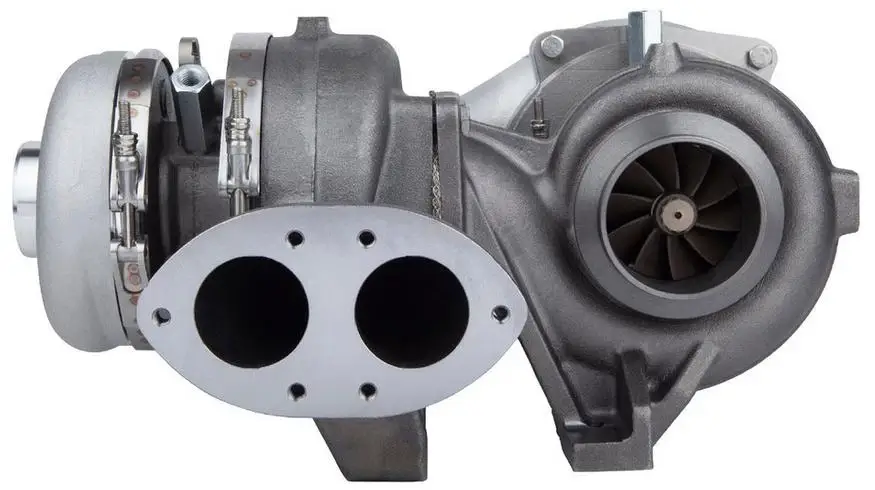
A turbocharger mounts to the exhaust with a pipe running up to the charge air cooler and then to the intake
exhaust gases. It consists of a turbine and a compressor connected by a shaft. The exhaust gases exiting the engine spin the turbine, which in turn drives the compressor. The compressor draws in more air, compresses it, and forces it into the engine’s intake manifold. Since it uses energy from the exhaust gases that would otherwise be wasted, a turbocharger is considered more efficient.
Supercharger: A supercharger is mechanically
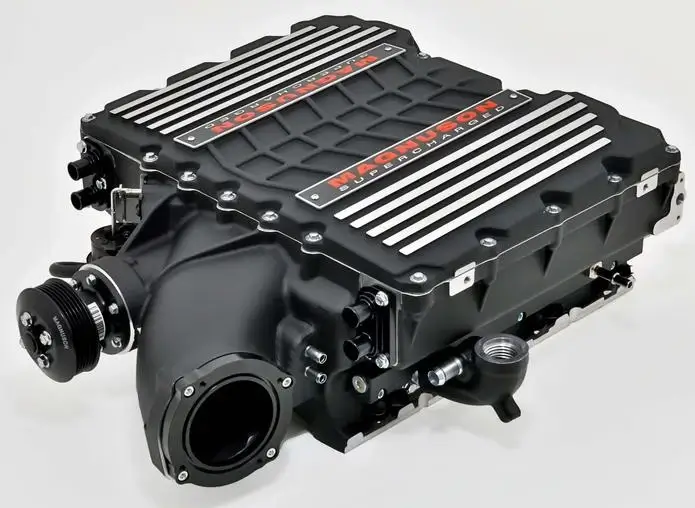
A direct connection superchargers sits on top of the intake manifold
driven by the engine itself, usually through a belt connected to the crankshaft. Because it draws power directly from the engine, it doesn’t have the lag associated with turbochargers, but it also takes some energy from the engine to operate, which can reduce overall efficiency.
One Has Boost Lag; The Other Doesn’t
Turbocharger: Turbochargers can suffer from “turbo lag,” which is a delay in power delivery. This occurs because the turbocharger needs time to spool up as exhaust gases build up enough pressure to drive the turbine. This lag can be noticeable, especially in older turbocharged engines.
Supercharger: Superchargers do not have lag because they are directly connected to the engine’s crankshaft and provide immediate boost as soon as the engine revs up. This results in more instantaneous power delivery.
A Turbo Beats a Supercharger in Terms of Efficiency
Turbocharger: Since turbochargers use exhaust gases, they are generally more efficient and can improve fuel economy compared to superchargers, especially when driving at higher speeds where the turbo is more effective.
Supercharger: Superchargers are less efficient than turbochargers because they rely on engine power to operate. The extra power required to drive the supercharger can offset some of the gains in engine power, resulting in lower fuel efficiency.
The Heat Management Challenges of Both
Turbocharger: Turbochargers are more complex because they involve the exhaust system and require additional components like intercoolers to cool the compressed air before it enters the engine. The high temperatures generated by exhaust gases can also increase the thermal load on the engine, requiring better heat management.
Supercharger: Superchargers are generally simpler in design and easier to install since they are mechanically driven. However, because they are constantly drawing power from the engine, they generate additional heat, which can also require enhanced cooling solutions.
The Best Applications For Each
Turbocharger: Turbochargers are commonly used in both performance and economy-focused applications. They are found in a wide range of vehicles, from high-performance sports cars to everyday commuter vehicles, and even in diesel engines where they help improve both power and fuel efficiency.
Supercharger: Superchargers are often associated with performance vehicles, such as muscle cars and high-performance sports cars, where immediate power delivery is critical. They are also used in some aircraft engines for altitude performance.
Power Characteristics: Turbocharger vs Supercharger
Turbocharger: Turbocharged engines tend to produce more power at higher RPMs once the turbo is fully spooled. This characteristic is useful for applications where peak power is needed, such as in racing or high-speed driving.
Supercharger: Supercharged engines provide a more linear and immediate power boost across the entire RPM range, which can be advantageous in situations where consistent power is needed, such as in drag racing or heavy towing.
Sound: Turbocharger vs Supercharger
Turbocharger: Turbochargers can produce a characteristic “whistle” or “whoosh” sound as they spool up, and the sound of a blow-off valve venting excess pressure is often associated with turbocharged engines.
Supercharger: Superchargers typically produce a distinctive “whine” or “scream,” especially at higher RPMs, due to the belt-driven nature of their operation.
How a turbocharger compresses air
A turbocharger has two turbines connected
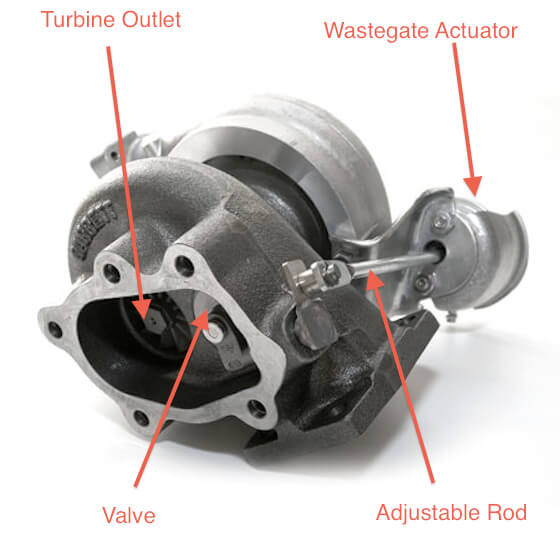
Turbo Wastegate
to a single shaft. One turbine sits in the exhaust stream, while the other turbine sits in the intake air duct. The exhaust flow spins both turbines, causing the fresh air turbine to compress outside air and force it into the intake manifold.
As you stop on the gas, the increased exhaust flow causes the exhaust turbine to spin the shaft at a higher speed. So, there is always a slight lag between the time you punch the gas pedal and the time you get more boost air into the intake manifold.
How a supercharger compresses air
A supercharger is connected to the crankshaft pulley on the engine with a cogged belt. When you punch the pedal on a supercharged engine, the results are more spontaneous because there’s a direct connection between the crankshaft and the supercharger.
A supercharger can boost intake air pressure higher than a turbocharger, but a supercharger requires more power to produce that extra boost. There’s no free lunch.
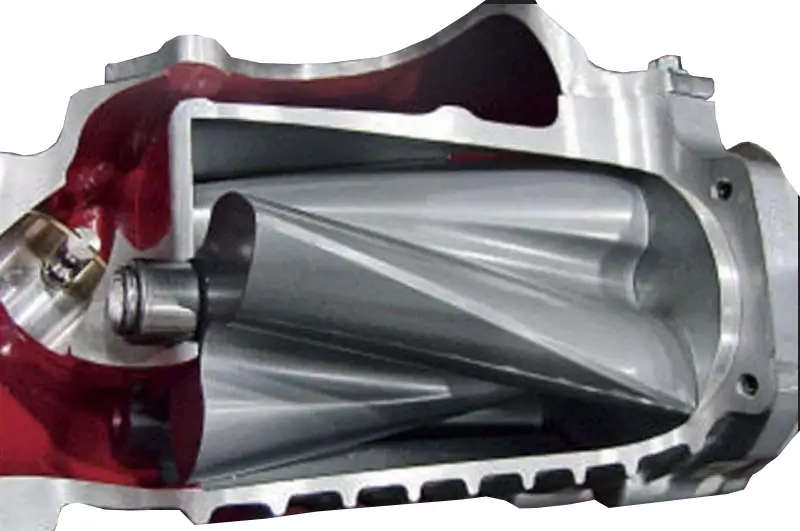
This is one example of a scroll supercharger
©, 2021 Rick Muscoplat
Posted on by Rick Muscoplat