
Understanding low speed pre-ignition and its causes
What is low speed pre-ignition (LSPI) and how to prevent it from damaging your engine.
Low-speed pre-ignition (LSPI), also known as stochastic pre-ignition (SPI) or super-knock, is a phenomenon that occurs in modern turbocharged gasoline direct injection engines. LSPI can result in catastrophic engine damage, often unexpectedly.
Why does low speed pre-ignition happen?
Engines are designed to ignite fuel in a controlled combustion process. This involves the burning of the air-fuel mixture in the combustion chamber, where the flame starts at the spark plug and spreads evenly. This controlled expansion is managed by the valve train, timing chain, and cam mechanisms. Ideally, the air-fuel mixture burns completely, with the heat generated from combustion moving to the piston, then to the cylinder wall, and finally into the cooling system.
In contrast, auto-ignition, also known as stochastic pre-ignition, super knock, or mega knock, represents uncontrolled combustion that occurs outside the normal sequence of events. It happens when rising temperatures and high-pressure levels in the cylinder cause unburned fuel to ignite prematurely, resulting in engine knocks. LSPI typically occurs at low speeds during sudden acceleration.
Low-Speed Pre-Ignition is the opposite of Detonation
Detonation occurs after normal combustion has started and is caused by excess heat and pressure that make residual gases ignite spontaneously. While detonation can be damaging, it is generally less harmful than LSPI, which occurs before normal combustion and can cause severe damage.
Causes of Low-Speed Pre-Ignition
Downsized gasoline engines are characterized by smaller engine sizes, heavy loads, higher average pressures, and low engine speeds. These factors contribute to engine stress and increase the risk of LSPI.
The precise cause of LSPI is not fully understood, though extensive research has been conducted. Initial theories suggested that soot accumulation and hot spots in the cylinder were major contributors. However, further studies have found that LSPI can occur randomly within the combustion chamber.
The testing has shown that oil droplets are the most likely cause of LSPI. The piston oil rings wipe a protective oil film onto the cylinder walls. Then, the introduction of high pressure fuel during the compression stroke dilutes that oil film. The oil dilution decreases the oil’s surface tension and its viscosity, causing a new “fuel” comprised of gasoline and lower viscosity motor oil.
Tests show that this gas/oil combination accumulates between the uppermost piston compression ring and the land area. As the piston rises during the compression stroke, the top compression ring pushes gas/oil droplets out of the land area. The high heat of compression and the heat caused by oxidation of these droplets cause them to vaporize and auto-ignite. The result is heavy or “super-knocking” that damages engine components.
So it’s the combination of oil film wash down, oil viscosity and surface tension reduction, combination with gas, and extremely high combustion chamber pressures during the compression stroke that cause LSPI. This perfect storm scenario happens more often on smaller turbocharged vehicles with 6-speed transmissions because the engines operate with lower RPMs in most gear ranges. When drivers demand acceleration at these low RPMs, they push the pedal to the metal, creating much higher combustion chamber pressures, causing LSPI.
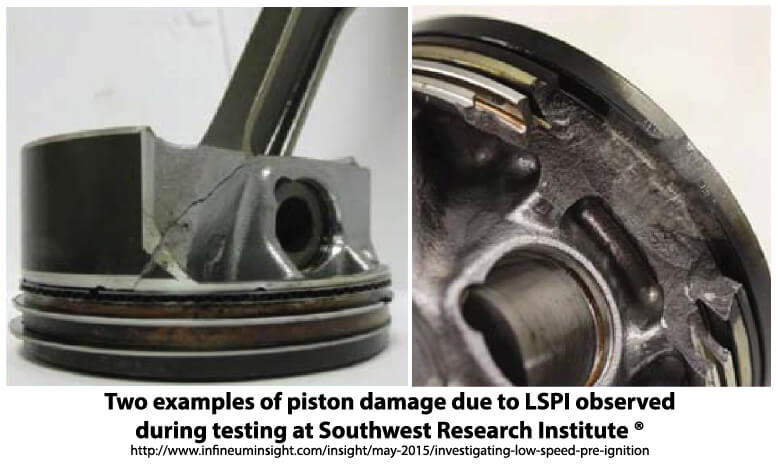
This premature ignition causes a rapid increase in pressure within the combustion chamber, which acts against the piston and can cause severe engine damage. Components such as pistons, rings, cylinder heads, and connecting rods are designed to absorb these pressure shocks, but they are often damaged in the process. The extreme pressure increases can ultimately lead to engine failure.
What are the symptoms of low speed pre-ignition?
The super knock can completely ruin your engine. That is why recognizing its symptoms on time is immensely important. Here are some of them:
• Damaged spark plugs, especially the central electrode
• Loss of power
• Reduced fuel economy
• Occasional clanging noise when speeding up
• Loud engine noise and explosion sounds
How to preventing Low-Speed Pre-Ignition (LSPI)
Even though the exact causes of low-speed pre-ignition (LSPI) are not fully understood, there are several crucial steps you can take to reduce the risk. These include using high-quality engine oil, high-octane fuel, and petrol system cleaning products.
Here’s what you need to know about these preventative measures:
Choose a High-Quality Engine Oil
One of the most important factors in minimizing the risk of LSPI is selecting the right engine oil. Each vehicle manufacturer designs engines with specific requirements, so it’s vital to follow the OEM guidelines and choose the recommended oil for your gasoline engine.
Using High-Octane Fuel
High-octane fuel can help prevent LSPI by providing a more stable combustion process. Higher octane levels reduce the likelihood of premature ignition, which is critical in preventing the rapid pressure increases associated with LSPI. Always use the octane rating recommended by your vehicle manufacturer to ensure optimal performance and protection.
Cleaning Products for Gasoline Engines
Keeping your engine clean is another important step in preventing LSPI. Over time, deposits can build up in the fuel injectors and combustion chamber, which can contribute to LSPI. Using high-quality cleaning products designed for petrol engines can help remove these deposits and maintain a clean, efficient fuel system.
©, 2016 Rick Muscoplat